black-gum
Eucalyptus ovata · Accepted scientific name
Scientific literature: Very Sparse (2 studies) · ★☆☆☆☆
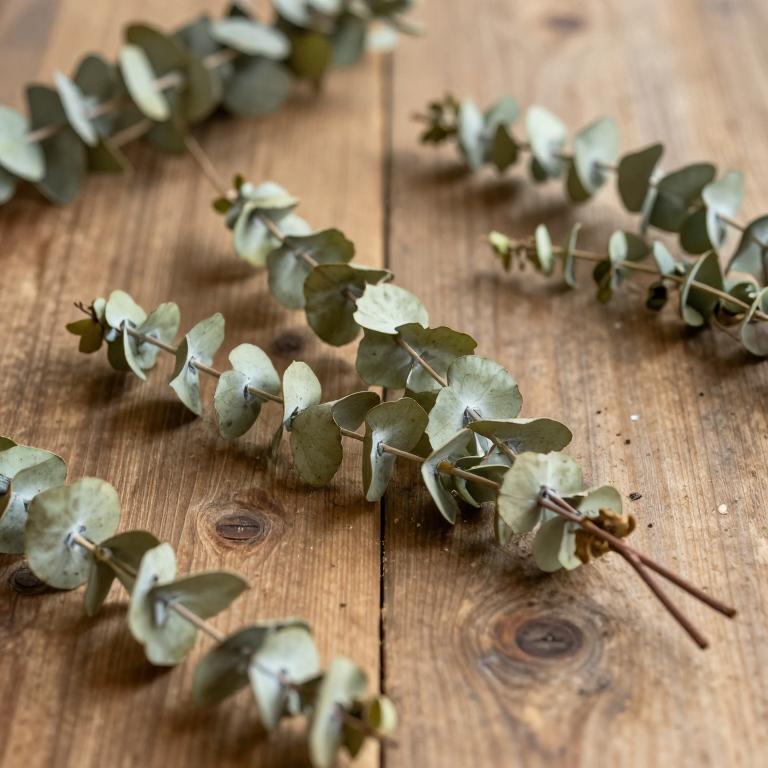
Black-gum, scientifically known as Eucalyptus ovata, is a versatile evergreen native to Australia. Renowned for its medicinal properties, its aromatic leaves contain essential oils used to soothe respiratory ailments and reduce inflammation. This resilient tree serves as a vital botanical resource, offering both therapeutic benefits and ecological value.
- Family
- Myrtaceae
- Native range
- Africa
- Parts used
- Leaf
- Common names
- Black-Gum · Swamp-Gum · 6 more
- Scientific synonyms
- Eucalyptus Gunnii Var. Ovata
Names and Synonyms
Common Names
- black-gum
- swamp-gum
- Marrawah gum
- black gum
- blue-leaf sally
- large-flower swamp gum
- swamp gum
- white gum
Scientific Names
Accepted name
Eucalyptus ovataSynonyms
- Eucalyptus gunnii var. ovata
Sources: Wikidata, Catalogue of Life
Taxonomical Classification
This plant belongs to the kingdom Plantae within the phylum Streptophyta and the class Equisetopsida. It is classified under the subclass Magnoliidae in the order Myrtales and the family Myrtaceae. Finally, it is identified by the genus Eucalyptus.
| Rank | Classification |
|---|---|
| Kingdom | Plantae |
| Phylum | Streptophyta |
| Class | Equisetopsida |
| Subclass | Magnoliidae |
| Order | Myrtales |
| Family | Myrtaceae |
| Genus | Eucalyptus |
Sources: The World Checklist of Vascular Plants (WCVP)
Distribution
This plant exhibits a wide geographical distribution spanning across two distinct regions. In the Macaronesian region, it can be found specifically within the Canary Islands. Its presence is also heavily concentrated across various parts of Australia. Within the Australian continent, it inhabits the states of New South Wales, South Australia, Victoria, and Tasmania. This diverse range highlights the plant's ability to thrive in different environmental settings.
| Region | Area |
|---|---|
| Macaronesia | Canary Is. |
| Australia | New South Wales |
| Australia | South Australia |
| Australia | Tasmania |
| Australia | Victoria |
| New Zealand | New Zealand North |
Sources: The World Checklist of Vascular Plants (WCVP)
Botanical Identification
Ecology
The ecology of Eucalyptus ovata is characterized by its preference for lowland environments, where it occupies specific niches within these lower-altitude landscapes. A critical component of its survival and nutrient acquisition strategy is its symbiotic relationship with soil fungi, as the species demonstrates a positive association with mycorrhiza. This fungal partnership facilitates enhanced nutrient uptake and water absorption, which is vital for maintaining its physiological functions within its native lowland habitats.
- Habitat :
- Lowland
- Mycorrhiza :
- yes
Life history
The life history of Eucalyptus ovata is characterized by a perennial lifecycle, allowing the plant to persist through multiple growing seasons and establish a long-term presence in its ecosystem. As a phanerophyte, its regenerative buds are elevated well above the ground level on woody stems, a structural strategy that supports its development into a robust tree. This species maintains an evergreen deciduousness, ensuring that its foliage remains functional and photosynthetic throughout the year without the seasonal shedding of leaves typical of deciduous species. Consequently, its biological strategy relies on the sustained maintenance of its canopy, categorizing it firmly within the phanerophyte life forms that thrive through continuous vegetative presence.
- Deciduousness :
- evergreen
- Life form :
- phanerophyte
- Lifecycle :
- perennial
Morphology
The morphology of Eucalyptus ovata is characterized by a woody growth form, specifically classified as a tree. This species is a self-supporting organism that functions as an independent plant, lacking any parasitic or epiphytic tendencies, and is strictly terrestrial in its habitat rather than being aquatic or semiaquatic. It does not exhibit climbing habits, such as being a liana or vine, but instead maintains a robust, upright structure. As a large woody plant, it can reach a maximum plant height of approximately 30 meters.
- Aquatic :
- terrestrial
- Climber :
- self-supporting
- Epiphyte :
- terrestrial
- Growth form :
- tree
- Parasite :
- independent
- Plant height max:
- 30 m
- Woodiness :
- woody
Physiology
The physiology of Eucalyptus ovata is characterized by a C3 photosynthetic pathway, which dictates its metabolic processes and carbon fixation efficiency. The vegetative structure is defined by leaves that exhibit consistent dimensions, maintaining a leaf width of exactly 2.8 cm across minimum, mean, and maximum measurements. In terms of longitudinal growth, the leaves can reach a maximum length of 12 cm. Furthermore, this species does not function as a nitrogen fixer, meaning it relies on the uptake of available nitrogen from the soil rather than through symbiotic biological nitrogen fixation.
- Leaf length max:
- 12 cm
- Leaf width mean:
- 2.8 cm
- Nitrogen fixer :
- no
- Photosynthetic pathway :
- C3
Reproduction
The reproduction of Eucalyptus ovata is driven by biotic pollination processes, specifically involving birds as a key component of its pollination syndrome. The plant does not exhibit any form of asexual reproduction, relying entirely on sexual cycles to produce offspring. The resulting fruits are relatively small and uniform in size, with a mean length of 0.5 cm and a mean width of 0.5 cm. Within these fruits, the seeds exhibit a degree of variability in mass, ranging from a minimum of 0.00042 g to a maximum of 0.0018 g, with an average seed mass of approximately 0.001303333 g. Regarding the movement of these seeds, the species utilizes an unspecialized dispersal syndrome, suggesting that the dispersal mechanism is not strictly limited to a single specialized agent.
- Dispersal syndrome :
- unspecialized
- Fruit length mean:
- 0.5 cm
- Fruit width mean:
- 0.5 cm
- Pollination syndrome :
- bird
- Pollination syndrome :
- biotic
- Reproduction asexual :
- absent
- Seed mass max:
- 0.0018 g
- Seed mass mean:
- 0.001303333 g
- Seed mass min:
- 0.00042 g
Sources: Global Inventory of Floras and Traits (GIFT)
Plant Parts
Eucalyptus ovata has 1 reported plant parts identified across 1 scientific publications and several other databases that are studied for medicinal purposes. The most consistently reported plant part include leaf.
| Plant part | Supporting sources | Consensus |
|---|---|---|
| Leaf | 1 supporting sources | ★☆☆☆☆ |
Leaf
- Fitoterapia
Chemicals
Eucalyptus ovata has 1 reported phytochemicals identified across 1 scientific publications and several other databases. The most consistently reported chemicals include Tannins.
| Chemical | Supporting sources | Consensus |
|---|---|---|
| Tannins | 1 supporting sources | ★☆☆☆☆ |
Tannins
- Fitoterapia