Eucalyptus odorata
Eucalyptus odorata · Accepted scientific name
Scientific literature: Very Extensive (250 studies) · ★★★★★
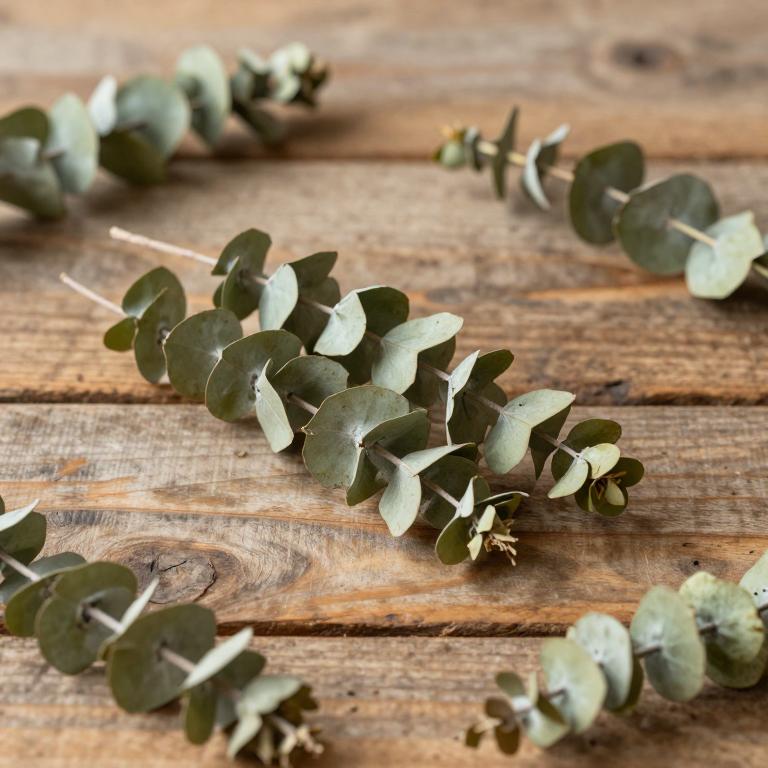
scientifically known as Eucalyptus odorata, is a fragrant evergreen tree native to Australia. Renowned for its aromatic, medicinal properties, its leaves are frequently used in traditional remedies to alleviate respiratory congestion and soothe skin irritations. This versatile plant remains a vital resource in herbal medicine and essential oil production.
- Family
- Not available
- Native range
- Australasia
- Parts used
- Not available
- Common names
- Not available
- Scientific synonyms
- Not available
Names and Synonyms
Scientific Names
Accepted name
Eucalyptus odorataDistribution
This plant is native to the Australian continent, where it occupies specific ecological niches. Its primary distribution is found within the state of South Australia. Additionally, the species is widely documented throughout the region of Victoria. These two areas represent its core natural habitat within the country. Consequently, the plant's presence is closely tied to the climates found in these particular Australian territories.
| Region | Area |
|---|---|
| Australia | South Australia |
| Australia | Victoria |
Sources: The World Checklist of Vascular Plants (WCVP)
Botanical Identification
Life history
The life history of Eucalyptus odorata is characterized by its classification as a phanerophyte, specifically exhibiting growth forms that include both phanerophyte and nanophanerophyte traits depending on environmental conditions and developmental stages. As a woody perennial, its life cycle begins with seed germination, typically following disturbances such as fire or soil clearance, which facilitates the establishment of seedlings in well-drained soils. During its maturation, the plant develops into a robust tree structure where the permanent buds are elevated well above the ground, a defining feature of its phanerophyte status. As it progresses through its ontogeny, the plant focuses on structural expansion and the development of its characteristic aromatic foliage, eventually reaching reproductive maturity where it produces inflorescences to facilitate pollination and subsequent seed dispersal, ensuring the continuity of its life cycle within its native ecological niche.
- Life form :
- phanerophyte
Morphology
The morphology of Eucalyptus odorata is characterized by its distinct growth form as a tree, which establishes a robust and structural presence in its ecosystem. It functions as an independent organism, lacking any parasitic tendencies, and is strictly a terrestrial plant rather than an epiphyte. The plant exhibits a woody constitution, providing the necessary structural integrity for its stature. Furthermore, it is a self-supporting species, requiring no external climbing structures or hosts to maintain its vertical orientation as it matures.
- Climber :
- self-supporting
- Epiphyte :
- terrestrial
- Growth form :
- tree
- Parasite :
- independent
- Woodiness :
- woody
Physiology
The physiology of Eucalyptus odorata is characterized by a robust metabolic framework optimized for survival in diverse environmental conditions, primarily driven by its utilization of the C3 photosynthetic pathway. As a C3 plant, it fixes atmospheric carbon dioxide through the enzyme Rubisco during the Calvin cycle, a process that is highly efficient under temperate to cool conditions but requires sophisticated physiological adaptations to manage photorespiration and transpiration during periods of high thermal stress. To support its rapid growth and extensive canopy development, the plant maintains a highly efficient vascular system capable of sustaining high transpiration rates, which facilitates nutrient transport and thermoregulation through leaf cooling. Furthermore, its physiological resilience is bolstered by specialized leaf anatomy and cuticle structures designed to regulate gas exchange and minimize excessive water loss, ensuring metabolic stability even when faced with fluctuating moisture availability.
- Photosynthetic pathway :
- C3
Reproduction
The reproduction of Eucalyptus odorata is characterized by the production of small, lightweight seeds that exhibit specific morphological variations in weight. The seed mass within the population demonstrates a notable range, with a minimum recorded value of 0.00023 g and a maximum value reaching up to 0.00245 g. On average, the seed mass is approximately 0.001325 g, reflecting a standardized weight profile for the species during its reproductive cycles.
- Seed mass max:
- 0.00245 g
- Seed mass mean:
- 0.001325 g
- Seed mass min:
- 0.00023 g
Sources: Global Inventory of Floras and Traits (GIFT)
Chemicals
Eucalyptus odorata has 74 reported phytochemicals identified across 0 scientific publications and several other databases. The most consistently reported chemicals include 1,8-Cineole, A-MUUROLENE, ALPHA-PHELLANDRENE, ALPHA-PINENE, ALPHA-SELINENE.
| Chemical | Supporting sources | Consensus |
|---|---|---|
| 1,8-Cineole | 1 supporting sources | ★☆☆☆☆ |
| A-MUUROLENE | 1 supporting sources | ★☆☆☆☆ |
| ALPHA-PHELLANDRENE | 1 supporting sources | ★☆☆☆☆ |
| ALPHA-PINENE | 1 supporting sources | ★☆☆☆☆ |
| ALPHA-SELINENE | 1 supporting sources | ★☆☆☆☆ |
| Allo-Aromadendrene | 1 supporting sources | ★☆☆☆☆ |
| Aromadendrene | 1 supporting sources | ★☆☆☆☆ |
| BETA-CARYOPHYLLENE | 1 supporting sources | ★☆☆☆☆ |
| BETA-ELEMENE | 1 supporting sources | ★☆☆☆☆ |
| BETA-PHELLANDRENE | 1 supporting sources | ★☆☆☆☆ |
1,8-Cineole
- Dr. Duke
A-MUUROLENE
- Dr. Duke
ALPHA-PHELLANDRENE
- Dr. Duke
ALPHA-PINENE
- Dr. Duke
ALPHA-SELINENE
- Dr. Duke
Allo-Aromadendrene
- Dr. Duke
Aromadendrene
- Dr. Duke
BETA-CARYOPHYLLENE
- Dr. Duke
BETA-ELEMENE
- Dr. Duke
BETA-PHELLANDRENE
- Dr. Duke
Activities
Eucalyptus odorata has 176 reported activities identified across 0 scientific publications and several other databases. The most consistently reported activities include (-)-Chronotropic, (-)-Inotropic, ACE-Inhibitor, AChE-Inhibitor, Acaricide.
| Activity | Supporting sources | Consensus |
|---|---|---|
| (-)-Chronotropic | 1 supporting sources | ★☆☆☆☆ |
| (-)-Inotropic | 1 supporting sources | ★☆☆☆☆ |
| ACE-Inhibitor | 1 supporting sources | ★☆☆☆☆ |
| AChE-Inhibitor | 1 supporting sources | ★☆☆☆☆ |
| Acaricide | 1 supporting sources | ★☆☆☆☆ |
| Aldose-Reductase-Inhibitor | 1 supporting sources | ★☆☆☆☆ |
| Allelochemic | 1 supporting sources | ★☆☆☆☆ |
| Allelopathic | 1 supporting sources | ★☆☆☆☆ |
| Allergenic | 1 supporting sources | ★☆☆☆☆ |
| Analgesic | 1 supporting sources | ★☆☆☆☆ |
(-)-Chronotropic
- Dr. Duke
(-)-Inotropic
- Dr. Duke
ACE-Inhibitor
- Dr. Duke
AChE-Inhibitor
- Dr. Duke
Acaricide
- Dr. Duke
Aldose-Reductase-Inhibitor
- Dr. Duke
Allelochemic
- Dr. Duke
Allelopathic
- Dr. Duke
Allergenic
- Dr. Duke
Analgesic
- Dr. Duke