Eucalyptus nova-anglica
Eucalyptus nova-anglica · Accepted scientific name
Scientific literature: Extensive (168 studies) · ★★★★☆
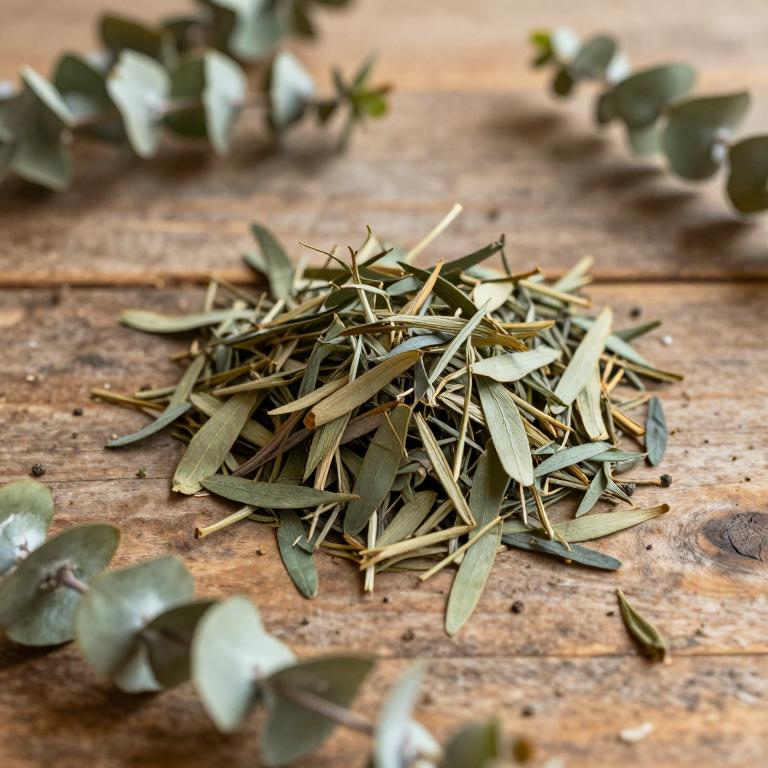
, scientifically known as Eucalyptus nova-anglica, is a distinctive medicinal plant native to specific Australian regions. Renowned for its potent essential oils, it possesses powerful antimicrobial and anti-inflammatory properties. Traditionally used to treat respiratory ailments and skin irritations, this species offers significant therapeutic potential in modern herbal pharmacology.
- Family
- Not available
- Native range
- Australasia
- Parts used
- Not available
- Common names
- Not available
- Scientific synonyms
- Not available
Names and Synonyms
Scientific Names
Accepted name
Eucalyptus nova-anglicaDistribution
This plant is primarily found within the diverse landscapes of Australia. Its specific distribution spans across two major eastern states. Within these regions, it is documented to grow in New South Wales. Additionally, the species can be located throughout parts of Queensland. Consequently, its natural range is concentrated in these specific Australian territories.
| Region | Area |
|---|---|
| Australia | New South Wales |
| Australia | Queensland |
Sources: The World Checklist of Vascular Plants (WCVP)
Botanical Identification
Life history
The life history of Eucalyptus nova-anglica is characterized by its classification as a phanerophyte, a growth form where the perennating buds are located high above the ground on woody stems. Within this botanical framework, the species exhibits a complex developmental strategy that aligns with the traits of both a phanerophyte and a nanophanerophyte, indicating its capacity to maintain structural integrity and reproductive potential through various environmental stresses. As a perennial woody plant, its life cycle begins with seed germination, followed by a period of establishment where it develops the robust, elevated stem architecture necessary to protect its vital buds from surface-level disturbances and temperature fluctuations. This life form allows the plant to dominate its niche by utilizing vertical space for light competition while ensuring its survival through long-term seasonal cycles.
- Life form :
- phanerophyte
Morphology
The morphology of Eucalyptus nova-anglica is characterized by its growth form as a woody tree, capable of reaching a maximum plant height of 25 m. It functions as a self-supporting, independent organism, exhibiting no parasitic or epiphytic tendencies, and is strictly terrestrial in its habitat rather than being aquatic or semiaquatic.
- Aquatic :
- terrestrial
- Climber :
- self-supporting
- Epiphyte :
- terrestrial
- Growth form :
- tree
- Parasite :
- independent
- Plant height max:
- 25 m
- Woodiness :
- woody
Physiology
The physiology of Eucalyptus nova-anglica is fundamentally characterized by its carbon assimilation strategy, employing a C3 photosynthetic pathway to facilitate energy production. As a C3 plant, its carbon fixation process occurs through the direct carboxylation of ribulose-1,5-bisphosphate (RuBP) by the enzyme RuBisCO within the mesophyll cells, leading to the immediate formation of a three-carbon compound, 3-phosphoglycerate. This metabolic pathway dictates its resource management, particularly regarding water-use efficiency and gas exchange, as the plant must balance the intake of carbon dioxide against the potential for photorespiration during periods of high temperature or moisture stress. The physiological efficiency of this C3 mechanism in Eucalyptus nova-anglica is closely integrated with its leaf morphology and stomatal conductance, which are critical for maintaining the metabolic balance required for growth and survival in its native environment.
- Photosynthetic pathway :
- C3
Reproduction
The reproduction of Eucalyptus nova-anglica is characterized by the production of specialized seeds that exhibit specific mass variations within its population. The seed mass for this species shows a mean value of approximately 0.001083333 g, indicating a highly standardized size for successful germination. However, there is measurable biological variability in the weight of individual seeds, with recorded values ranging from a minimum of 0.00066 g to a maximum of 0.00135 g. This range in seed mass plays a crucial role in the plant's reproductive strategy and its ability to establish itself in its native environment.
- Seed mass max:
- 0.00135 g
- Seed mass mean:
- 0.001083333 g
- Seed mass min:
- 0.00066 g
Sources: Global Inventory of Floras and Traits (GIFT)
Chemicals
Eucalyptus nova-anglica has 30 reported phytochemicals identified across 0 scientific publications and several other databases. The most consistently reported chemicals include 1,8-Cineole, ALPHA-PINENE, ALPHA-SELINENE, Allo-Aromadendrene, Aromadendrene.
| Chemical | Supporting sources | Consensus |
|---|---|---|
| 1,8-Cineole | 1 supporting sources | ★☆☆☆☆ |
| ALPHA-PINENE | 1 supporting sources | ★☆☆☆☆ |
| ALPHA-SELINENE | 1 supporting sources | ★☆☆☆☆ |
| Allo-Aromadendrene | 1 supporting sources | ★☆☆☆☆ |
| Aromadendrene | 1 supporting sources | ★☆☆☆☆ |
| BETA-PINENE | 1 supporting sources | ★☆☆☆☆ |
| BETA-SELINENE | 1 supporting sources | ★☆☆☆☆ |
| CALAMENENE | 1 supporting sources | ★☆☆☆☆ |
| CAMPHENE | 1 supporting sources | ★☆☆☆☆ |
| Calacorene | 1 supporting sources | ★☆☆☆☆ |
1,8-Cineole
- Dr. Duke
ALPHA-PINENE
- Dr. Duke
ALPHA-SELINENE
- Dr. Duke
Allo-Aromadendrene
- Dr. Duke
Aromadendrene
- Dr. Duke
BETA-PINENE
- Dr. Duke
BETA-SELINENE
- Dr. Duke
CALAMENENE
- Dr. Duke
CAMPHENE
- Dr. Duke
Calacorene
- Dr. Duke
Activities
Eucalyptus nova-anglica has 138 reported activities identified across 0 scientific publications and several other databases. The most consistently reported activities include (-)-Chronotropic, (-)-Inotropic, ACE-Inhibitor, AChE-Inhibitor, Acaricide.
| Activity | Supporting sources | Consensus |
|---|---|---|
| (-)-Chronotropic | 1 supporting sources | ★☆☆☆☆ |
| (-)-Inotropic | 1 supporting sources | ★☆☆☆☆ |
| ACE-Inhibitor | 1 supporting sources | ★☆☆☆☆ |
| AChE-Inhibitor | 1 supporting sources | ★☆☆☆☆ |
| Acaricide | 1 supporting sources | ★☆☆☆☆ |
| Aldose-Reductase-Inhibitor | 1 supporting sources | ★☆☆☆☆ |
| Allelochemic | 1 supporting sources | ★☆☆☆☆ |
| Allelopathic | 1 supporting sources | ★☆☆☆☆ |
| Allergenic | 1 supporting sources | ★☆☆☆☆ |
| Analgesic | 1 supporting sources | ★☆☆☆☆ |
(-)-Chronotropic
- Dr. Duke
(-)-Inotropic
- Dr. Duke
ACE-Inhibitor
- Dr. Duke
AChE-Inhibitor
- Dr. Duke
Acaricide
- Dr. Duke
Aldose-Reductase-Inhibitor
- Dr. Duke
Allelochemic
- Dr. Duke
Allelopathic
- Dr. Duke
Allergenic
- Dr. Duke
Analgesic
- Dr. Duke