Narrow-leaved Peppermint
Eucalyptus nicholii · Accepted scientific name
Scientific literature: Very Sparse (4 studies) · ★☆☆☆☆
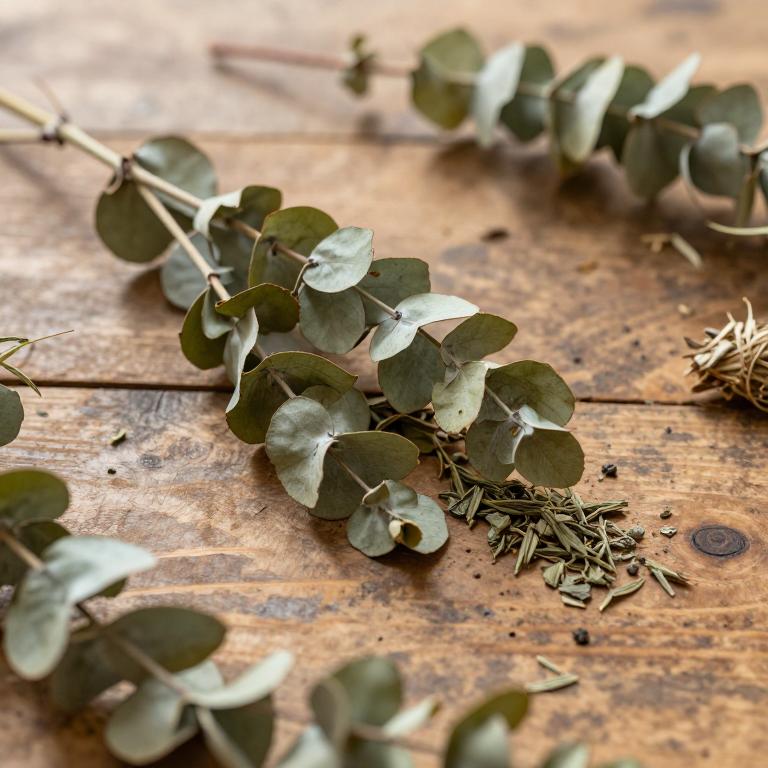
Narrow-leaved Peppermint, scientifically known as Eucalyptus nicholii, is a distinctive Australian shrub prized for its aromatic properties. Characterized by slender, oil-rich leaves, it offers significant medicinal potential. Traditionally utilized for its invigorating essential oils, this plant serves as a natural remedy for respiratory relief and soothing topical applications.
- Family
- Myrtaceae
- Native range
- Australasia
- Parts used
- Not available
- Common names
- Narrow-Leaved Peppermint · Narrow-Leaf Black Peppermint · 5 more
- Scientific synonyms
- Eucalyptus Acaciiformis Var. Linearis
Names and Synonyms
Common Names
- Narrow-leaved Peppermint
- narrow-leaf black peppermint
- narrow-leaf peppermint
- small-leaf peppermint
- willow peppermint
- willow-leaf peppermint
- narrow-leaved black peppermint
Scientific Names
Accepted name
Eucalyptus nicholiiSynonyms
- Eucalyptus acaciiformis var. linearis
Regional and Traditional Names
Spanish:
- Eucalyptus acaciiformis var. linearis
Sources: Wikidata, Catalogue of Life
Taxonomical Classification
This plant belongs to the kingdom Plantae within the phylum Streptophyta and the class Equisetopsida. It is further classified under the subclass Magnoliidae, the order Myrtales, and the family Myrtaceae. Finally, its taxonomic identity is defined by the genus Eucalyptus.
| Rank | Classification |
|---|---|
| Kingdom | Plantae |
| Phylum | Streptophyta |
| Class | Equisetopsida |
| Subclass | Magnoliidae |
| Order | Myrtales |
| Family | Myrtaceae |
| Genus | Eucalyptus |
Sources: The World Checklist of Vascular Plants (WCVP)
Distribution
This plant is specifically categorized by a very limited geographical range. Its natural distribution is confined entirely to the continent of Australia. Within this vast landmass, it is found exclusively in the state of New South Wales. Because it is localized to this single region, it is considered an endemic species. Consequently, its survival is closely tied to the specific environmental conditions of this particular Australian territory.
| Region | Area |
|---|---|
| Australia | New South Wales |
Sources: The World Checklist of Vascular Plants (WCVP)
Botanical Identification
Life history
The life history of Eucalyptus nicholii is characterized by its classification as a phanerophyte, specifically functioning as both a phanerophyte and a nanophanerophyte depending on the environmental conditions and the stage of its development. As a phanerophyte, the plant maintains its perennating buds high above the ground, typically on woody stems or branches, which allows it to survive seasonal variations and environmental stressors. Its growth habit often fluctuates between a more robust phanerophyte form and a smaller, more compact nanophanerophyte form, reflecting its ability to adapt its structural height and biomass in response to its specific ecological niche. This life history strategy ensures long-term persistence through the protection of its vital meristematic tissues, enabling it to endure various climatic shifts within its habitat.
- Life form :
- phanerophyte
Morphology
The morphology of Eucalyptus nicholii is characterized by its growth form as a woody tree, which is capable of reaching a maximum plant height of 18 meters. As a self-supporting organism, it does not function as a climber or an epiphyte, maintaining a terrestrial existence rather than being aquatic or semiaquatic. The plant is an independent species, meaning it does not exhibit parasitic behavior, and its structure is defined by its robust, woody nature.
- Aquatic :
- terrestrial
- Climber :
- self-supporting
- Epiphyte :
- terrestrial
- Growth form :
- tree
- Parasite :
- independent
- Plant height max:
- 18 m
- Woodiness :
- woody
Physiology
The physiology of Eucalyptus nicholii is characterized by a metabolic framework utilizing a C3 photosynthetic pathway, which dictates how the plant captures carbon dioxide and manages energy conversion. As a C3 plant, it fixes carbon dioxide directly through the Calvin cycle using the enzyme RuBisCO, a process that is highly efficient under temperate or moist conditions but necessitates careful regulation of stomatal conductance to balance gas exchange with transpiration rates. This physiological mechanism influences its water-use efficiency and overall carbon assimilation patterns, influencing how the species responds to varying light intensities and ambient temperatures within its ecological niche.
- Photosynthetic pathway :
- C3
Reproduction
Reproduction in Eucalyptus nicholii is characterized by the production of specialized seeds that exhibit a specific range of physical dimensions essential for its dispersal and germination processes. The seed mass within this species shows notable variability, with a documented mean mass of 0.0015 g. This variation is further detailed by a minimum seed mass of 0.00034 g and a maximum seed mass reaching up to 0.00216 g. These quantitative traits indicate a spectrum of seed sizes that likely influence the plant's ability to colonize diverse microhabitats within its ecological niche.
- Seed mass max:
- 0.00216 g
- Seed mass mean:
- 0.0015 g
- Seed mass min:
- 0.00034 g
Sources: Global Inventory of Floras and Traits (GIFT)
Chemicals
Eucalyptus nicholii has 4 reported phytochemicals identified across 0 scientific publications and several other databases. The most consistently reported chemicals include Bicyclogermacrene, LIMONENE, Sesquiterpenes, cineole.
| Chemical | Supporting sources | Consensus |
|---|---|---|
| Bicyclogermacrene | 1 supporting sources | ★☆☆☆☆ |
| LIMONENE | 1 supporting sources | ★☆☆☆☆ |
| Sesquiterpenes | 1 supporting sources | ★☆☆☆☆ |
| cineole | 1 supporting sources | ★☆☆☆☆ |
Bicyclogermacrene
- Planta medica
LIMONENE
- Planta medica
Sesquiterpenes
- Planta medica
cineole
- Planta medica