bastard-box
Eucalyptus microtheca · Accepted scientific name
Scientific literature: Very Sparse (9 studies) · ★☆☆☆☆
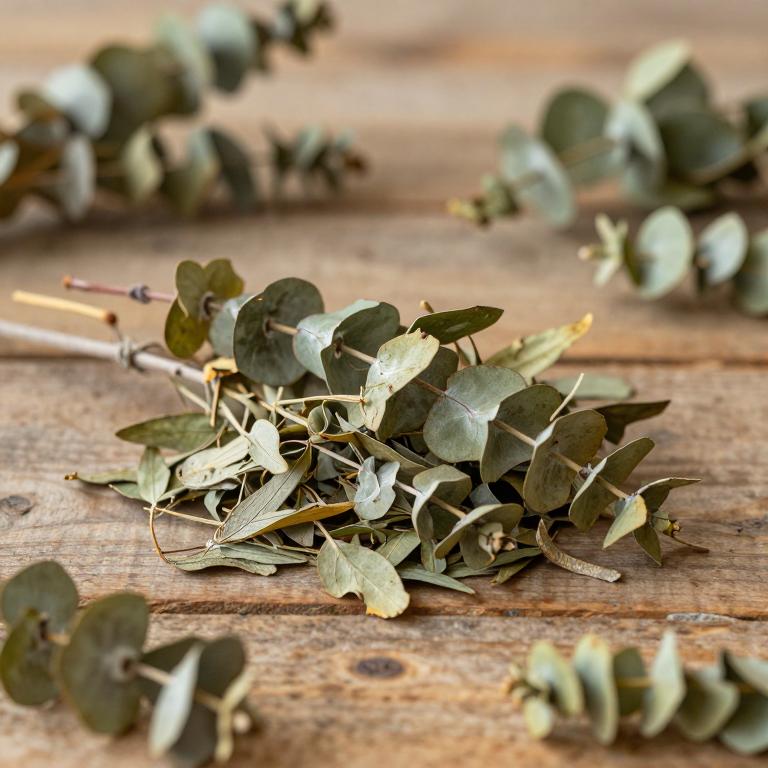
Bastard-box, scientifically known as Eucalyptus microtheca, is a resilient Australian tree renowned for its medicinal properties. Its aromatic leaves contain essential oils with potent antimicrobial and antiseptic qualities. Traditionally used to treat respiratory ailments and skin conditions, this hardy species remains a vital resource in natural healing and pharmacology.
Names and Synonyms
Common Names
- bastard-box
- coolibah
- coolabah
- flooded-box
- western coolibah
- Desert Box
- Flooded Box
- Tropical Coolibah
Scientific Names
Accepted name
Eucalyptus microthecaSynonyms
- Eucalyptus microtheca var. cymbaliformis
- Eucalyptus helenae
- Eucalyptus cyanoclada
- Eucalyptus barklyensis
Sources: Wikidata, Catalogue of Life
Taxonomical Classification
This plant belongs to the kingdom Plantae and the phylum Streptophyta, falling under the class Equisetopsida and subclass Magnoliidae. It is further classified within the order Myrtales and the family Myrtaceae. Finally, it is identified by the genus Eucalyptus, specifically as the species Eucalyptus microtheca.
| Rank | Classification |
|---|---|
| Kingdom | Plantae |
| Phylum | Streptophyta |
| Class | Equisetopsida |
| Subclass | Magnoliidae |
| Order | Myrtales |
| Family | Myrtaceae |
| Genus | Eucalyptus |
Sources: The World Checklist of Vascular Plants (WCVP)
Distribution
This plant exhibits a broad geographical distribution that spans several continents and diverse climates. In East Tropical Africa, its presence is noted within the borders of Kenya and Tanzania. Moving toward the southern regions, it can also be found growing in the Cape Provinces of Southern Africa. Its range extends into the Indian Subcontinent, specifically within the country of Pakistan. Finally, the species is native to Australia, where it is located in the Northern Territory.
| Region | Area |
|---|---|
| East Tropical Africa | Kenya |
| East Tropical Africa | Tanzania |
| Southern Africa | Cape Provinces |
| Indian Subcontinent | Pakistan |
| Australia | Northern Territory |
| Australia | Queensland |
| Australia | Western Australia |
Sources: The World Checklist of Vascular Plants (WCVP)
Botanical Identification
Ecology
The ecology of Eucalyptus microtheca is characterized by its specific niche within montane environments, where it thrives within a distinct altitudinal band. This species is primarily distributed across an elevational range that begins at 800 m AMSL and extends up to a maximum of 1000 m AMSL. Within this specific vertical stratification, the plant interacts with localized climatic variables, adapting to the unique temperature gradients and moisture availability found at these mid-to-high elevations. This narrow elevational window suggests a specialized ecological requirement, positioning the species within specific mountain ecosystems where soil compositions and atmospheric conditions meet its physiological demands.
- Elevational range max:
- 1000 m AMSL
- Elevational range min:
- 800 m AMSL
Life history
The life history of Eucalyptus microtheca is characterized by its status as a perennial species, allowing it to persist in its environment through multiple growing seasons. As a phanerophyte, its reproductive buds are elevated well above the ground level, typically supported by a robust woody structure. This plant maintains an evergreen deciduousness, ensuring that its foliage remains functional and present throughout the year rather than shedding seasonally. Within the classification of its growth habit, it is categorized as a phanerophyte, reflecting its development into a substantial tree form that sustains its vital organs above the soil surface.
- Deciduousness :
- evergreen
- Life form :
- phanerophyte
- Lifecycle :
- perennial
Morphology
The morphology of Eucalyptus microtheca is characterized by its growth form as a woody tree, which functions as a self-supporting structure. As a terrestrial species, it is neither aquatic nor an epiphyte, and it maintains an independent life cycle without acting as a parasite. The plant typically reaches a height ranging from a minimum of 5 m to a maximum of 15 m, with a mean height of approximately 15 m.
- Aquatic :
- terrestrial
- Climber :
- self-supporting
- Epiphyte :
- terrestrial
- Growth form :
- tree
- Parasite :
- independent
- Plant height mean:
- 15 m
- Plant height min:
- 5 m
- Woodiness :
- woody
Physiology
The physiology of Eucalyptus microtheca is characterized by a C3 photosynthetic pathway, which dictates its carbon fixation processes and metabolic efficiency within its native environments. As a C3 plant, it utilizes the enzyme Rubisco to fix atmospheric carbon dioxide directly into the Calvin cycle, a strategy that is typically effective in temperate to sub-humid climates but requires specific adaptations to manage transpiration during periods of high irradiance. Furthermore, this species does not function as a nitrogen fixer, meaning it lacks the symbiotic relationship with diazotrophic bacteria (such as those found in Rhizobium or Frankia) required to convert atmospheric nitrogen into biologically available forms, and instead relies on the uptake of nitrates and ammonium from the soil to meet its nutritional requirements for growth and development.
- Nitrogen fixer :
- no
- Photosynthetic pathway :
- C3
Reproduction
The reproduction of Eucalyptus microtheca is characterized by the production of small, specialized seeds that exhibit specific variations in weight. The seed mass within this species shows a notable range, with a recorded minimum mass of 0.00099 g and a maximum mass of 0.00323 g. When considering the overall distribution of these reproductive units, the seed mass mean is calculated at 0.0024375 g, reflecting the typical size profile used for dispersal and subsequent germination.
- Seed mass max:
- 0.00323 g
- Seed mass mean:
- 0.0024375 g
- Seed mass min:
- 0.00099 g
Sources: Global Inventory of Floras and Traits (GIFT)
Plant Parts
Eucalyptus microtheca has 1 reported plant parts identified across 1 scientific publications and several other databases that are studied for medicinal purposes. The most consistently reported plant part include leaf.
| Plant part | Supporting sources | Consensus |
|---|---|---|
| Leaf | 1 supporting sources | ★☆☆☆☆ |
Leaf
- Molecules (Basel, Switzerland)
Chemicals
Eucalyptus microtheca has 5 reported phytochemicals identified across 1 scientific publications and several other databases. The most consistently reported chemicals include 1,8-Cineole, 9-Octadecenamide, Aromadendrene, Globulol, Ledene.
| Chemical | Supporting sources | Consensus |
|---|---|---|
| 1,8-Cineole | 1 supporting sources | ★☆☆☆☆ |
| 9-Octadecenamide | 1 supporting sources | ★☆☆☆☆ |
| Aromadendrene | 1 supporting sources | ★☆☆☆☆ |
| Globulol | 1 supporting sources | ★☆☆☆☆ |
| Ledene | 1 supporting sources | ★☆☆☆☆ |
1,8-Cineole
- Molecules (Basel, Switzerland)
9-Octadecenamide
- Avicenna journal of phytomedicine
Aromadendrene
- Avicenna journal of phytomedicine
Globulol
- Avicenna journal of phytomedicine
Ledene
- Avicenna journal of phytomedicine
Conditions
Eucalyptus microtheca has 1 reported investigations on conditions identified across 1 scientific publications and several other databases. The most consistently reported conditions include inflammation.
| Condition | Supporting sources | Consensus |
|---|---|---|
| Inflammation | 1 supporting sources | ★☆☆☆☆ |
Inflammation
- Avicenna journal of phytomedicine
Preparations
Eucalyptus microtheca has 1 reported preparations identified across 1 scientific publications and several other databases. The most consistently reported preparations include essential oils.
| Preparation | Supporting sources | Consensus |
|---|---|---|
| Essential oils | 1 supporting sources | ★☆☆☆☆ |
Essential oils
- Molecules (Basel, Switzerland)