jarrah
Eucalyptus marginata · Accepted scientific name
Scientific literature: Very Sparse (1 studies) · ★☆☆☆☆
Jarrah, scientifically known as Eucalyptus marginata, is a majestic Western Australian tree prized for its diverse medicinal properties. Renowned for its potent essential oils, the bark and leaves are traditionally used to treat skin ailments, respiratory issues, and inflammation, offering a natural remedy deeply rooted in indigenous healing practices.
- Family
- Myrtaceae
- Native range
- Australasia
- Parts used
- Not available
- Common names
- Jarrah
- Scientific synonyms
- Not available
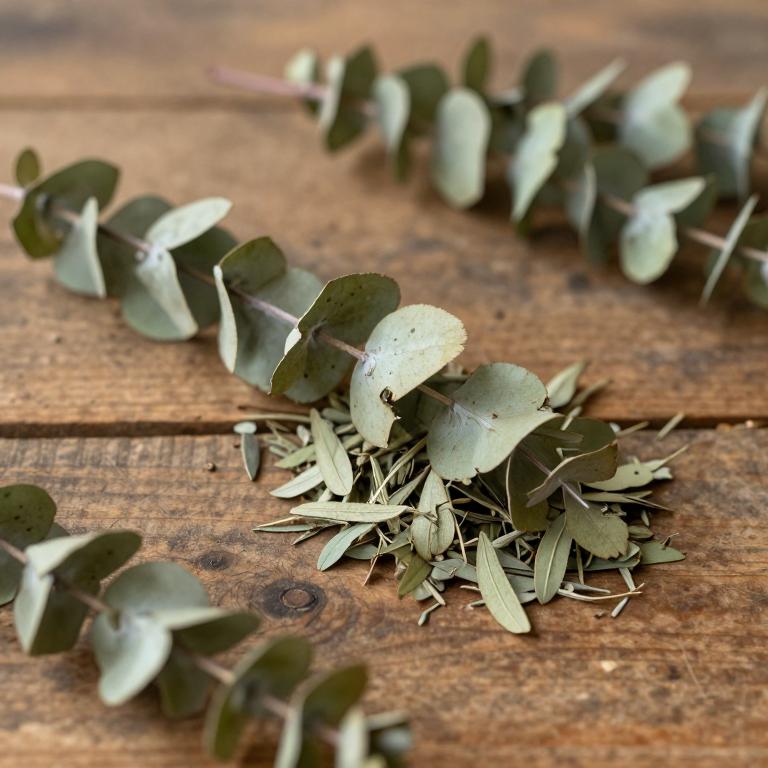
Names and Synonyms
Common Names
- Jarrah
Scientific Names
Accepted name
Eucalyptus marginataRegional and Traditional Names
Spanish:
- Jarrah
French:
- Jarrah
Sources: Wikidata, Catalogue of Life
Taxonomical Classification
This plant belongs to the kingdom Plantae and is classified under the phylum Streptophyta and class Equisetopsida. Within the subclass Magnoliidae, it is organized into the order Myrtales and the family Myrtaceae. Finally, it is identified by the genus Eucalyptus.
| Rank | Classification |
|---|---|
| Kingdom | Plantae |
| Phylum | Streptophyta |
| Class | Equisetopsida |
| Subclass | Magnoliidae |
| Order | Myrtales |
| Family | Myrtaceae |
| Genus | Eucalyptus |
Sources: The World Checklist of Vascular Plants (WCVP)
Distribution
This plant is primarily native to the specific regions of Australia, where it is found within Western Australia. Beyond its natural habitat, it has also established a presence in the North-Central Pacific. Specifically, it can be located growing in the islands of Hawaii. This indicates that its geographical range extends from the Australian continent across the ocean. Therefore, its distribution is characterized by both native and introduced populations in these distinct areas.
| Region | Area |
|---|---|
| Australia | Western Australia |
| North-Central Pacific | Hawaii |
Sources: The World Checklist of Vascular Plants (WCVP)
Botanical Identification
Genetics
The genetics of Eucalyptus marginata are characterized by a specific chromosomal architecture that serves as a fundamental component of its reproductive biology and evolutionary stability. A key cytogenetic feature of this species is its diploid chromosome number, which is recorded as 22. This genetic configuration provides the structural basis for the inheritance of complex physiological traits and plays a critical role in the species' ability to adapt to its specific ecological niches. The stability of this chromosome number is essential for maintaining genomic integrity during meiosis, ensuring the consistent transmission of hereditary information across generations within its natural populations.
- Chromosome number :
- 22
Life history
The life history of Eucalyptus marginata is characterized by its status as a perennial organism, allowing it to persist through many growing seasons and establish a robust presence within its ecosystem. As a phanerophyte, its reproductive buds and vital structures are elevated well above the ground level, typically supported by a woody trunk or significant branching structure that protects the plant from various environmental stressors. This phanerophyte life form ensures that the plant can maintain its stature and photosynthetic capacity over an extended lifespan, contributing to the long-term stability of its habitat through its enduring and perennial nature.
- Life form :
- phanerophyte
- Lifecycle :
- perennial
Morphology
The morphology of Eucalyptus marginata is characterized by its robust, woody growth form, manifesting primarily as a large, self-supporting tree. As a terrestrial species, it does not exhibit aquatic or semiaquatic tendencies, nor does it function as an epiphyte or a parasite, maintaining an independent existence within its ecosystem. The plant's stature is significant, with a height that typically ranges from a minimum of 5 meters to a maximum of 40 meters. Its structural integrity is defined by its woody nature, providing the necessary support for its substantial vertical development.
- Aquatic :
- terrestrial
- Climber :
- self-supporting
- Epiphyte :
- terrestrial
- Growth form :
- tree
- Parasite :
- independent
- Plant height max:
- 40 m
- Plant height min:
- 5 m
- Woodiness :
- woody
Physiology
The physiology of Eucalyptus marginata is characterized by a specialized carbon fixation process and distinct morphological dimensions of its foliage. The plant utilizes the C3 photosynthetic pathway, a fundamental metabolic process for managing gas exchange and energy production within its vegetative structures. The leaves exhibit specific dimensional ranges essential to its physiological performance, with lengths varying between a minimum of 8 cm and a maximum of 13 cm. Furthermore, the leaf width is constrained within a specific physiological niche, measuring as narrow as 1.5 cm at its minimum and extending to a maximum width of 3 cm.
- Leaf length max:
- 13 cm
- Leaf length min:
- 8 cm
- Leaf width max:
- 3 cm
- Leaf width min:
- 1.5 cm
- Photosynthetic pathway :
- C3
Reproduction
Reproduction in Eucalyptus marginata is characterized by the development of woody fruits, typically referred to as capsules, which contain the seeds necessary for the continuation of the species. These fruits exhibit specific morphological dimensions that are critical for identification; they possess a fruit length that ranges from a minimum of 0.9 cm to a maximum of 1.6 cm. Correspondingly, the fruit width shows significant variability, measuring as little as 0.9 cm at its minimum and reaching up to 1.5 cm at its maximum. This variation in the size of the woody capsules plays a vital role in the protection and eventual dispersal of the seeds within its natural habitat.
- Fruit length max:
- 1.6 cm
- Fruit length min:
- 0.9 cm
- Fruit width max:
- 1.5 cm
- Fruit width min:
- 0.9 cm
Sources: Global Inventory of Floras and Traits (GIFT)
Chemicals
Eucalyptus marginata has 1 reported phytochemicals identified across 0 scientific publications and several other databases. The most consistently reported chemicals include lysine.
| Chemical | Supporting sources | Consensus |
|---|---|---|
| lysine | 1 supporting sources | ★☆☆☆☆ |
lysine
- The Journal of nutrition
Preparations
Eucalyptus marginata has 1 reported preparations identified across 0 scientific publications and several other databases. The most consistently reported preparations include Jarrah pollen.
| Preparation | Supporting sources | Consensus |
|---|---|---|
| Jarrah pollen | 1 supporting sources | ★☆☆☆☆ |
Jarrah pollen
- The Journal of nutrition