Eucalyptus macrocarpa
Eucalyptus macrocarpa · Accepted scientific name
Scientific literature: Very Sparse (1 studies) · ★☆☆☆☆
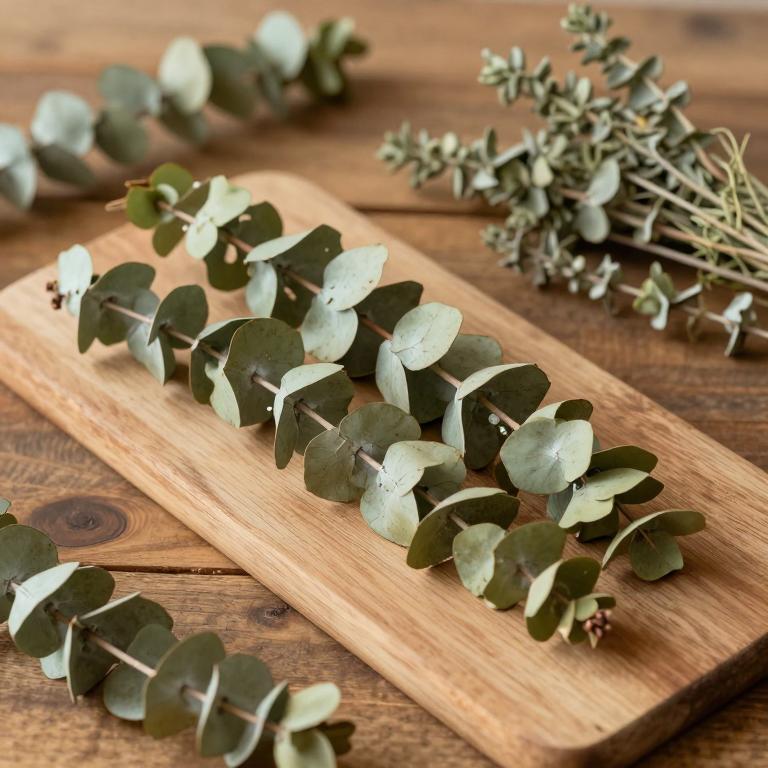
Scientifically known as Eucalyptus macrocarpa, is a resilient shrub native to Western Australia. Renowned for its large, woody fruits and distinctive leaves, this species offers significant therapeutic potential. Its essential oils possess potent antimicrobial and anti-inflammatory properties, making it a valuable subject for studying natural medicinal remedies.
- Family
- Not available
- Native range
- Australasia
- Parts used
- Leaf
- Common names
- Not available
- Scientific synonyms
- Not available
Names and Synonyms
Scientific Names
Accepted name
Eucalyptus macrocarpaDistribution
This plant is a rare species with a very restricted geographical range. It is found exclusively within the continent of Australia. More specifically, its natural habitat is limited to the state of Western Australia. Because it is endemic to this specific region, it does not occur naturally anywhere else in the world. This localized distribution makes the species a significant subject for conservation efforts within its native territory.
| Region | Area |
|---|---|
| Australia | Western Australia |
Sources: The World Checklist of Vascular Plants (WCVP)
Botanical Identification
Life history
The life history of Eucalyptus macrocarpa is characterized by its classification as a phanerophyte, specifically exhibiting traits of both phanerophyte and nanophanerophyte life forms. As a woody perennial, it maintains its perennating buds well above the ground level, allowing it to withstand environmental fluctuations and persist through various seasonal cycles. Its growth strategy involves the development of a robust structural framework that supports its large, terminal inflorescences and distinctive woody capsules. This phanerophyte life history enables the species to establish a stable presence in its native habitats, utilizing its elevated bud positions to ensure survival and continued reproductive capacity over many years.
- Life form :
- phanerophyte
Morphology
The morphology of Eucalyptus macrocarpa is characterized by its growth form as a woody tree that functions as a self-supporting, independent organism. It is a terrestrial species, lacking aquatic or epiphytic tendencies, and maintains a growth habit that does not require climbing structures. In terms of stature, the plant exhibits a height ranging from a minimum of 0.8 meters to a maximum of 5 meters.
- Aquatic :
- terrestrial
- Climber :
- self-supporting
- Epiphyte :
- terrestrial
- Growth form :
- tree
- Parasite :
- independent
- Plant height max:
- 5 m
- Plant height min:
- 0.8 m
- Woodiness :
- woody
Physiology
The physiology of Eucalyptus macrocarpa is fundamentally characterized by its utilization of the C3 photosynthetic pathway, a mechanism wherein carbon dioxide is fixed directly into a three-carbon compound during the initial stages of the Calvin cycle. This metabolic strategy dictates the plant's efficiency in gas exchange and water use, as the reliance on stomatal conductance for CO2 uptake necessitates a physiological balance between photosynthetic gain and transpirational water loss. To optimize this process in its native arid and semi-arid environments, the plant exhibits specialized physiological adaptations, including sclerophyllous leaf structures that minimize cellular damage and regulate internal water potential. Furthermore, the metabolic processes within its tissues are tightly coupled with its ability to maintain osmotic adjustment, allowing the C3 pathway to remain functional even under fluctuating environmental stressors and limited moisture availability.
- Photosynthetic pathway :
- C3
Reproduction
The reproduction of Eucalyptus macrocarpa is characterized by the production of specialized seeds that exhibit significant variability in their physical dimensions. The seed mass of this species is notably diverse, with a recorded minimum mass of 0.00407 g and a maximum mass reaching up to 0.03846 g. When considering the overall population, the seed mass maintains a mean value of 0.01008 g, reflecting a distribution of reproductive units that allows for varying levels of nutrient storage and dispersal potential within its environment.
- Seed mass max:
- 0.03846 g
- Seed mass mean:
- 0.01008 g
- Seed mass min:
- 0.00407 g
Sources: Global Inventory of Floras and Traits (GIFT)
Plant Parts
Eucalyptus macrocarpa has 1 reported plant parts identified across 1 scientific publications and several other databases that are studied for medicinal purposes. The most consistently reported plant part include leaf.
| Plant part | Supporting sources | Consensus |
|---|---|---|
| Leaf | 1 supporting sources | ★☆☆☆☆ |
Leaf
- Bioscience, biotechnology, and biochemistry