Eucalyptus leucoxylon
Eucalyptus leucoxylon · Accepted scientific name
Scientific literature: Very Extensive (250 studies) · ★★★★★
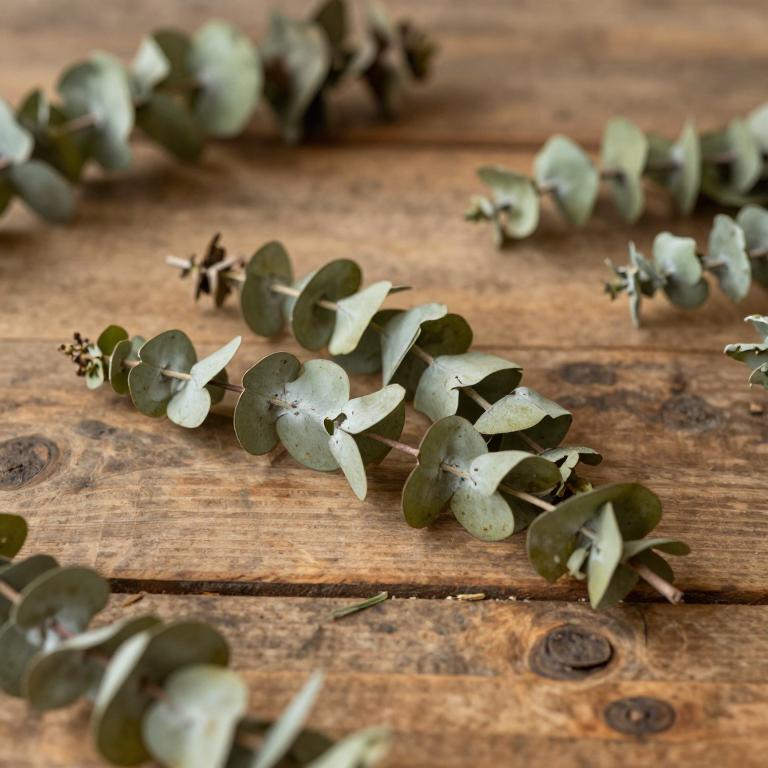
Eucalyptus leucoxylon, scientifically known as Eucalyptus leucoxylon, is a resilient medicinal plant native to specific Australian ecosystems. Renowned for its potent essential oils, it serves as a traditional remedy for respiratory ailments, skin irritations, and inflammation. Its unique chemical properties make it a valuable resource in herbal pharmacology.
- Family
- Not available
- Native range
- Africa
- Parts used
- Not available
- Common names
- Not available
- Scientific synonyms
- Not available
Names and Synonyms
Scientific Names
Accepted name
Eucalyptus leucoxylonDistribution
This plant exhibits a wide geographical distribution spanning two different continents. In East Tropical Africa, it can be found growing within the borders of Kenya and Tanzania. Additionally, the species is well-established across various regions of Australia. Specifically, it inhabits the states of New South Wales, South Australia, and Victoria. These diverse locations demonstrate the plant's ability to thrive in different environmental settings.
| Region | Area |
|---|---|
| East Tropical Africa | Kenya |
| East Tropical Africa | Tanzania |
| Australia | New South Wales |
| Australia | South Australia |
| Australia | Victoria |
| Australia | Western Australia |
Sources: The World Checklist of Vascular Plants (WCVP)
Botanical Identification
Life history
The life history of Eucalyptus leucoxylon is characterized by a perennial lifecycle, allowing the plant to persist in its environment over many years. As a phanerophyte, its perennating buds are borne high above the ground on woody stems, a life form trait that enables it to maintain structural dominance within its ecosystem. This classification as a phanerophyte is consistent across its developmental stages, ensuring that its vital organs remain protected and capable of supporting sustained growth throughout its long-lived existence.
- Life form :
- phanerophyte
- Lifecycle :
- perennial
Morphology
The morphology of Eucalyptus leucoxylon is characterized by its robust growth form as a woody tree, reaching a mean height of 15 m and potentially attaining a maximum height of 25 m. As a self-supporting plant, it does not exhibit climbing behavior and functions as an independent organism rather than a parasite. This species is strictly terrestrial in its ecological niche, neither possessing aquatic nor epiphytic tendencies.
- Aquatic :
- terrestrial
- Climber :
- self-supporting
- Epiphyte :
- terrestrial
- Growth form :
- tree
- Parasite :
- independent
- Plant height max:
- 25 m
- Plant height mean:
- 15 m
- Woodiness :
- woody
Physiology
The physiology of Eucalyptus leucoxylon is characterized by its specialized carbon fixation processes and distinct foliar morphology. As a plant utilizing the C3 photosynthetic pathway, it undergoes carbon fixation through the Calvin cycle, which is typical for many woody species in its genus. Its leaves exhibit a specific dimensional range that facilitates efficient gas exchange and light interception; the leaf length typically varies between a minimum of 8 cm and a maximum of 15 cm. Complementing this length, the leaf width is relatively narrow, ranging from a minimum of 1 cm to a maximum of 1.8 cm, a structural configuration that influences the plant's transpiration rates and overall metabolic efficiency within its ecological niche.
- Leaf length max:
- 15 cm
- Leaf length min:
- 8 cm
- Leaf width max:
- 1.8 cm
- Leaf width min:
- 1 cm
- Photosynthetic pathway :
- C3
Reproduction
The reproduction of Eucalyptus leucoxylon is characterized by the production of seeds that exhibit significant variability in their physical dimensions. The seed mass is notably small, with a recorded mean value of 0.016137 g. Within the population, the mass of individual seeds fluctuates across a specific range, reaching a maximum value of 0.00487 g and a minimum value of 0.00058 g. This variation in seed mass suggests a diverse dispersal potential and varying nutrient reserves within the reproductive output of the species.
- Seed mass max:
- 0.00487 g
- Seed mass mean:
- 0.016137 g
- Seed mass min:
- 0.00058 g
Sources: Global Inventory of Floras and Traits (GIFT)
Chemicals
Eucalyptus leucoxylon has 74 reported phytochemicals identified across 0 scientific publications and several other databases. The most consistently reported chemicals include 1,8-Cineole, A-MUUROLENE, ALPHA-PHELLANDRENE, ALPHA-PINENE, ALPHA-SELINENE.
| Chemical | Supporting sources | Consensus |
|---|---|---|
| 1,8-Cineole | 1 supporting sources | ★☆☆☆☆ |
| A-MUUROLENE | 1 supporting sources | ★☆☆☆☆ |
| ALPHA-PHELLANDRENE | 1 supporting sources | ★☆☆☆☆ |
| ALPHA-PINENE | 1 supporting sources | ★☆☆☆☆ |
| ALPHA-SELINENE | 1 supporting sources | ★☆☆☆☆ |
| Allo-Aromadendrene | 1 supporting sources | ★☆☆☆☆ |
| Aromadendrene | 1 supporting sources | ★☆☆☆☆ |
| BETA-CARYOPHYLLENE | 1 supporting sources | ★☆☆☆☆ |
| BETA-ELEMENE | 1 supporting sources | ★☆☆☆☆ |
| BETA-PHELLANDRENE | 1 supporting sources | ★☆☆☆☆ |
1,8-Cineole
- Dr. Duke
A-MUUROLENE
- Dr. Duke
ALPHA-PHELLANDRENE
- Dr. Duke
ALPHA-PINENE
- Dr. Duke
ALPHA-SELINENE
- Dr. Duke
Allo-Aromadendrene
- Dr. Duke
Aromadendrene
- Dr. Duke
BETA-CARYOPHYLLENE
- Dr. Duke
BETA-ELEMENE
- Dr. Duke
BETA-PHELLANDRENE
- Dr. Duke
Activities
Eucalyptus leucoxylon has 176 reported activities identified across 0 scientific publications and several other databases. The most consistently reported activities include (-)-Chronotropic, (-)-Inotropic, ACE-Inhibitor, AChE-Inhibitor, Acaricide.
| Activity | Supporting sources | Consensus |
|---|---|---|
| (-)-Chronotropic | 1 supporting sources | ★☆☆☆☆ |
| (-)-Inotropic | 1 supporting sources | ★☆☆☆☆ |
| ACE-Inhibitor | 1 supporting sources | ★☆☆☆☆ |
| AChE-Inhibitor | 1 supporting sources | ★☆☆☆☆ |
| Acaricide | 1 supporting sources | ★☆☆☆☆ |
| Aldose-Reductase-Inhibitor | 1 supporting sources | ★☆☆☆☆ |
| Allelochemic | 1 supporting sources | ★☆☆☆☆ |
| Allelopathic | 1 supporting sources | ★☆☆☆☆ |
| Allergenic | 1 supporting sources | ★☆☆☆☆ |
| Analgesic | 1 supporting sources | ★☆☆☆☆ |
(-)-Chronotropic
- Dr. Duke
(-)-Inotropic
- Dr. Duke
ACE-Inhibitor
- Dr. Duke
AChE-Inhibitor
- Dr. Duke
Acaricide
- Dr. Duke
Aldose-Reductase-Inhibitor
- Dr. Duke
Allelochemic
- Dr. Duke
Allelopathic
- Dr. Duke
Allergenic
- Dr. Duke
Analgesic
- Dr. Duke