Eucalyptus lansdowneana
Eucalyptus lansdowneana · Accepted scientific name
Scientific literature: Very Extensive (248 studies) · ★★★★★
Scientifically known as Eucalyptus lansdowneanar, is a versatile medicinal plant celebrated for its potent therapeutic properties. Renowned for its aromatic leaves, it serves as a powerful natural remedy for respiratory ailments, inflammation, and skin irritations. Its essential oils offer soothing relief, making it a cornerstone in traditional herbal medicine.
- Family
- Not available
- Native range
- Australasia
- Parts used
- Not available
- Common names
- Not available
- Scientific synonyms
- Not available
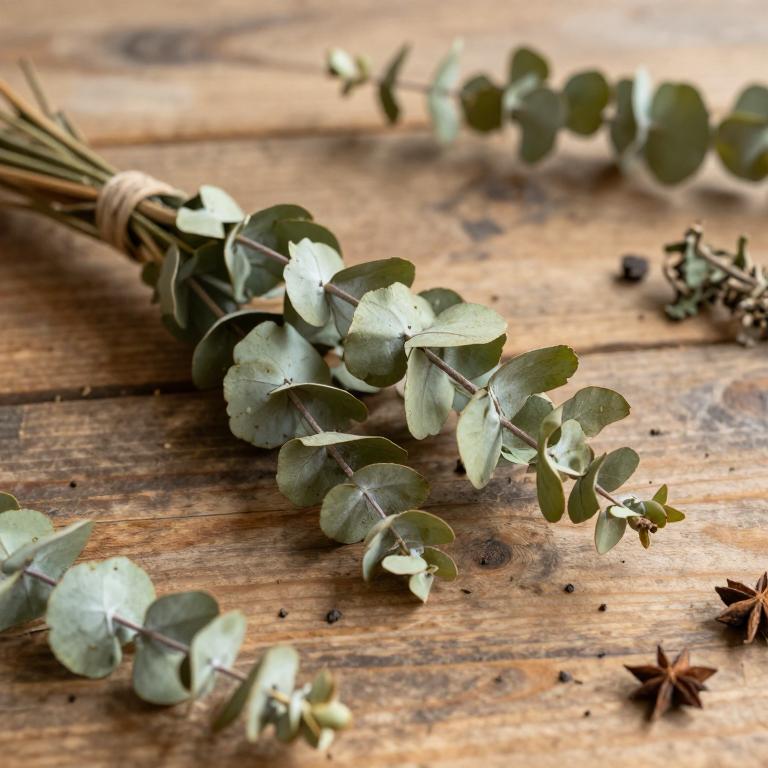
Names and Synonyms
Scientific Names
Accepted name
Eucalyptus lansdowneanaDistribution
This plant, known scientifically as Eucalyptus lansdowniana, exhibits a very specific and restricted geographical range. Its natural distribution is confined primarily to the continent of Australia. Within this vast landmass, the species is specifically located in the region of South Australia. This limited habitat suggests that the plant thrives under very particular environmental conditions found in that area. Consequently, its presence is a unique characteristic of the South Australian landscape.
| Region | Area |
|---|---|
| Australia | South Australia |
Sources: The World Checklist of Vascular Plants (WCVP)
Botanical Identification
Life history
The life history of Eucalyptus lansdowniana is characterized by its classification as a phanerophyte, specifically exhibiting life forms as both a phanerophyte and a nanophanerophyte. As a phanerophyte, its reproductive buds and vegetative structures are elevated well above the ground level, protected by woody stems or branches, which allows it to dominate its ecological niche through significant vertical growth. The presence of the nanophanerophyte trait indicates that while it primarily functions as a larger woody plant, it can also manifest growth forms where the buds are held relatively close to the ground or on shorter woody shoots. This life history strategy enables the species to establish a persistent perennial presence, utilizing its elevated biomass to access sunlight and withstand environmental fluctuations, ensuring long-term survival through its woody architectural structure.
- Life form :
- phanerophyte
Morphology
The morphology of Eucalyptus lansdowniana is characterized by its growth form as a tree, exhibiting a robust and structural habit. It is a woody plant, developing significant lignified tissue to support its stature and height. Unlike climbing species, it is entirely self-supporting and does not function as a climber. Furthermore, the plant is an independent organism, neither acting as a parasite nor as an epiphyte, instead maintaining a terrestrial life habit rooted in the soil.
- Climber :
- self-supporting
- Epiphyte :
- terrestrial
- Growth form :
- tree
- Parasite :
- independent
- Woodiness :
- woody
Physiology
The physiology of Eucalyptus lansdowniana is characterized by a highly efficient metabolic framework adapted for rapid growth and resource acquisition. A fundamental aspect of its metabolic processes is its photosynthetic pathway, which follows the C3 mechanism. Through this C3 pathway, the plant utilizes the enzyme Rubisco to fix atmospheric carbon dioxide directly into organic compounds during the Calvin cycle, a process that is highly effective under the temperate to subtropical light intensities typically found in its habitat. This carbon fixation is closely integrated with specialized stomatal regulation and water-use efficiency mechanisms, allowing the plant to balance gas exchange with transpiration rates. Furthermore, the physiological performance of the species is supported by robust vascular architecture and nutrient transport systems that facilitate the translocation of photosynthates from the leaves to various storage organs, ensuring sustained vegetative development and resilience against environmental fluctuations.
- Photosynthetic pathway :
- C3
Reproduction
The reproduction of Eucalyptus lansdownean is characterized by the production of specialized seeds that exhibit specific morphological and mass variations. The seed mass of this species is notably small, with a mean mass of 0.001787 g. However, there is a distinct range of variation within the population, as the seed mass can fluctuate from a minimum of 0.00043 g to a maximum of 0.003144 g. This variability in seed weight is a critical component of its reproductive strategy and dispersal potential.
- Seed mass max:
- 0.003144 g
- Seed mass mean:
- 0.001787 g
- Seed mass min:
- 0.00043 g
Sources: Global Inventory of Floras and Traits (GIFT)
Chemicals
Eucalyptus lansdowneana has 73 reported phytochemicals identified across 0 scientific publications and several other databases. The most consistently reported chemicals include 1,8-Cineole, A-MUUROLENE, ALPHA-PINENE, ALPHA-SELINENE, Allo-Aromadendrene.
| Chemical | Supporting sources | Consensus |
|---|---|---|
| 1,8-Cineole | 1 supporting sources | ★☆☆☆☆ |
| A-MUUROLENE | 1 supporting sources | ★☆☆☆☆ |
| ALPHA-PINENE | 1 supporting sources | ★☆☆☆☆ |
| ALPHA-SELINENE | 1 supporting sources | ★☆☆☆☆ |
| Allo-Aromadendrene | 1 supporting sources | ★☆☆☆☆ |
| Aromadendrene | 1 supporting sources | ★☆☆☆☆ |
| BETA-CARYOPHYLLENE | 1 supporting sources | ★☆☆☆☆ |
| BETA-ELEMENE | 1 supporting sources | ★☆☆☆☆ |
| BETA-PHELLANDRENE | 1 supporting sources | ★☆☆☆☆ |
| BETA-PINENE | 1 supporting sources | ★☆☆☆☆ |
1,8-Cineole
- Dr. Duke
A-MUUROLENE
- Dr. Duke
ALPHA-PINENE
- Dr. Duke
ALPHA-SELINENE
- Dr. Duke
Allo-Aromadendrene
- Dr. Duke
Aromadendrene
- Dr. Duke
BETA-CARYOPHYLLENE
- Dr. Duke
BETA-ELEMENE
- Dr. Duke
BETA-PHELLANDRENE
- Dr. Duke
BETA-PINENE
- Dr. Duke
Activities
Eucalyptus lansdowneana has 175 reported activities identified across 0 scientific publications and several other databases. The most consistently reported activities include (-)-Chronotropic, (-)-Inotropic, ACE-Inhibitor, AChE-Inhibitor, Acaricide.
| Activity | Supporting sources | Consensus |
|---|---|---|
| (-)-Chronotropic | 1 supporting sources | ★☆☆☆☆ |
| (-)-Inotropic | 1 supporting sources | ★☆☆☆☆ |
| ACE-Inhibitor | 1 supporting sources | ★☆☆☆☆ |
| AChE-Inhibitor | 1 supporting sources | ★☆☆☆☆ |
| Acaricide | 1 supporting sources | ★☆☆☆☆ |
| Aldose-Reductase-Inhibitor | 1 supporting sources | ★☆☆☆☆ |
| Allelochemic | 1 supporting sources | ★☆☆☆☆ |
| Allelopathic | 1 supporting sources | ★☆☆☆☆ |
| Allergenic | 1 supporting sources | ★☆☆☆☆ |
| Analgesic | 1 supporting sources | ★☆☆☆☆ |
(-)-Chronotropic
- Dr. Duke
(-)-Inotropic
- Dr. Duke
ACE-Inhibitor
- Dr. Duke
AChE-Inhibitor
- Dr. Duke
Acaricide
- Dr. Duke
Aldose-Reductase-Inhibitor
- Dr. Duke
Allelochemic
- Dr. Duke
Allelopathic
- Dr. Duke
Allergenic
- Dr. Duke
Analgesic
- Dr. Duke