Eucalyptus intertexta
Eucalyptus intertexta · Accepted scientific name
Scientific literature: Very Extensive (250 studies) · ★★★★★
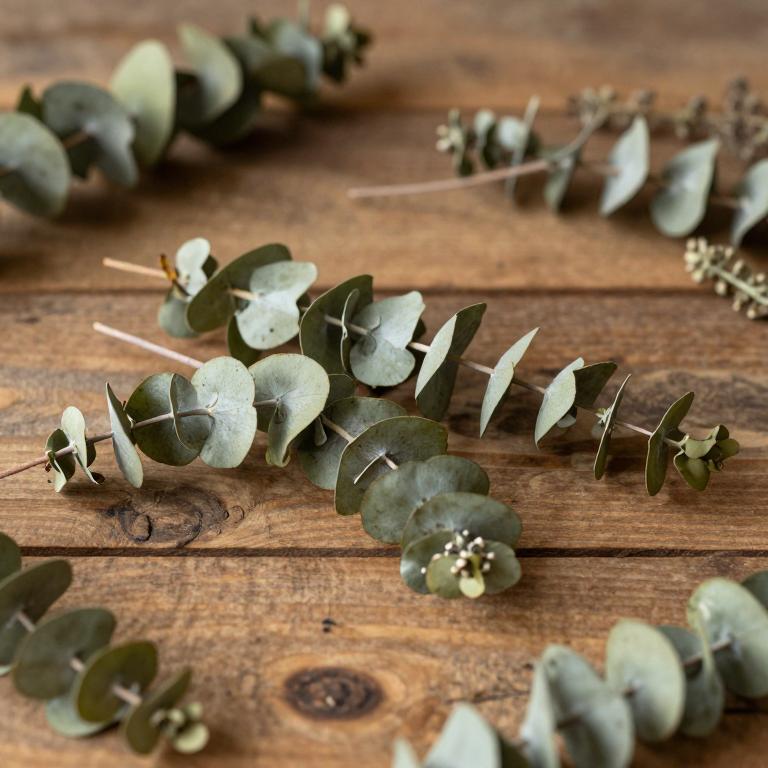
Eucalyptus intertexta, scientifically known as Eucalyptus intertexta, is a distinctive medicinal plant valued for its therapeutic properties. Native to specific Australian ecosystems, its leaves contain essential oils frequently used to alleviate respiratory congestion, reduce inflammation, and provide antiseptic benefits, offering a natural remedy for various common ailments.
- Family
- Not available
- Native range
- Australasia
- Parts used
- Not available
- Common names
- Not available
- Scientific synonyms
- Not available
Names and Synonyms
Scientific Names
Accepted name
Eucalyptus intertextaDistribution
This plant is natively distributed across various regions of Australia. Specifically, it can be found growing within the state of New South Wales. Its presence also extends into the tropical landscapes of the Northern Territory. Furthermore, the species is located throughout parts of Queensland and South Australia. Finally, its geographical range reaches into the vast territories of Western Australia.
| Region | Area |
|---|---|
| Australia | New South Wales |
| Australia | Northern Territory |
| Australia | Queensland |
| Australia | South Australia |
| Australia | Western Australia |
Sources: The World Checklist of Vascular Plants (WCVP)
Botanical Identification
Life history
The life history of Eucalyptus intertexta is characterized by its classification as a perennial organism, ensuring its persistence across multiple growing seasons. As a phanerophyte, its reproductive buds and vital structures are maintained well above the ground on woody stems, a trait that defines its structural life form. This plant maintains an evergreen deciduousness, retaining its foliage throughout the year rather than shedding it seasonally. Throughout its developmental stages, it functions as a robust phanerophyte, utilizing its elevated architecture to thrive within its ecological niche.
- Deciduousness :
- evergreen
- Life form :
- phanerophyte
- Lifecycle :
- perennial
Morphology
The morphology of Eucalyptus intertexta is characterized by its growth form as a woody tree, which functions as a self-supporting structure rather than a climber. As a terrestrial species, it is neither aquatic nor epiphytic, maintaining an independent existence without being a parasite. In terms of stature, the plant exhibits significant vertical development, with heights ranging from a minimum of 4 m to a maximum of 30 m, maintaining an average plant height of approximately 20 m.
- Aquatic :
- terrestrial
- Climber :
- self-supporting
- Epiphyte :
- terrestrial
- Growth form :
- tree
- Parasite :
- independent
- Plant height max:
- 30 m
- Plant height mean:
- 20 m
- Plant height min:
- 4 m
- Woodiness :
- woody
Physiology
The physiology of Eucalyptus intertexta is characterized by a C3 photosynthetic pathway, a common metabolic strategy among many woody perennials that involves the direct fixation of carbon dioxide via the enzyme RuBisCO. Unlike plants utilizing C4 or CAM pathways, this species relies on the Calvin cycle to produce carbohydrates, a process that typically requires regulated stomatal conductance to balance carbon uptake with transpiration rates. Furthermore, the species does not function as a nitrogen fixer, meaning it lacks the specialized symbiotic relationships with diazotrophic bacteria, such as Rhizobium or Frankia, necessary to convert atmospheric nitrogen into bioavailable forms. Consequently, its nutritional physiology is dependent on the uptake of nitrogenous compounds directly from the soil solution through its root system.
- Nitrogen fixer :
- no
- Photosynthetic pathway :
- C3
Reproduction
The reproduction of Eucalyptus intertexta is characterized by a highly diverse dispersal syndrome, utilizing an unspecialized strategy that encompasses anemochory, zoochory, autochory, and hydrochory to facilitate seedling establishment. The seeds produced by this species exhibit significant variability in size and weight to accommodate these different modes of movement. Specifically, the seed mass ranges from a minimum of 0.00021 g to a maximum of 0.00699 g, resulting in an average seed mass of approximately 0.002529333 g. This range in mass suggests a reproductive strategy capable of both wind-driven transport and more localized or water-assisted dispersal mechanisms.
- Dispersal syndrome :
- unspecialized
- Seed mass max:
- 0.00699 g
- Seed mass mean:
- 0.002529333 g
- Seed mass min:
- 0.00021 g
Sources: Global Inventory of Floras and Traits (GIFT)
Chemicals
Eucalyptus intertexta has 74 reported phytochemicals identified across 0 scientific publications and several other databases. The most consistently reported chemicals include 1,8-Cineole, A-MUUROLENE, ALPHA-PHELLANDRENE, ALPHA-PINENE, ALPHA-SELINENE.
| Chemical | Supporting sources | Consensus |
|---|---|---|
| 1,8-Cineole | 1 supporting sources | ★☆☆☆☆ |
| A-MUUROLENE | 1 supporting sources | ★☆☆☆☆ |
| ALPHA-PHELLANDRENE | 1 supporting sources | ★☆☆☆☆ |
| ALPHA-PINENE | 1 supporting sources | ★☆☆☆☆ |
| ALPHA-SELINENE | 1 supporting sources | ★☆☆☆☆ |
| Allo-Aromadendrene | 1 supporting sources | ★☆☆☆☆ |
| Aromadendrene | 1 supporting sources | ★☆☆☆☆ |
| BETA-CARYOPHYLLENE | 1 supporting sources | ★☆☆☆☆ |
| BETA-ELEMENE | 1 supporting sources | ★☆☆☆☆ |
| BETA-PHELLANDRENE | 1 supporting sources | ★☆☆☆☆ |
1,8-Cineole
- Dr. Duke
A-MUUROLENE
- Dr. Duke
ALPHA-PHELLANDRENE
- Dr. Duke
ALPHA-PINENE
- Dr. Duke
ALPHA-SELINENE
- Dr. Duke
Allo-Aromadendrene
- Dr. Duke
Aromadendrene
- Dr. Duke
BETA-CARYOPHYLLENE
- Dr. Duke
BETA-ELEMENE
- Dr. Duke
BETA-PHELLANDRENE
- Dr. Duke
Activities
Eucalyptus intertexta has 176 reported activities identified across 0 scientific publications and several other databases. The most consistently reported activities include (-)-Chronotropic, (-)-Inotropic, ACE-Inhibitor, AChE-Inhibitor, Acaricide.
| Activity | Supporting sources | Consensus |
|---|---|---|
| (-)-Chronotropic | 1 supporting sources | ★☆☆☆☆ |
| (-)-Inotropic | 1 supporting sources | ★☆☆☆☆ |
| ACE-Inhibitor | 1 supporting sources | ★☆☆☆☆ |
| AChE-Inhibitor | 1 supporting sources | ★☆☆☆☆ |
| Acaricide | 1 supporting sources | ★☆☆☆☆ |
| Aldose-Reductase-Inhibitor | 1 supporting sources | ★☆☆☆☆ |
| Allelochemic | 1 supporting sources | ★☆☆☆☆ |
| Allelopathic | 1 supporting sources | ★☆☆☆☆ |
| Allergenic | 1 supporting sources | ★☆☆☆☆ |
| Analgesic | 1 supporting sources | ★☆☆☆☆ |
(-)-Chronotropic
- Dr. Duke
(-)-Inotropic
- Dr. Duke
ACE-Inhibitor
- Dr. Duke
AChE-Inhibitor
- Dr. Duke
Acaricide
- Dr. Duke
Aldose-Reductase-Inhibitor
- Dr. Duke
Allelochemic
- Dr. Duke
Allelopathic
- Dr. Duke
Allergenic
- Dr. Duke
Analgesic
- Dr. Duke