Eucalyptus incrassata
Eucalyptus incrassata · Accepted scientific name
Scientific literature: Very Extensive (215 studies) · ★★★★★
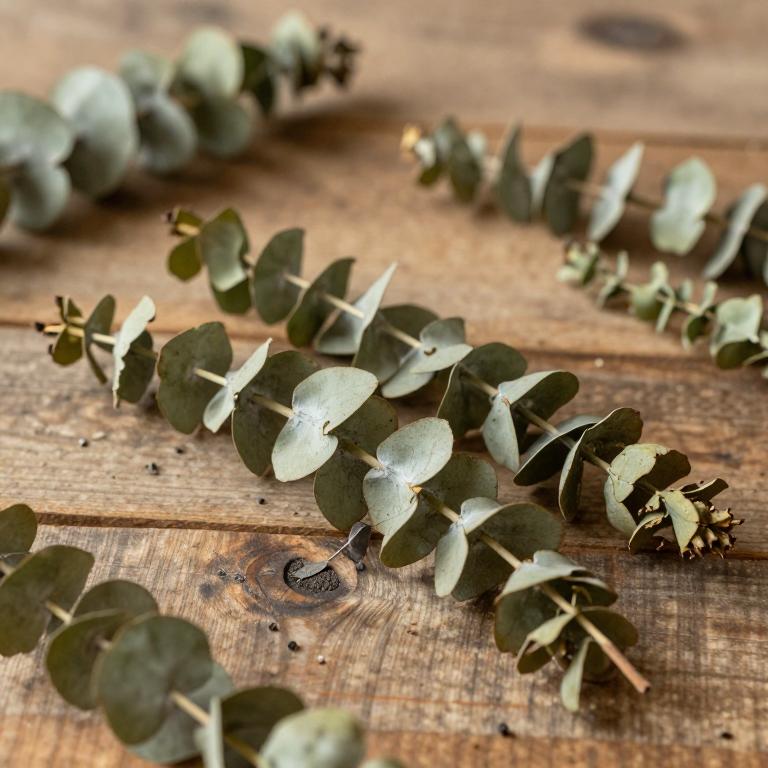
Eucalyptus incrassata, scientifically known as Eucalyptus incrassata, is a resilient medicinal shrub native to Australia. Renowned for its aromatic foliage, this plant is traditionally utilized in various herbal remedies. Its essential oils possess potent antimicrobial and anti-inflammatory properties, making it a valuable resource in natural therapeutic practices worldwide.
- Family
- Not available
- Native range
- Australasia
- Parts used
- Not available
- Common names
- Not available
- Scientific synonyms
- Not available
Names and Synonyms
Scientific Names
Accepted name
Eucalyptus incrassataDistribution
This plant, known as Eucalyptus incrassata, possesses a distribution spanning several key regions across the Australian continent. It is commonly found growing within the state of New South Wales. Additionally, its presence extends southward into the territory of Victoria. The species can also be located within the borders of South Australia. Finally, its geographical range reaches across to include parts of Western Australia.
| Region | Area |
|---|---|
| Australia | New South Wales |
| Australia | South Australia |
| Australia | Victoria |
| Australia | Western Australia |
Sources: The World Checklist of Vascular Plants (WCVP)
Botanical Identification
Life history
The life history of Eucalyptus incrassata is characterized by its classification as a phanerophyte, a growth form where the perennating buds are elevated well above the ground level on woody stems. Within this classification, it exhibits specific life form dynamics that align with the phanerophyte and nanophanerophyte categories, indicating its ability to maintain structural integrity and reproductive potential through perennial woody architecture. This life strategy allows the plant to endure seasonal environmental fluctuations by protecting its vital meristematic tissues within elevated branches, ensuring survival through varying climatic conditions. As a woody perennial, its life cycle involves a long-term investment in biomass, utilizing its phanerophyte structure to compete for light and resources within its ecosystem.
- Life form :
- phanerophyte
Morphology
The morphology of Eucalyptus incrassata is characterized by its growth form as a woody tree, exhibiting a self-supporting structure that does not rely on climbing or parasitic mechanisms. As an independent organism, it functions as a terrestrial plant, maintaining a non-aquatic and non-epiphytic lifestyle. The physical stature of the species is defined by a plant height that ranges from a minimum of 2 meters to a maximum of 5 meters, supported by its robust, woody stem.
- Aquatic :
- terrestrial
- Climber :
- self-supporting
- Epiphyte :
- terrestrial
- Growth form :
- tree
- Parasite :
- independent
- Plant height max:
- 5 m
- Plant height min:
- 2 m
- Woodiness :
- woody
Physiology
The physiology of Eucalyptus incrassata is characterized by a C3 photosynthetic pathway, a metabolic strategy common among many woody species that optimizes carbon fixation under moderate environmental conditions. The morphological aspects of its photosynthetic organs are defined by specific leaf dimensions, with leaf lengths ranging from a minimum of 6 cm to a maximum of 11 cm. Complementing this longitudinal variation, the leaf width fluctuates between a minimum of 1.5 cm and a maximum of 2.5 cm, parameters that collectively influence the plant's surface area for gas exchange and light interception.
- Leaf length max:
- 11 cm
- Leaf length min:
- 6 cm
- Leaf width max:
- 2.5 cm
- Leaf width min:
- 1.5 cm
- Photosynthetic pathway :
- C3
Reproduction
The reproduction of Eucalyptus incrassata is characterized by specific seed morphological traits that influence its dispersal and establishment potential. The seed mass of this species exhibits significant variability, with a recorded mean mass of 0.0060875 g. This variation is further evidenced by the range of individual seed weights, which spans from a minimum of 0.00136 g to a maximum of 0.0357 g. Such fluctuations in seed mass are critical factors in the reproductive success and ecological distribution of the species within its habitat.
- Seed mass max:
- 0.0357 g
- Seed mass mean:
- 0.0060875 g
- Seed mass min:
- 0.00136 g
Sources: Global Inventory of Floras and Traits (GIFT)
Chemicals
Eucalyptus incrassata has 56 reported phytochemicals identified across 0 scientific publications and several other databases. The most consistently reported chemicals include 1,8-Cineole, ALPHA-PHELLANDRENE, ALPHA-PINENE, ALPHA-SELINENE, Allo-Aromadendrene.
| Chemical | Supporting sources | Consensus |
|---|---|---|
| 1,8-Cineole | 1 supporting sources | ★☆☆☆☆ |
| ALPHA-PHELLANDRENE | 1 supporting sources | ★☆☆☆☆ |
| ALPHA-PINENE | 1 supporting sources | ★☆☆☆☆ |
| ALPHA-SELINENE | 1 supporting sources | ★☆☆☆☆ |
| Allo-Aromadendrene | 1 supporting sources | ★☆☆☆☆ |
| Aromadendrene | 1 supporting sources | ★☆☆☆☆ |
| BETA-CARYOPHYLLENE | 1 supporting sources | ★☆☆☆☆ |
| BETA-ELEMENE | 1 supporting sources | ★☆☆☆☆ |
| BETA-PHELLANDRENE | 1 supporting sources | ★☆☆☆☆ |
| BETA-PINENE | 1 supporting sources | ★☆☆☆☆ |
1,8-Cineole
- Dr. Duke
ALPHA-PHELLANDRENE
- Dr. Duke
ALPHA-PINENE
- Dr. Duke
ALPHA-SELINENE
- Dr. Duke
Allo-Aromadendrene
- Dr. Duke
Aromadendrene
- Dr. Duke
BETA-CARYOPHYLLENE
- Dr. Duke
BETA-ELEMENE
- Dr. Duke
BETA-PHELLANDRENE
- Dr. Duke
BETA-PINENE
- Dr. Duke
Activities
Eucalyptus incrassata has 159 reported activities identified across 0 scientific publications and several other databases. The most consistently reported activities include (-)-Chronotropic, (-)-Inotropic, ACE-Inhibitor, AChE-Inhibitor, Acaricide.
| Activity | Supporting sources | Consensus |
|---|---|---|
| (-)-Chronotropic | 1 supporting sources | ★☆☆☆☆ |
| (-)-Inotropic | 1 supporting sources | ★☆☆☆☆ |
| ACE-Inhibitor | 1 supporting sources | ★☆☆☆☆ |
| AChE-Inhibitor | 1 supporting sources | ★☆☆☆☆ |
| Acaricide | 1 supporting sources | ★☆☆☆☆ |
| Aldose-Reductase-Inhibitor | 1 supporting sources | ★☆☆☆☆ |
| Allelochemic | 1 supporting sources | ★☆☆☆☆ |
| Allelopathic | 1 supporting sources | ★☆☆☆☆ |
| Allergenic | 1 supporting sources | ★☆☆☆☆ |
| Analgesic | 1 supporting sources | ★☆☆☆☆ |
(-)-Chronotropic
- Dr. Duke
(-)-Inotropic
- Dr. Duke
ACE-Inhibitor
- Dr. Duke
AChE-Inhibitor
- Dr. Duke
Acaricide
- Dr. Duke
Aldose-Reductase-Inhibitor
- Dr. Duke
Allelochemic
- Dr. Duke
Allelopathic
- Dr. Duke
Allergenic
- Dr. Duke
Analgesic
- Dr. Duke