scribbly-gum
Eucalyptus haemastoma · Accepted scientific name
Scientific literature: Very Sparse (2 studies) · ★☆☆☆☆
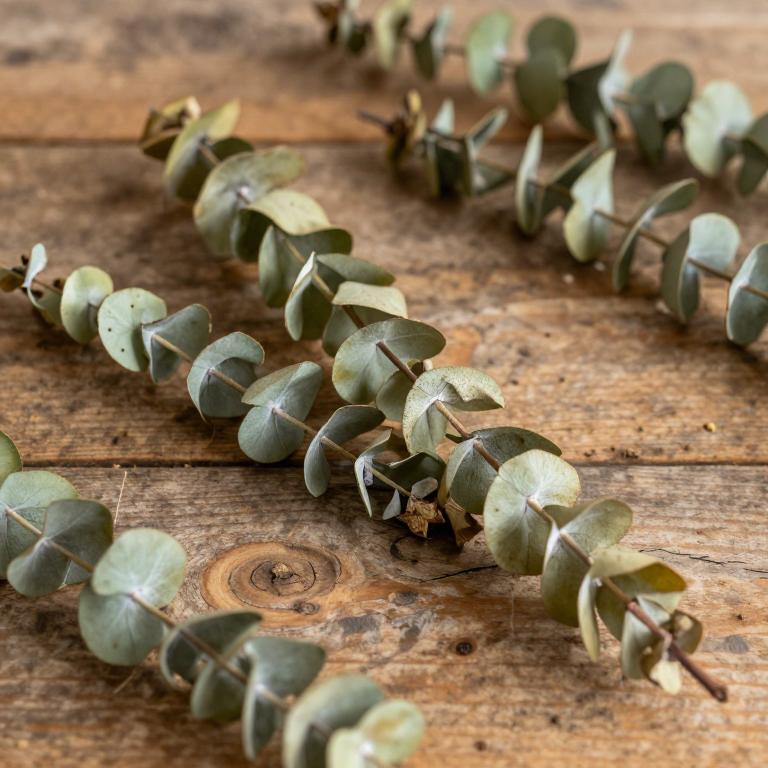
Scribbly-gum, scientifically known as Eucalyptus haemastoma, is a distinctive Australian tree celebrated for its unique, patterned bark. Beyond its aesthetic charm, this species holds medicinal potential, often utilized in traditional practices for its antimicrobial and anti-inflammatory properties, derived from its essential oils, which support respiratory and topical health.
- Family
- Myrtaceae
- Native range
- Australasia
- Parts used
- Not available
- Common names
- Scribbly-Gum · White-Gumm · 3 more
- Scientific synonyms
- Not available
Names and Synonyms
Common Names
- scribbly-gum
- white-gumm
- scribbly gum
- snappy gum
- white gum
Scientific Names
Accepted name
Eucalyptus haemastomaRegional and Traditional Names
French:
- Eucalyptus gribouillé
Sources: Wikidata, Catalogue of Life
Taxonomical Classification
This plant belongs to the kingdom Plantae and the phylum Streptophyta. Within the class Equisetopsida and subclass Magnoliidae, it is classified under the order Myrtales and the family Myrtaceae. Finally, it is identified by the genus Eucalyptus.
| Rank | Classification |
|---|---|
| Kingdom | Plantae |
| Phylum | Streptophyta |
| Class | Equisetopsida |
| Subclass | Magnoliidae |
| Order | Myrtales |
| Family | Myrtaceae |
| Genus | Eucalyptus |
Sources: The World Checklist of Vascular Plants (WCVP)
Distribution
This plant, known scientifically as Eucalyptus haemastoma, possesses a very specific and limited natural range. Its geographical distribution is primarily confined to the continent of Australia. Within this vast landmass, it is most notably found in the state of New South Wales. This localized occurrence suggests that the species is adapted to the particular environmental conditions of this particular region. Consequently, understanding its habitat in New South Wales is essential for its conservation and study.
| Region | Area |
|---|---|
| Australia | New South Wales |
Sources: The World Checklist of Vascular Plants (WCVP)
Botanical Identification
Life history
The life history of Eucalyptus haemastoma is characterized by its classification as a phanerophyte, a growth form where the perennating buds are elevated well above the ground level. Within the various sub-classifications of this life strategy, it functions specifically as a phanerophyte (Life_form_1) and a phanerophyte (Life_form_2), indicating its development into a robust, woody tree structure that relies on elevated meristematic tissue to survive seasonal environmental fluctuations. This life form allows the species to establish a permanent, perennial presence in its habitat, utilizing its elevated canopy to optimize light interception and its woody architecture to endure various climatic stresses.
- Life form :
- phanerophyte
Morphology
The morphology of Eucalyptus haemastoma is characterized by a robust growth form as a tree, exhibiting a predominantly woody structure throughout its development. It functions as an independent organism, neither acting as a parasite nor as an epiphyte, as it maintains a strictly terrestrial life habit. Furthermore, it does not possess climbing tendencies, being entirely self-supporting in its structural integrity.
- Climber :
- self-supporting
- Epiphyte :
- terrestrial
- Growth form :
- tree
- Parasite :
- independent
- Woodiness :
- woody
Physiology
The physiology of Eucalyptus haemastoma is characterized by a metabolic framework centered on a C3 photosynthetic pathway, which governs how the plant captures carbon dioxide and converts it into chemical energy. As a C3 plant, the initial fixation of CO2 occurs via the enzyme RuBisCO within the mesophyll cells, leading to the direct production of a three-carbon compound. This metabolic strategy is intrinsically linked to the plant's water-use efficiency and its ability to manage gas exchange under varying environmental conditions. The efficiency of this photosynthetic process is further influenced by the plant's stomatal conductance and its capacity for transpiration, which are critical for maintaining leaf temperature and driving the nutrient uptake necessary for sustained physiological function.
- Photosynthetic pathway :
- C3
Reproduction
Reproduction in Eucalyptus haemastoma is characterized by the production of specialized seed structures that exhibit specific mass variations essential to its dispersal and germination success. The seeds produced by this species are notably small and lightweight, with a measured mean seed mass of 0.000623 g. Within the population, there is a measurable degree of variability in seed size, ranging from a minimum mass of 0.00047 g to a maximum mass of 0.000776 g. This precise distribution of seed mass plays a critical role in the plant's reproductive strategy, influencing how the progeny are distributed within the environment and their subsequent ability to establish new growth.
- Seed mass max:
- 0.000776 g
- Seed mass mean:
- 0.000623 g
- Seed mass min:
- 0.00047 g
Sources: Global Inventory of Floras and Traits (GIFT)
Activities
Eucalyptus haemastoma has 2 reported activities identified across 0 scientific publications and several other databases. The most consistently reported activities include Antibacterial, Antioxidant.
| Activity | Supporting sources | Consensus |
|---|---|---|
| Antibacterial | 1 supporting sources | ★☆☆☆☆ |
| Antioxidant | 1 supporting sources | ★☆☆☆☆ |
Antibacterial
- Evidence-based complementary and alternative medicine : eCAM
Antioxidant
- Evidence-based complementary and alternative medicine : eCAM
Preparations
Eucalyptus haemastoma has 1 reported preparations identified across 0 scientific publications and several other databases. The most consistently reported preparations include sap.
| Preparation | Supporting sources | Consensus |
|---|---|---|
| Sap | 1 supporting sources | ★☆☆☆☆ |
Sap
- Evidence-based complementary and alternative medicine : eCAM