Flooded Gum
Eucalyptus grandis · Accepted scientific name
Scientific literature: Very Extensive (230 studies) · ★★★★★
Flooded Gum, scientifically known as Eucalyptus grandis, is a fast-growing evergreen tree native to Australia. Renowned for its impressive height and robust timber, it holds significant medicinal value. Its essential oils possess potent antimicrobial, anti-inflammatory, and decongestant properties, making it a vital resource in traditional and modern pharmacology.
- Family
- Myrtaceae
- Native range
- Africa
- Parts used
- Leaf
- Common names
- Flooded-Gum · Rose-Gum · 5 more
- Scientific synonyms
- Eucalyptus Saligna Var. Pallidivalvis
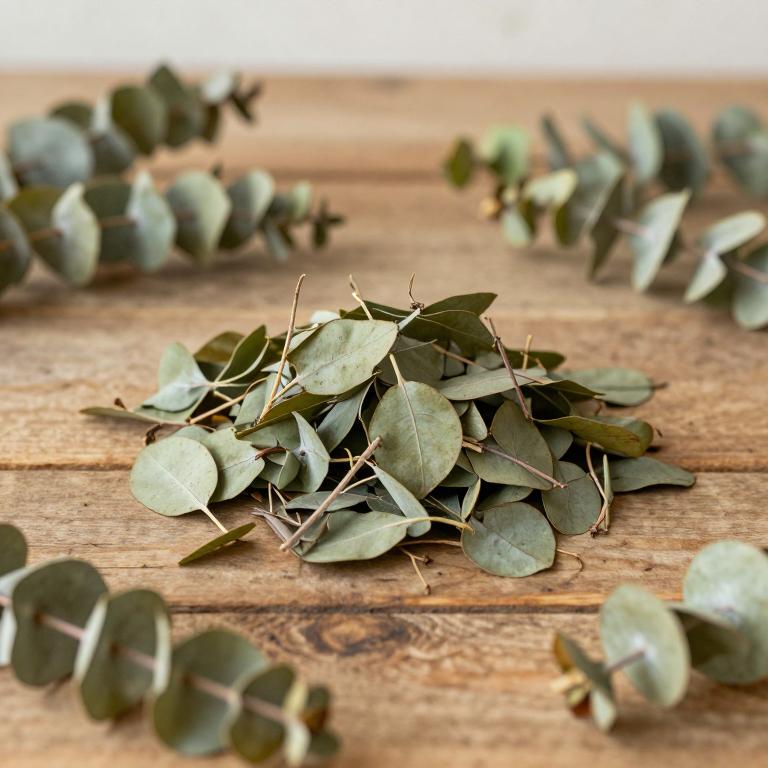
Names and Synonyms
Common Names
- flooded-gum
- rose-gum
- Flooded Gum
- Rose Gum
- saligna gum
- scrub gum
- Blue Gum
Scientific Names
Accepted name
Eucalyptus grandisSynonyms
- Eucalyptus saligna var. pallidivalvis
Regional and Traditional Names
Spanish:
- eucalipto rosado
Sources: Wikidata, Catalogue of Life
Taxonomical Classification
This plant belongs to the kingdom Plantae and is classified within the phylum Streptophyta and class Equisetopsida. It falls under the subclass Magnoliidae and the order Myrtales, placing it in the family Myrtaceae. Finally, it is identified by the genus Eucalyptus.
| Rank | Classification |
|---|---|
| Kingdom | Plantae |
| Phylum | Streptophyta |
| Class | Equisetopsida |
| Subclass | Magnoliidae |
| Order | Myrtales |
| Family | Myrtaceae |
| Genus | Eucalyptus |
Sources: The World Checklist of Vascular Plants (WCVP)
Distribution
This plant, Eucalyptus grandis, exhibits a specific distribution pattern across several key regions of the African continent. In Northern Africa, its presence has been documented within the borders of Morocco. Moving toward the Northeast Tropical Africa region, the species is found in Ethiopia. The distribution extends further into East Tropical Africa, where it is established in Kenya. Finally, the plant is also located within the East Tropical Africa territories of Tanzania and Uganda.
| Region | Area |
|---|---|
| Northern Africa | Morocco |
| Northeast Tropical Africa | Ethiopia |
| East Tropical Africa | Kenya |
| East Tropical Africa | Tanzania |
| East Tropical Africa | Uganda |
| South Tropical Africa | Malawi |
| South Tropical Africa | Zambia |
| South Tropical Africa | Zimbabwe |
| Southern Africa | Cape Provinces |
| Middle Atlantic Ocean | St.Helena |
Sources: The World Checklist of Vascular Plants (WCVP)
Botanical Identification
Ecology
The ecology of Eucalyptus grandis is characterized by its preference for lowland habitats, where it thrives across a broad altitudinal gradient. This species can be found at elevations starting from sea level (0 m AMSL) and extending up to a maximum of 1500 m AMSL. On average, the species is distributed within an elevational range centered around a mean of 1600 m AMSL, reflecting its capacity to adapt to diverse topographical settings within these lowland environments.
- Elevational range max:
- 1500 m AMSL
- Elevational range mean:
- 1600 m AMSL
- Elevational range min:
- 0 m AMSL
- Habitat :
- Lowland
Life history
The life history of Eucalyptus grandis is characterized by its status as a perennial species, allowing it to maintain a long-term presence within its ecosystem. As a phanerophyte, it possesses long-lived above-ground stems that protect its buds during unfavorable conditions, a trait reflected in both its classification as a phanerophyte and its structural development. The plant exhibits an evergreen deciduousness, meaning it retains its foliage throughout the year rather than shedding it seasonally, which supports continuous photosynthetic activity. This combination of a perennial lifecycle and a phanerophyte life form enables the species to achieve significant height and structural dominance in its natural habitat.
- Deciduousness :
- evergreen
- Life form :
- phanerophyte
- Lifecycle :
- perennial
Morphology
The morphology of Eucalyptus grandis is characterized by its robust growth form as a large, woody tree. It is a strictly terrestrial species, functioning as an independent organism without parasitic or epiphytic tendencies. As a self-supporting plant, it does not exhibit climbing or vine-like behaviors. In terms of stature, it is a significant forest species, reaching a mean height of approximately 46.33 meters, with the potential to attain a maximum height of up to 60 meters.
- Aquatic :
- terrestrial
- Climber :
- self-supporting
- Epiphyte :
- terrestrial
- Growth form :
- tree
- Parasite :
- independent
- Plant height max:
- 60 m
- Plant height mean:
- 46.3333333333333 m
- Woodiness :
- woody
Physiology
The physiology of Eucalyptus grandis is characterized by its utilization of the C3 photosynthetic pathway, which governs its carbon fixation processes. Morphologically, the plant exhibits specific leaf dimensions that reflect its physiological development, with leaf lengths typically ranging from a minimum of 13 cm to a mean of 16.5 cm, reaching a maximum of 20 cm. The leaf width follows a similar physiological variation, with a minimum width of 2 cm, a mean width of 2.875 cm, and a maximum width of 3.5 cm. Furthermore, this species does not function as a nitrogen fixer, meaning it relies on external soil nitrogen availability rather than symbiotic nitrogen-fixing mechanisms to support its metabolic requirements.
- Leaf length max:
- 20 cm
- Leaf length mean:
- 16.5 cm
- Leaf length min:
- 13 cm
- Leaf width max:
- 3.5 cm
- Leaf width mean:
- 2.875 cm
- Leaf width min:
- 2 cm
- Nitrogen fixer :
- no
- Photosynthetic pathway :
- C3
Reproduction
The reproduction of Eucalyptus grandis is characterized by a biotic pollination syndrome, primarily involving insects and specifically bees. The plant exhibits self-fertilization capabilities, though it does not engage in asexual reproduction. The inflorescence is relatively small, with lengths ranging from a minimum of 0.01 m to a maximum of 0.015 m. Following successful pollination, the plant produces fruits that vary in size; the fruit length ranges from 0.7 cm to a mean of 0.825 cm (with a maximum of 0.8 cm), while the fruit width ranges from a minimum of 0.6 cm to a mean of 0.65 cm (reaching a maximum of 0.8 cm). The resulting seeds are quite lightweight, possessing a mean mass of 0.0012985 g, with individual seed masses ranging from a minimum of 0.00027 g to a maximum of 0.00268 g. Dispersal of these seeds is achieved through both anemochorous (wind) and hydrochorous (water) syndromes.
- Dispersal syndrome :
- anemochorous
- Dispersal syndrome :
- hydrochorous
- Fruit length max:
- 0.8 cm
- Fruit length mean:
- 0.825 cm
- Fruit length min:
- 0.7 cm
- Fruit width max:
- 0.8 cm
- Fruit width mean:
- 0.65 cm
- Fruit width min:
- 0.6 cm
- Inflorescence length max:
- 0.015 m
- Inflorescence length min:
- 0.01 m
- Pollination syndrome :
- insect
- Pollination syndrome :
- bee
- Pollination syndrome :
- biotic
- Reproduction asexual :
- absent
- Seed mass max:
- 0.00268 g
- Seed mass mean:
- 0.0012985 g
- Seed mass min:
- 0.00027 g
- Self fertilization :
- present
Sources: Global Inventory of Floras and Traits (GIFT)
Plant Parts
Eucalyptus grandis has 1 reported plant parts identified across 3 scientific publications and several other databases that are studied for medicinal purposes. The most consistently reported plant part include leaf.
| Plant part | Supporting sources | Consensus |
|---|---|---|
| Leaf | 3 supporting sources | ★★☆☆☆ |
Leaf
- Cancer letters
- Journal of health & pollution
- Chemical & pharmaceutical bulletin
Chemicals
Eucalyptus grandis has 36 reported phytochemicals identified across 3 scientific publications and several other databases. The most consistently reported chemicals include Euglobal G1, 1,8-Cineol, ALPHA-PINENE, Aromadendrene, BETA-CARYOPHYLLENE.
| Chemical | Supporting sources | Consensus |
|---|---|---|
| Euglobal G1 | 2 supporting sources | ★☆☆☆☆ |
| 1,8-Cineol | 1 supporting sources | ★☆☆☆☆ |
| ALPHA-PINENE | 1 supporting sources | ★☆☆☆☆ |
| Aromadendrene | 1 supporting sources | ★☆☆☆☆ |
| BETA-CARYOPHYLLENE | 1 supporting sources | ★☆☆☆☆ |
| BETA-PINENE | 1 supporting sources | ★☆☆☆☆ |
| Borneol | 1 supporting sources | ★☆☆☆☆ |
| CD | 1 supporting sources | ★☆☆☆☆ |
| CR | 1 supporting sources | ★☆☆☆☆ |
| Campholenic aldehyde | 1 supporting sources | ★☆☆☆☆ |
Euglobal G1
- Cancer letters
- Chemical & pharmaceutical bulletin
1,8-Cineol
- Dr. Duke
ALPHA-PINENE
- Dr. Duke
Aromadendrene
- Dr. Duke
BETA-CARYOPHYLLENE
- Dr. Duke
BETA-PINENE
- Dr. Duke
Borneol
- Dr. Duke
CD
- Journal of health & pollution
CR
- Journal of health & pollution
Campholenic aldehyde
- Dr. Duke
Activities
Eucalyptus grandis has 184 reported activities identified across 3 scientific publications and several other databases. The most consistently reported activities include (-)-Chronotropic, (-)-Inotropic, ACE-Inhibitor, AChE-Inhibitor, Acaricide.
| Activity | Supporting sources | Consensus |
|---|---|---|
| (-)-Chronotropic | 1 supporting sources | ★☆☆☆☆ |
| (-)-Inotropic | 1 supporting sources | ★☆☆☆☆ |
| ACE-Inhibitor | 1 supporting sources | ★☆☆☆☆ |
| AChE-Inhibitor | 1 supporting sources | ★☆☆☆☆ |
| Acaricide | 1 supporting sources | ★☆☆☆☆ |
| Aldose-Reductase-Inhibitor | 1 supporting sources | ★☆☆☆☆ |
| Allelochemic | 1 supporting sources | ★☆☆☆☆ |
| Allelopathic | 1 supporting sources | ★☆☆☆☆ |
| Allergenic | 1 supporting sources | ★☆☆☆☆ |
| Alpha-Glucosidase-Inhibitor | 1 supporting sources | ★☆☆☆☆ |
(-)-Chronotropic
- Dr. Duke
(-)-Inotropic
- Dr. Duke
ACE-Inhibitor
- Dr. Duke
AChE-Inhibitor
- Dr. Duke
Acaricide
- Dr. Duke
Aldose-Reductase-Inhibitor
- Dr. Duke
Allelochemic
- Dr. Duke
Allelopathic
- Dr. Duke
Allergenic
- Dr. Duke
Alpha-Glucosidase-Inhibitor
- Dr. Duke
Conditions
Eucalyptus grandis has 3 reported investigations on conditions identified across 3 scientific publications and several other databases. The most consistently reported conditions include biotic stress, common cold, respiratory infections.
| Condition | Supporting sources | Consensus |
|---|---|---|
| Biotic stress | 1 supporting sources | ★☆☆☆☆ |
| Common cold | 1 supporting sources | ★☆☆☆☆ |
| Respiratory infections | 1 supporting sources | ★☆☆☆☆ |
Biotic stress
- BMC plant biology
Common cold
- Journal of health & pollution
Respiratory infections
- Journal of ethnopharmacology
Preparations
Eucalyptus grandis has 4 reported preparations identified across 3 scientific publications and several other databases. The most consistently reported preparations include boiling for 10 minutes in water, chloroform extract, leaves, sulfite dissolving pulp.
| Preparation | Supporting sources | Consensus |
|---|---|---|
| Boiling for 10 minutes in water | 1 supporting sources | ★☆☆☆☆ |
| Chloroform extract | 1 supporting sources | ★☆☆☆☆ |
| Leaves | 1 supporting sources | ★☆☆☆☆ |
| Sulfite dissolving pulp | 1 supporting sources | ★☆☆☆☆ |
Boiling for 10 minutes in water
- Journal of health & pollution
Chloroform extract
- Chemical & pharmaceutical bulletin
Leaves
- Cancer letters
Sulfite dissolving pulp
- Journal of biotechnology