tuart
Eucalyptus gomphocephala · Accepted scientific name
Scientific literature: Very Sparse (8 studies) · ★☆☆☆☆
Tuaart, scientifically known as Eucalyptus gomphocephala, is a versatile medicinal tree native to specific tropical regions. Renowned for its therapeutic properties, it is frequently utilized in traditional medicine to treat respiratory ailments, skin infections, and inflammation. Its leaves and bark offer potent bioactive compounds essential for holistic healing.
- Family
- Myrtaceae
- Native range
- Europe
- Parts used
- Not available
- Common names
- Tewart · Tooart · 3 more
- Scientific synonyms
- Eucalyptus Gomphocephala Var. Rhodoxylon
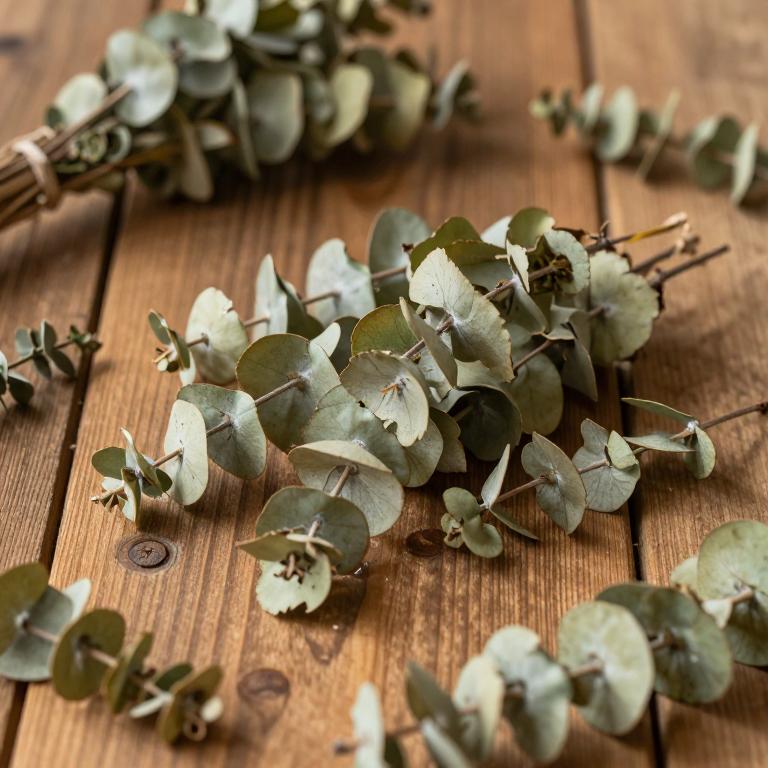
Names and Synonyms
Common Names
- tewart
- tooart
- touart
- tuart
- tuart gum
Scientific Names
Accepted name
Eucalyptus gomphocephalaSynonyms
- Eucalyptus gomphocephala var. rhodoxylon
Regional and Traditional Names
Spanish:
- Eucalipto tuart
German:
- tuart
French:
- tuart
Sources: Wikidata, Catalogue of Life
Taxonomical Classification
This plant belongs to the kingdom Plantae and is classified under the phylum Streptophyta within the class Equisetopsida. Following its subclass Magnoliidae, it is further organized into the order Myrtales and the family Myrtaceae. Finally, it is identified by the genus Eucalyptus.
| Rank | Classification |
|---|---|
| Kingdom | Plantae |
| Phylum | Streptophyta |
| Class | Equisetopsida |
| Subclass | Magnoliidae |
| Order | Myrtales |
| Family | Myrtaceae |
| Genus | Eucalyptus |
Sources: The World Checklist of Vascular Plants (WCVP)
Distribution
This plant exhibits a widespread presence across several distinct Mediterranean regions. In Southwestern Europe, its habitat includes the country of Spain. Moving into Southeastern Europe, it can be found throughout Italy and the island of Sicilia. Its distribution also extends into Northern Africa, specifically within the borders of Algeria. Finally, the species is documented to grow across the territory of Libya.
| Region | Area |
|---|---|
| Southwestern Europe | Spain |
| Southeastern Europe | Italy |
| Southeastern Europe | Sicilia |
| Northern Africa | Algeria |
| Northern Africa | Libya |
| Northern Africa | Morocco |
| Northern Africa | Tunisia |
| Macaronesia | Canary Is. |
| East Tropical Africa | Kenya |
| East Tropical Africa | Tanzania |
Sources: The World Checklist of Vascular Plants (WCVP)
Botanical Identification
Ecology
The ecology of Eucalyptus gomphocephala is characterized by its adaptation to low-lying landscapes, as it typically occupies an elevational range spanning from 0 m to 100 m AMSL. This species thrives in these near-sea-level environments, often establishing itself in areas with specific soil and moisture regimes conducive to its growth patterns. By occupying this narrow altitudinal band, the plant interacts with coastal or lowland ecosystems, where its physiological processes are shaped by the atmospheric and terrestrial conditions found at such low elevations.
- Elevational range max:
- 100 m AMSL
- Elevational range min:
- 0 m AMSL
Life history
The life history of Eucalyptus gomphocephala is characterized by a perennial lifecycle, allowing the plant to persist in its environment over many years. As a phanerophyte, its regenerative buds are elevated well above the ground, typically situated on woody branches or trunks, which defines its growth habit as a phanerophyte. This life form ensures its survival through various seasonal changes, maintaining its structural integrity and capacity for long-term development within its ecological niche.
- Life form :
- phanerophyte
- Lifecycle :
- perennial
Morphology
The morphology of Eucalyptus gomphocephala is characterized by its robust growth form as a woody tree, which functions as a self-supporting structure rather than a climber or epiphyte. As an independent organism, it does not exhibit parasitic behavior and maintains a terrestrial existence, occupying habitats that are neither aquatic nor semiaquatic. The plant demonstrates significant vertical development, with a stature that typically reaches a minimum height of 10 meters and can extend to a maximum height of 40 meters.
- Aquatic :
- terrestrial
- Climber :
- self-supporting
- Epiphyte :
- terrestrial
- Growth form :
- tree
- Parasite :
- independent
- Plant height max:
- 40 m
- Plant height min:
- 10 m
- Woodiness :
- woody
Physiology
The physiological characteristics of Eucalyptus gomphocephala are deeply integrated with its morphological adaptations, particularly regarding its photosynthetic efficiency and leaf structure. The plant utilizes the C3 photosynthetic pathway, a common metabolic strategy that allows for carbon fixation under varying environmental conditions. Its foliage is characterized by an elliptic leaf form, which serves as the primary site for gas exchange and light interception. The dimensions of these leaves vary significantly to optimize surface area for metabolic processes, with lengths ranging from a minimum of 9 cm to a maximum of 20 cm. Complementing this longitudinal variation, the leaf width fluctuates between a minimum of 3 cm and a maximum of 10 cm, providing a structural framework that supports its specialized physiological functions and resource management.
- Leaf form :
- elliptic
- Leaf length max:
- 20 cm
- Leaf length min:
- 9 cm
- Leaf width max:
- 10 cm
- Leaf width min:
- 3 cm
- Photosynthetic pathway :
- C3
Reproduction
The reproduction of Eucalyptus gomphocephala is characterized by a flowering period that typically begins in April and extends through August, though the timing can be variable across the months. The flowers are distinguished by their white color. Following pollination, the plant develops fruit in the form of a capsule. These capsules vary in size, with a minimum length of 1.3 cm and a maximum length of 2.2 cm, while their width ranges from a minimum of 1.3 cm to a maximum of 1.7 cm. The fruit is dehiscence, meaning it opens at maturity to release its seeds. The seeds themselves are quite small, possessing a mean mass of approximately 0.008876667 g, with individual seed masses ranging from a minimum of 0.00562 g to a maximum of 0.01234 g.
- Dehiscence :
- dehiscent
- Flower colour :
- white
- Flowering time :
- Apr
- Flowering time :
- Aug
- Fruit length max:
- 2.2 cm
- Fruit length min:
- 1.3 cm
- Fruit type :
- capsule
- Fruit width max:
- 1.7 cm
- Fruit width min:
- 1.3 cm
- Seed mass max:
- 0.01234 g
- Seed mass mean:
- 0.008876667 g
- Seed mass min:
- 0.00562 g
Sources: Global Inventory of Floras and Traits (GIFT)
Chemicals
Eucalyptus gomphocephala has 5 reported phytochemicals identified across 0 scientific publications and several other databases. The most consistently reported chemicals include CHLOROGENIC ACID, Quercetin 3-O-b-D-glucuronide, Quercetin 3-O-rhamnoside, caffeic acid, ellagic acid.
| Chemical | Supporting sources | Consensus |
|---|---|---|
| CHLOROGENIC ACID | 1 supporting sources | ★☆☆☆☆ |
| Quercetin 3-O-b-D-glucuronide | 1 supporting sources | ★☆☆☆☆ |
| Quercetin 3-O-rhamnoside | 1 supporting sources | ★☆☆☆☆ |
| caffeic acid | 1 supporting sources | ★☆☆☆☆ |
| ellagic acid | 1 supporting sources | ★☆☆☆☆ |
CHLOROGENIC ACID
- Natural product research
Quercetin 3-O-b-D-glucuronide
- Natural product research
Quercetin 3-O-rhamnoside
- Natural product research
caffeic acid
- Natural product research
ellagic acid
- Natural product research
Activities
Eucalyptus gomphocephala has 3 reported activities identified across 0 scientific publications and several other databases. The most consistently reported activities include Antibacterial, Antifungal, Antioxidant.
| Activity | Supporting sources | Consensus |
|---|---|---|
| Antibacterial | 1 supporting sources | ★☆☆☆☆ |
| Antifungal | 1 supporting sources | ★☆☆☆☆ |
| Antioxidant | 1 supporting sources | ★☆☆☆☆ |
Antibacterial
- Natural product research
Antifungal
- Natural product research
Antioxidant
- Natural product research