Eucalyptus forrestiana
Eucalyptus forrestiana · Accepted scientific name
Scientific literature: Very Extensive (215 studies) · ★★★★★
, scientifically known as Eucalyptus forrestiana, is a rare and specialized medicinal plant endemic to specific regions. Renowned for its potent aromatic properties, it contains unique bioactive compounds used in traditional healing. This species offers significant therapeutic potential, particularly in treating respiratory ailments and providing natural antimicrobial benefits.
- Family
- Not available
- Native range
- Australasia
- Parts used
- Not available
- Common names
- Not available
- Scientific synonyms
- Not available
Names and Synonyms
Scientific Names
Accepted name
Eucalyptus forrestianaDistribution
This plant is characterized by a very specific and limited natural range. It is found exclusively within the country of Australia. More precisely, its habitat is restricted to the state of Western Australia. Within this region, it occupies specific ecological niches that allow it to thrive. Consequently, its overall geographical distribution is considered quite localized.
| Region | Area |
|---|---|
| Australia | Western Australia |
Sources: The World Checklist of Vascular Plants (WCVP)
Botanical Identification
Life history
The life history of Eucalyptus forrestiana is characterized by its classification as a phanerophyte, a life form defined by its ability to maintain its regenerative buds well above the ground level, allowing it to thrive as a woody tree in its natural habitat. While the species primarily functions through this phanerophyte growth habit to establish canopy dominance, its developmental potential and ecological resilience can occasionally exhibit traits associated with a nanophanerophyte structure during specific growth stages or under certain environmental pressures. As it matures, the plant undergoes a complex cycle of germination, vigorous vegetative growth, and reproductive phases, utilizing its elevated buds to survive seasonal fluctuations and maintain its structural integrity within the ecosystem.
- Life form :
- nanophanerophyte
- Life form :
- phanerophyte
Morphology
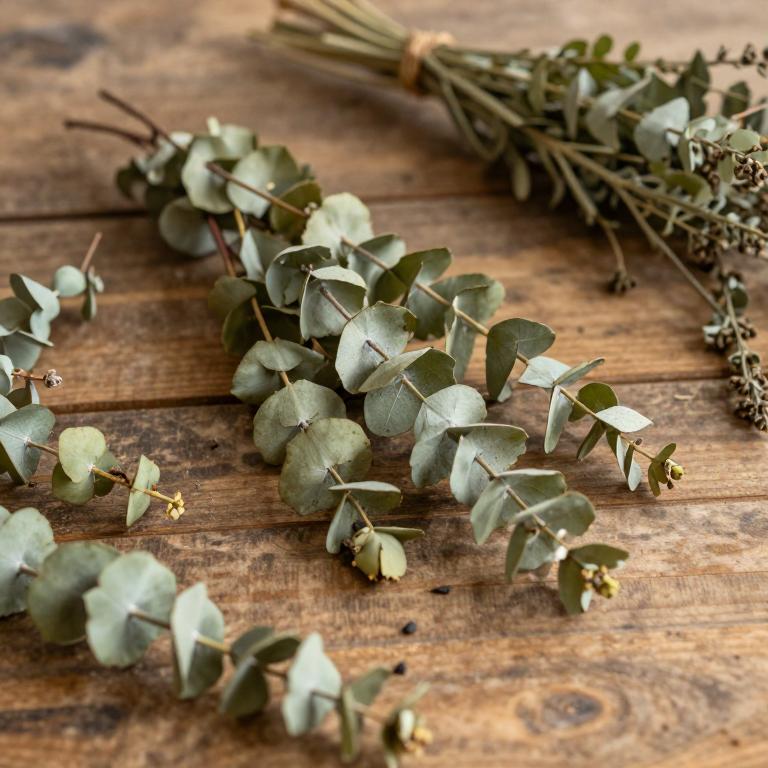
The morphology of Eucalyptus forrestiana is characterized by its growth form as a woody tree, which functions as a self-supporting structure rather than a climber or liana. This species is terrestrial in nature, lacking aquatic or semiaquatic tendencies, and it exists as an independent organism rather than a parasite or epiphyte. In terms of stature, the plant maintains a height ranging from a minimum of 1.5 meters to a maximum of 6 meters.
- Aquatic :
- terrestrial
- Climber :
- self-supporting
- Epiphyte :
- terrestrial
- Growth form :
- tree
- Parasite :
- independent
- Plant height max:
- 6 m
- Plant height min:
- 1.5 m
- Woodiness :
- woody
Physiology
The physiology of Eucalyptus forrestiana is characterized by a specialized metabolic framework designed to optimize carbon assimilation and water use efficiency in varying environmental conditions. A fundamental aspect of its metabolic function is its photosynthetic pathway, which follows the C3 mechanism. In this pathway, the initial fixation of atmospheric carbon dioxide occurs through the enzyme ribulose-1,5-bisphosphate carboxylase/oxygenase (RuBisCO), leading to the direct production of three-carbon compounds. This C3 process governs the plant's energy production and biomass accumulation, influencing its growth rates and response to light intensity. Furthermore, its physiological processes are closely linked to stomatal conductance and transpiration rates, which allow the plant to balance the intake of CO2 required for photosynthesis against the loss of water vapor, ensuring survival and vigor within its native ecological niche.
- Photosynthetic pathway :
- C3
Reproduction
The reproduction of Eucalyptus forrestiana is characterized by the production of seeds that exhibit a highly consistent morphological profile in terms of weight. Quantitative analysis of its seed dispersal units reveals a uniform seed mass, with a mean value of 0.02325 g. This measurement is precisely reflected across the entire sample range, as both the maximum and minimum recorded seed mass values are identical at 0.02325 g. This lack of variance in seed mass suggests a highly stabilized reproductive output, ensuring that each seed produced carries a consistent energetic investment for germination and subsequent seedling establishment.
- Seed mass mean:
- 0.02325 g
Sources: Global Inventory of Floras and Traits (GIFT)
Chemicals
Eucalyptus forrestiana has 56 reported phytochemicals identified across 0 scientific publications and several other databases. The most consistently reported chemicals include 1,8-Cineole, ALPHA-PHELLANDRENE, ALPHA-PINENE, ALPHA-SELINENE, Allo-Aromadendrene.
| Chemical | Supporting sources | Consensus |
|---|---|---|
| 1,8-Cineole | 1 supporting sources | ★☆☆☆☆ |
| ALPHA-PHELLANDRENE | 1 supporting sources | ★☆☆☆☆ |
| ALPHA-PINENE | 1 supporting sources | ★☆☆☆☆ |
| ALPHA-SELINENE | 1 supporting sources | ★☆☆☆☆ |
| Allo-Aromadendrene | 1 supporting sources | ★☆☆☆☆ |
| Aromadendrene | 1 supporting sources | ★☆☆☆☆ |
| BETA-CARYOPHYLLENE | 1 supporting sources | ★☆☆☆☆ |
| BETA-ELEMENE | 1 supporting sources | ★☆☆☆☆ |
| BETA-PHELLANDRENE | 1 supporting sources | ★☆☆☆☆ |
| BETA-PINENE | 1 supporting sources | ★☆☆☆☆ |
1,8-Cineole
- Dr. Duke
ALPHA-PHELLANDRENE
- Dr. Duke
ALPHA-PINENE
- Dr. Duke
ALPHA-SELINENE
- Dr. Duke
Allo-Aromadendrene
- Dr. Duke
Aromadendrene
- Dr. Duke
BETA-CARYOPHYLLENE
- Dr. Duke
BETA-ELEMENE
- Dr. Duke
BETA-PHELLANDRENE
- Dr. Duke
BETA-PINENE
- Dr. Duke
Activities
Eucalyptus forrestiana has 159 reported activities identified across 0 scientific publications and several other databases. The most consistently reported activities include (-)-Chronotropic, (-)-Inotropic, ACE-Inhibitor, AChE-Inhibitor, Acaricide.
| Activity | Supporting sources | Consensus |
|---|---|---|
| (-)-Chronotropic | 1 supporting sources | ★☆☆☆☆ |
| (-)-Inotropic | 1 supporting sources | ★☆☆☆☆ |
| ACE-Inhibitor | 1 supporting sources | ★☆☆☆☆ |
| AChE-Inhibitor | 1 supporting sources | ★☆☆☆☆ |
| Acaricide | 1 supporting sources | ★☆☆☆☆ |
| Aldose-Reductase-Inhibitor | 1 supporting sources | ★☆☆☆☆ |
| Allelochemic | 1 supporting sources | ★☆☆☆☆ |
| Allelopathic | 1 supporting sources | ★☆☆☆☆ |
| Allergenic | 1 supporting sources | ★☆☆☆☆ |
| Analgesic | 1 supporting sources | ★☆☆☆☆ |
(-)-Chronotropic
- Dr. Duke
(-)-Inotropic
- Dr. Duke
ACE-Inhibitor
- Dr. Duke
AChE-Inhibitor
- Dr. Duke
Acaricide
- Dr. Duke
Aldose-Reductase-Inhibitor
- Dr. Duke
Allelochemic
- Dr. Duke
Allelopathic
- Dr. Duke
Allergenic
- Dr. Duke
Analgesic
- Dr. Duke