Eucalyptus dives
Eucalyptus dives · Accepted scientific name
Scientific literature: Very Sparse (1 studies) · ★☆☆☆☆
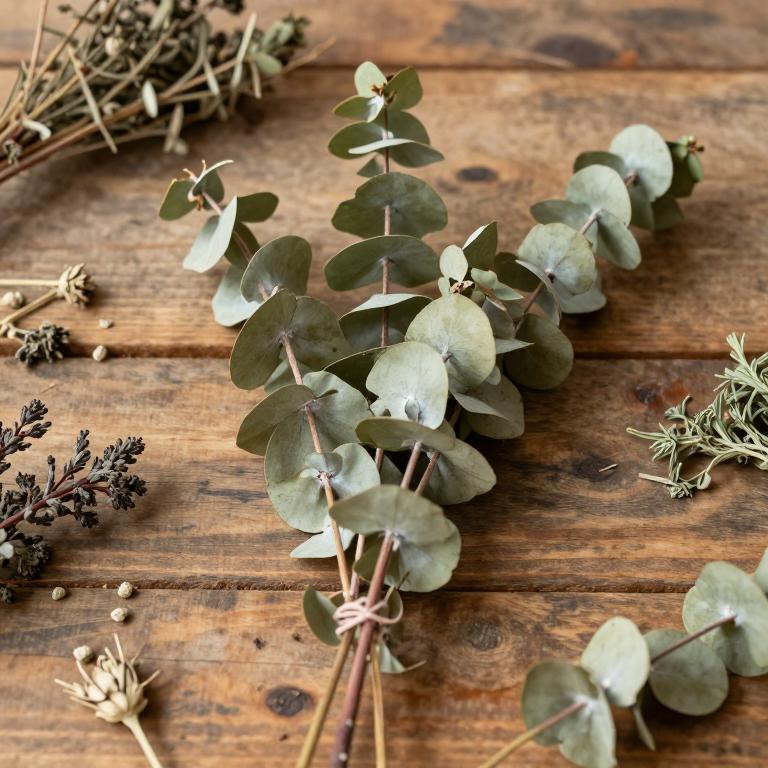
, scientifically known as Eucalyptus dives, is a remarkable medicinal plant prized for its potent aromatic properties. Often referred to as the "Blue Mallee," its leaves contain essential oils with powerful antiseptic and decongestant qualities. It serves as a vital natural remedy for respiratory ailments and skin inflammations worldwide.
- Family
- Not available
- Native range
- Australasia
- Parts used
- Not available
- Common names
- Not available
- Scientific synonyms
- Not available
Names and Synonyms
Scientific Names
Accepted name
Eucalyptus divesDistribution
This plant is a species of eucalyptus that is native to the Australian continent. Its primary geographical distribution is concentrated within specific southeastern regions of the country. Specifically, it can be found growing naturally throughout the state of New South Wales. Additionally, the species is widely distributed across the landscape of Victoria. These two states represent the core areas where this medicinal plant thrives in the wild.
| Region | Area |
|---|---|
| Australia | New South Wales |
| Australia | Victoria |
Sources: The World Checklist of Vascular Plants (WCVP)
Botanical Identification
Life history
The life history of Eucalyptus dives is characterized by its status as a perennial organism, allowing it to persist in its environment through multiple growing seasons. As a member of the phanerophyte life forms, specifically categorized under both phanerophyte and nanophanerophyte designations, its reproductive buds and vegetative structures are elevated well above the ground level, typically supported by a woody trunk or substantial branches. This structural development enables the plant to maintain a robust presence within its ecosystem, ensuring long-term survival and continued growth over many years.
- Life form :
- phanerophyte
- Lifecycle :
- perennial
Morphology
The morphology of Eucalyptus dives is characterized by its growth form as a woody tree, which is self-supporting and does not function as a climber or an epiphyte. It is a terrestrial species, existing as an independent organism rather than a parasite. This tree typically reaches a maximum plant height of approximately 20 m, exhibiting a robust, woody structure consistent with its classification as a perennial tree.
- Aquatic :
- terrestrial
- Climber :
- self-supporting
- Epiphyte :
- terrestrial
- Growth form :
- tree
- Parasite :
- independent
- Plant height max:
- 20 m
- Woodiness :
- woody
Physiology
The physiology of Eucalyptus dives is characterized by its specialized adaptations to semi-arid and temperate environments, primarily governed by its carbon fixation strategy. The plant utilizes a C3 photosynthetic pathway, which involves the direct fixation of atmospheric carbon dioxide by the enzyme RuBisCO during the Calvin cycle. This metabolic process is supported by a highly efficient hydraulic architecture designed to manage water potential and prevent xylem cavitation under varying transpiration demands. To mitigate the risks of photoinhibition and water loss, the plant exhibits sophisticated stomatal control, regulating gas exchange to balance CO2 uptake with the prevention of excessive desiccation. Furthermore, its physiological resilience is enhanced by the production of secondary metabolites, such as essential oils, which play a role in chemical defense and potentially influence the plant's thermal regulation and metabolic stability.
- Photosynthetic pathway :
- C3
Reproduction
Reproduction in Eucalyptus dives is characterized by the production of seeds that exhibit a notable range of morphological variation in terms of weight. The seed mass within this species is highly variable, with a recorded minimum value of 0.00049 g and a maximum value reaching up to 0.01333 g. When looking at the population as a whole, the average seed mass is approximately 0.00888 g. This diversity in seed mass reflects the complex reproductive strategies and environmental adaptations inherent to the species' dispersal and germination processes.
- Seed mass max:
- 0.01333 g
- Seed mass mean:
- 0.00888 g
- Seed mass min:
- 0.00049 g
Sources: Global Inventory of Floras and Traits (GIFT)
Chemicals
Eucalyptus dives has 1 reported phytochemicals identified across 0 scientific publications and several other databases. The most consistently reported chemicals include DL-Piperitone.
| Chemical | Supporting sources | Consensus |
|---|---|---|
| DL-Piperitone | 1 supporting sources | ★☆☆☆☆ |
DL-Piperitone
- Dr. Duke