Eucalyptus diversicolor
Eucalyptus diversicolor · Accepted scientific name
Scientific literature: Very Extensive (224 studies) · ★★★★★
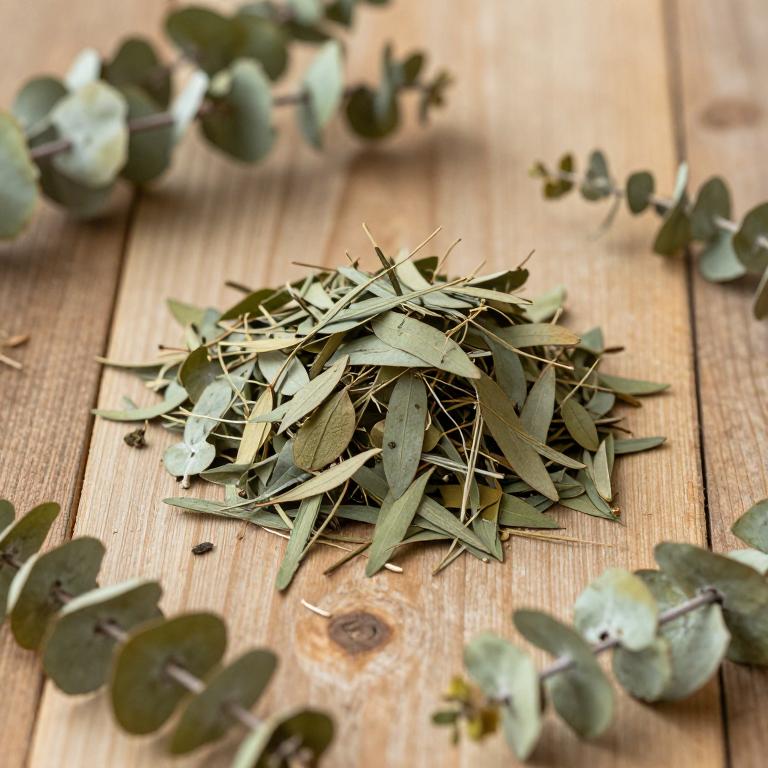
Eucalyptus diversicolor, scientifically known as Eucalyptus diversicolor, is a striking medicinal plant native to Australia. Renowned for its diverse foliage and aromatic properties, it offers therapeutic benefits through its essential oils. Often utilized in traditional remedies, its leaves possess potent antimicrobial and decongestant qualities, making it highly valued.
- Family
- Not available
- Native range
- Africa
- Parts used
- Not available
- Common names
- Not available
- Scientific synonyms
- Not available
Names and Synonyms
Scientific Names
Accepted name
Eucalyptus diversicolorDistribution
This plant exhibits a broad and fragmented geographical distribution across several distinct regions. In the Atlantic, it can be found growing within the Macaronesia region, specifically on the Canary Islands. Its range extends significantly into East Tropical Africa, where it inhabits the landscapes of both Kenya and Tanzania. Furthermore, the species has a notable presence in the Southern Hemisphere within Australia. Specifically, it is documented as growing in the state of Western Australia.
| Region | Area |
|---|---|
| Macaronesia | Canary Is. |
| East Tropical Africa | Kenya |
| East Tropical Africa | Tanzania |
| Australia | Western Australia |
Sources: The World Checklist of Vascular Plants (WCVP)
Botanical Identification
Life history
The life history of Eucalyptus diversicolor is characterized by its status as a phanerophyte, specifically categorized under both phanerophyte and nanophanerophyte classifications, which signifies that its perennating buds are located high above the ground on woody stems. As a long-lived perennial tree, it progresses through distinct ontogenetic stages, beginning with seed germination in well-drained, moisture-retentive soils where it establishes a robust root system. During its juvenile phase, the plant focuses on rapid vertical growth and the development of specialized foliage, eventually transitioning into a mature adult stage marked by the production of characteristic flowers and woody capsules. Throughout its life cycle, the species maintains its structural integrity through significant secondary thickening of the trunk and branches, allowing it to dominate forest canopies and withstand environmental fluctuations while maintaining its reproductive capacity over many decades.
- Life form :
- phanerophyte
Morphology
The morphology of Eucalyptus diversicolor is characterized by its robust growth form as a woody tree, which stands as a self-supporting structure rather than a climber or parasite. It is an independent, terrestrial organism that does not function as an epiphyte or an aquatic plant, instead thriving in terrestrial environments. This species exhibits significant vertical development, with a plant height that typically ranges from a minimum of 10 meters to a maximum of 60 meters.
- Aquatic :
- terrestrial
- Climber :
- self-supporting
- Epiphyte :
- terrestrial
- Growth form :
- tree
- Parasite :
- independent
- Plant height max:
- 60 m
- Plant height min:
- 10 m
- Woodiness :
- woody
Physiology
The physiology of Eucalyptus diversicolor is characterized by its specialized adaptations to temperate and sub-tropical environments, primarily governed by its photosynthetic pathway, which is classified as C3. As a C3 plant, it utilizes the Calvin cycle to fix atmospheric carbon dioxide through the enzyme RuBisCO, a process that is highly efficient under the moist, cool-to-moderate temperature conditions typical of its native habitats. This metabolic framework influences its water-use efficiency and stomatal conductance, as the plant must balance carbon uptake with the risks of transpiration and photorespiration. Furthermore, its physiological processes include a robust hydraulic architecture designed to manage high transpiration rates and a complex secondary metabolism that produces diverse volatile organic compounds, which serve both protective and medicinal roles within the plant's systemic functions.
- Photosynthetic pathway :
- C3
Reproduction
The reproduction of Eucalyptus diversicolor is characterized by specific seed morphology and specialized dispersal mechanisms. The species produces seeds with a notable range of masses, varying from a minimum of 0.00086 g to a maximum of 0.01053 g, with an average seed mass recorded at 0.003212 g. In terms of movement and distribution, the plant utilizes an anemochorous dispersal syndrome, relying primarily on wind to transport its seeds to new locations for colonization.
- Dispersal syndrome :
- anemochorous
- Seed mass max:
- 0.01053 g
- Seed mass mean:
- 0.003212 g
- Seed mass min:
- 0.00086 g
Sources: Global Inventory of Floras and Traits (GIFT)
Chemicals
Eucalyptus diversicolor has 38 reported phytochemicals identified across 0 scientific publications and several other databases. The most consistently reported chemicals include 1,8-Cineole, ALPHA-PHELLANDRENE, ALPHA-PINENE, ALPHA-TERPINYL ACETATE, ALPHA-THUJENE.
| Chemical | Supporting sources | Consensus |
|---|---|---|
| 1,8-Cineole | 1 supporting sources | ★☆☆☆☆ |
| ALPHA-PHELLANDRENE | 1 supporting sources | ★☆☆☆☆ |
| ALPHA-PINENE | 1 supporting sources | ★☆☆☆☆ |
| ALPHA-TERPINYL ACETATE | 1 supporting sources | ★☆☆☆☆ |
| ALPHA-THUJENE | 1 supporting sources | ★☆☆☆☆ |
| Allo-Aromadendrene | 1 supporting sources | ★☆☆☆☆ |
| Alpha terpinene | 1 supporting sources | ★☆☆☆☆ |
| Aromadendrene | 1 supporting sources | ★☆☆☆☆ |
| BETA-CARYOPHYLLENE | 1 supporting sources | ★☆☆☆☆ |
| BETA-ELEMENE | 1 supporting sources | ★☆☆☆☆ |
1,8-Cineole
- Dr. Duke
ALPHA-PHELLANDRENE
- Dr. Duke
ALPHA-PINENE
- Dr. Duke
ALPHA-TERPINYL ACETATE
- Dr. Duke
ALPHA-THUJENE
- Dr. Duke
Allo-Aromadendrene
- Dr. Duke
Alpha terpinene
- Dr. Duke
Aromadendrene
- Dr. Duke
BETA-CARYOPHYLLENE
- Dr. Duke
BETA-ELEMENE
- Dr. Duke
Activities
Eucalyptus diversicolor has 186 reported activities identified across 0 scientific publications and several other databases. The most consistently reported activities include (-)-Chronotropic, (-)-Inotropic, ACE-Inhibitor, AChE-Inhibitor, Acaricide.
| Activity | Supporting sources | Consensus |
|---|---|---|
| (-)-Chronotropic | 1 supporting sources | ★☆☆☆☆ |
| (-)-Inotropic | 1 supporting sources | ★☆☆☆☆ |
| ACE-Inhibitor | 1 supporting sources | ★☆☆☆☆ |
| AChE-Inhibitor | 1 supporting sources | ★☆☆☆☆ |
| Acaricide | 1 supporting sources | ★☆☆☆☆ |
| Aldose-Reductase-Inhibitor | 1 supporting sources | ★☆☆☆☆ |
| Allelochemic | 1 supporting sources | ★☆☆☆☆ |
| Allelopathic | 1 supporting sources | ★☆☆☆☆ |
| Allergenic | 1 supporting sources | ★☆☆☆☆ |
| Analgesic | 1 supporting sources | ★☆☆☆☆ |
(-)-Chronotropic
- Dr. Duke
(-)-Inotropic
- Dr. Duke
ACE-Inhibitor
- Dr. Duke
AChE-Inhibitor
- Dr. Duke
Acaricide
- Dr. Duke
Aldose-Reductase-Inhibitor
- Dr. Duke
Allelochemic
- Dr. Duke
Allelopathic
- Dr. Duke
Allergenic
- Dr. Duke
Analgesic
- Dr. Duke