Eucalyptus dealbata
Eucalyptus dealbata · Accepted scientific name
Scientific literature: Very Extensive (224 studies) · ★★★★★
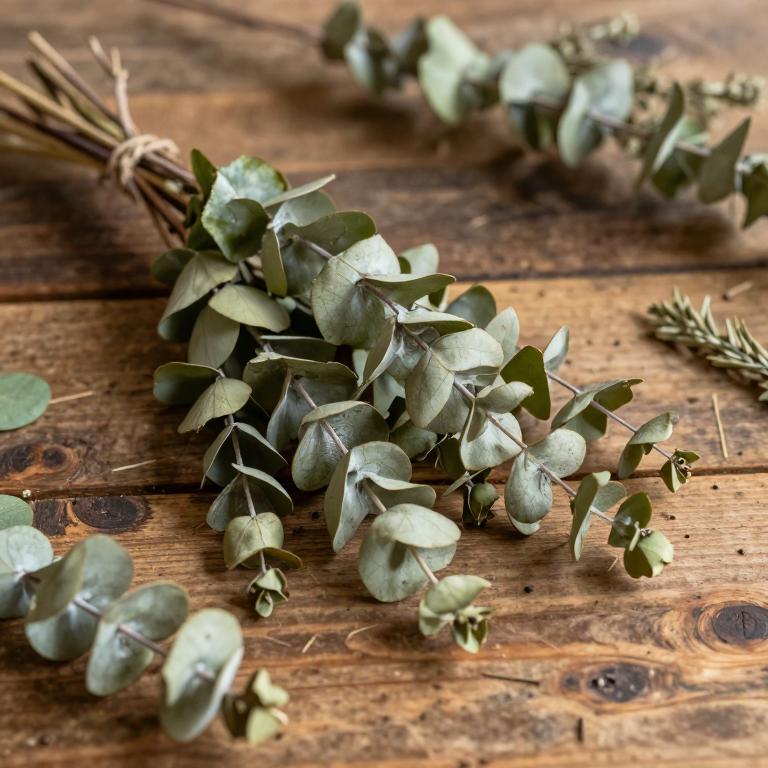
Eucalyptus dealbatia, scientifically known as Eucalyptus dealbatia, is a magnificent evergreen tree native to Australia. Renowned for its silvery-blue foliage, it holds significant medicinal value. Its essential oils are widely utilized in aromatherapy and traditional remedies to treat respiratory ailments, reduce inflammation, and provide powerful antiseptic properties.
- Family
- Not available
- Native range
- Asia-Tropical
- Parts used
- Not available
- Common names
- Not available
- Scientific synonyms
- Not available
Names and Synonyms
Scientific Names
Accepted name
Eucalyptus dealbataDistribution
This plant, known scientifically as Eucalyptus dealbata, exhibits a specific geographical distribution across different continents. In Australia, it is widely found within the states of New South Wales and Queensland. Beyond the Australian continent, its presence extends to the Indian Subcontinent. Specifically, it has been documented growing in Pakistan. These diverse locations highlight the varied environmental adaptability of this medicinal species.
| Region | Area |
|---|---|
| Indian Subcontinent | Pakistan |
| Australia | New South Wales |
| Australia | Queensland |
Sources: The World Checklist of Vascular Plants (WCVP)
Botanical Identification
Life history
The life history of Eucalyptus dealbata is characterized by its classification as a phanerophyte, specifically manifesting as both a phanerophyte and a nanophanerophyte depending on its developmental stage and environmental conditions. As a woody perennial, its life cycle begins with seed germination, often following fire events or seasonal moisture shifts, leading to the establishment of a long-lived tree structure where the perennating buds are borne high above the ground on woody branches. This phanerophyte strategy allows the species to endure varying climatic stressors by maintaining its vital meristems in a protected, elevated position. Throughout its lifespan, the plant undergoes complex physiological stages, transitioning from a juvenile phase to a mature reproductive phase, where it allocates significant energy toward the production of inflorescences and woody capsules, ensuring the continuity of its lineage within its native ecological niche.
- Life form :
- phanerophyte
Morphology
The morphology of Eucalyptus dealbata is characterized by its growth form as a woody tree, which functions as a self-supporting organism. It is a terrestrial species, existing independently without being an epiphyte or a parasite, and it does not exhibit any climbing habits. The plant typically attains a maximum height of approximately 15 m, maintaining a robust, woody structure throughout its development.
- Aquatic :
- terrestrial
- Climber :
- self-supporting
- Epiphyte :
- terrestrial
- Growth form :
- tree
- Parasite :
- independent
- Plant height max:
- 15 m
- Woodiness :
- woody
Physiology
The physiology of Eucalyptus dealbata is characterized by a highly efficient metabolic framework adapted to various environmental conditions, most notably through its utilization of the C3 photosynthetic pathway. As a C3 plant, its carbon fixation process occurs primarily within the mesophyll cells, where the enzyme RuBisCO facilitates the initial carboxylation of atmospheric carbon dioxide to form 3-phosphoglycerate. This metabolic strategy is supported by a complex water-management system and specialized leaf anatomy designed to optimize gas exchange while minimizing transpirational loss. The plant exhibits robust physiological responses to light intensity and temperature fluctuations, regulating its stomatal conductance to maintain turgor pressure and facilitate nutrient transport through its vascular tissues. Furthermore, its physiological profile includes the synthesis and secretion of secondary metabolites, such as essential oils, which serve integrated roles in herbivory defense and thermal regulation.
- Photosynthetic pathway :
- C3
Reproduction
The reproduction of Eucalyptus dealbata is characterized by the production of specialized seeds that exhibit notable variability in their physical dimensions. The reproductive output is defined by a specific seed mass range, where the individual seeds are quite minute. On average, the seed mass is approximately 0.00411 g, though this value fluctuates depending on environmental conditions and individual specimen health. Within the population, the seed mass reaches a maximum of 0.00664 g and a minimum of 0.00158 g, highlighting a distinct spread in the weight of the reproductive units produced during the flowering and seeding cycles.
- Seed mass max:
- 0.00664 g
- Seed mass mean:
- 0.00411 g
- Seed mass min:
- 0.00158 g
Sources: Global Inventory of Floras and Traits (GIFT)
Chemicals
Eucalyptus dealbata has 38 reported phytochemicals identified across 0 scientific publications and several other databases. The most consistently reported chemicals include 1,8-Cineole, ALPHA-PHELLANDRENE, ALPHA-PINENE, ALPHA-TERPINYL ACETATE, ALPHA-THUJENE.
| Chemical | Supporting sources | Consensus |
|---|---|---|
| 1,8-Cineole | 1 supporting sources | ★☆☆☆☆ |
| ALPHA-PHELLANDRENE | 1 supporting sources | ★☆☆☆☆ |
| ALPHA-PINENE | 1 supporting sources | ★☆☆☆☆ |
| ALPHA-TERPINYL ACETATE | 1 supporting sources | ★☆☆☆☆ |
| ALPHA-THUJENE | 1 supporting sources | ★☆☆☆☆ |
| Allo-Aromadendrene | 1 supporting sources | ★☆☆☆☆ |
| Alpha terpinene | 1 supporting sources | ★☆☆☆☆ |
| Aromadendrene | 1 supporting sources | ★☆☆☆☆ |
| BETA-CARYOPHYLLENE | 1 supporting sources | ★☆☆☆☆ |
| BETA-ELEMENE | 1 supporting sources | ★☆☆☆☆ |
1,8-Cineole
- Dr. Duke
ALPHA-PHELLANDRENE
- Dr. Duke
ALPHA-PINENE
- Dr. Duke
ALPHA-TERPINYL ACETATE
- Dr. Duke
ALPHA-THUJENE
- Dr. Duke
Allo-Aromadendrene
- Dr. Duke
Alpha terpinene
- Dr. Duke
Aromadendrene
- Dr. Duke
BETA-CARYOPHYLLENE
- Dr. Duke
BETA-ELEMENE
- Dr. Duke
Activities
Eucalyptus dealbata has 186 reported activities identified across 0 scientific publications and several other databases. The most consistently reported activities include (-)-Chronotropic, (-)-Inotropic, ACE-Inhibitor, AChE-Inhibitor, Acaricide.
| Activity | Supporting sources | Consensus |
|---|---|---|
| (-)-Chronotropic | 1 supporting sources | ★☆☆☆☆ |
| (-)-Inotropic | 1 supporting sources | ★☆☆☆☆ |
| ACE-Inhibitor | 1 supporting sources | ★☆☆☆☆ |
| AChE-Inhibitor | 1 supporting sources | ★☆☆☆☆ |
| Acaricide | 1 supporting sources | ★☆☆☆☆ |
| Aldose-Reductase-Inhibitor | 1 supporting sources | ★☆☆☆☆ |
| Allelochemic | 1 supporting sources | ★☆☆☆☆ |
| Allelopathic | 1 supporting sources | ★☆☆☆☆ |
| Allergenic | 1 supporting sources | ★☆☆☆☆ |
| Analgesic | 1 supporting sources | ★☆☆☆☆ |
(-)-Chronotropic
- Dr. Duke
(-)-Inotropic
- Dr. Duke
ACE-Inhibitor
- Dr. Duke
AChE-Inhibitor
- Dr. Duke
Acaricide
- Dr. Duke
Aldose-Reductase-Inhibitor
- Dr. Duke
Allelochemic
- Dr. Duke
Allelopathic
- Dr. Duke
Allergenic
- Dr. Duke
Analgesic
- Dr. Duke