Eucalyptus cypellocarpa
Eucalyptus cypellocarpa · Accepted scientific name
Scientific literature: Very Sparse (2 studies) · ★☆☆☆☆
, scientifically known as Eucalyptus cypellocarpa, is a remarkable medicinal plant valued for its therapeutic properties. Found in specific ecological niches, this species offers unique phytochemical compounds used in traditional healing. Its essential oils and bioactive extracts provide significant potential for treating respiratory ailments and supporting overall wellness through natural pharmacology.
- Family
- Not available
- Native range
- Australasia
- Parts used
- Leaf
- Common names
- Not available
- Scientific synonyms
- Not available
Names and Synonyms
Scientific Names
Accepted name
Eucalyptus cypellocarpaDistribution
This plant is native to the continent of Australia. Within this region, its presence is specifically noted in the state of New South Wales. It can also be found growing in the state of Victoria. These two areas represent its primary geographical distribution. Consequently, its natural habitat is concentrated in these southeastern parts of the country.
| Region | Area |
|---|---|
| Australia | New South Wales |
| Australia | Victoria |
Sources: The World Checklist of Vascular Plants (WCVP)
Botanical Identification
Life history
The life history of Eucalyptus cypellocarpa is characterized by a perennial lifecycle, allowing the individual to persist through multiple growing seasons and establish a long-term presence in its habitat. As a phanerophyte, its life form is defined by its structural growth habit where the perennially produced buds and leaves are borne on branches elevated well above the ground, protecting the vital photosynthetic organs from various environmental stressors. This phanerophyte classification underscores its capacity to maintain significant woody biomass over time, contributing to its enduring role within its ecological niche.
- Life form :
- phanerophyte
- Lifecycle :
- perennial
Morphology
The morphology of Eucalyptus cypellocarpa is characterized by a robust, woody growth form, specifically classified as a tree. As a self-supporting organism, it does not function as a climber or an epiphyte, maintaining a terrestrial existence rather than occupying aquatic or semiaquatic niches. The plant is an independent species, lacking any parasitic tendencies. In terms of physical dimensions, it exhibits significant stature, with a maximum plant height reaching up to 65 meters.
- Aquatic :
- terrestrial
- Climber :
- self-supporting
- Epiphyte :
- terrestrial
- Growth form :
- tree
- Parasite :
- independent
- Plant height max:
- 65 m
- Woodiness :
- woody
Physiology
The physiology of Eucalyptus cypellocarpa is characterized by specific morphological dimensions and metabolic processes that dictate its growth and environmental adaptation. The plant utilizes the C3 photosynthetic pathway, a fundamental metabolic process that involves the initial fixation of carbon dioxide through the enzyme RuBisCO. Its foliar structure is defined by elongated, lanceolate leaves that exhibit significant dimensional variation, with leaf lengths ranging from a minimum of 9.5 cm to a maximum of 18 cm. Complementing this longitudinal growth, the leaf width fluctuates between a minimum of 1.2 cm and a maximum of 2.2 cm, providing a specific surface area optimized for gas exchange and light interception within its ecological niche.
- Leaf length max:
- 18 cm
- Leaf length min:
- 9.5 cm
- Leaf width max:
- 2.2 cm
- Leaf width min:
- 1.2 cm
- Photosynthetic pathway :
- C3
Reproduction
The reproduction of Eucalyptus cypellocarpa is characterized by the production of seeds that exhibit significant variability in weight. The seed mass within this species fluctuates across a distinct range, with a recorded minimum value of 0.00079 g and a maximum value reaching up to 0.00709 g. When considering the collective population, the seed mass mean is established at 0.00373 g, reflecting the diverse physical properties of the reproductive units produced by the plant.
- Seed mass max:
- 0.00709 g
- Seed mass mean:
- 0.00373 g
- Seed mass min:
- 0.00079 g
Sources: Global Inventory of Floras and Traits (GIFT)
Plant Parts
Eucalyptus cypellocarpa has 1 reported plant parts identified across 1 scientific publications and several other databases that are studied for medicinal purposes. The most consistently reported plant part include leaf.
| Plant part | Supporting sources | Consensus |
|---|---|---|
| Leaf | 1 supporting sources | ★☆☆☆☆ |
Leaf
- Journal of natural products
Conditions
Eucalyptus cypellocarpa has 1 reported investigations on conditions identified across 1 scientific publications and several other databases. The most consistently reported conditions include carcinogenesis.
| Condition | Supporting sources | Consensus |
|---|---|---|
| Carcinogenesis | 1 supporting sources | ★☆☆☆☆ |
Carcinogenesis
- Journal of natural products
Preparations
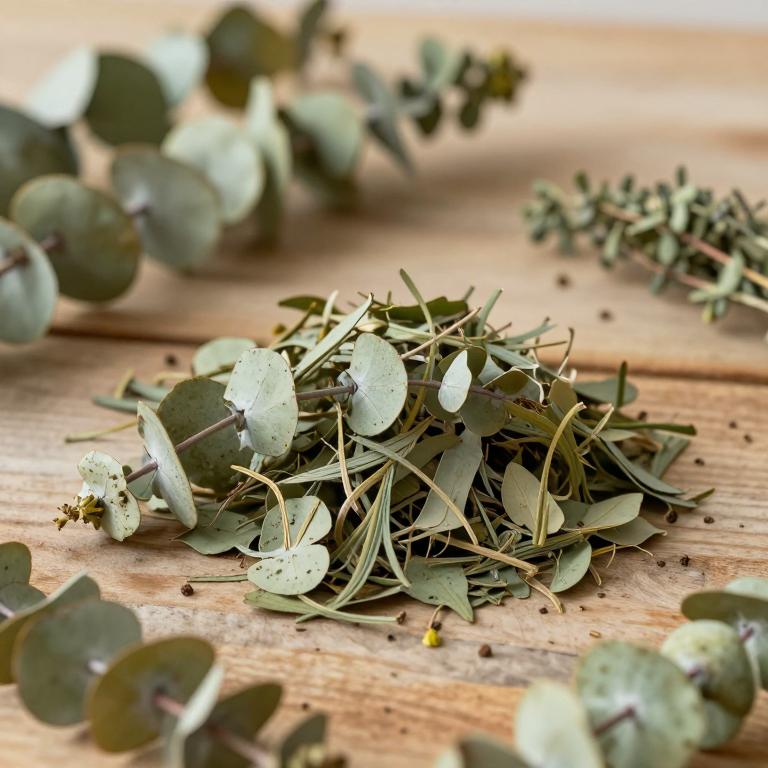
Eucalyptus cypellocarpa has 1 reported preparations identified across 1 scientific publications and several other databases. The most consistently reported preparations include dried leaves of Eucalyptus cypellocarpa.
| Preparation | Supporting sources | Consensus |
|---|---|---|
| Dried leaves of eucalyptus cypellocarpa | 1 supporting sources | ★☆☆☆☆ |
Dried leaves of eucalyptus cypellocarpa
- Journal of natural products