sugar gum
Eucalyptus cladocalyx · Accepted scientific name
Scientific literature: Very Extensive (246 studies) · ★★★★★
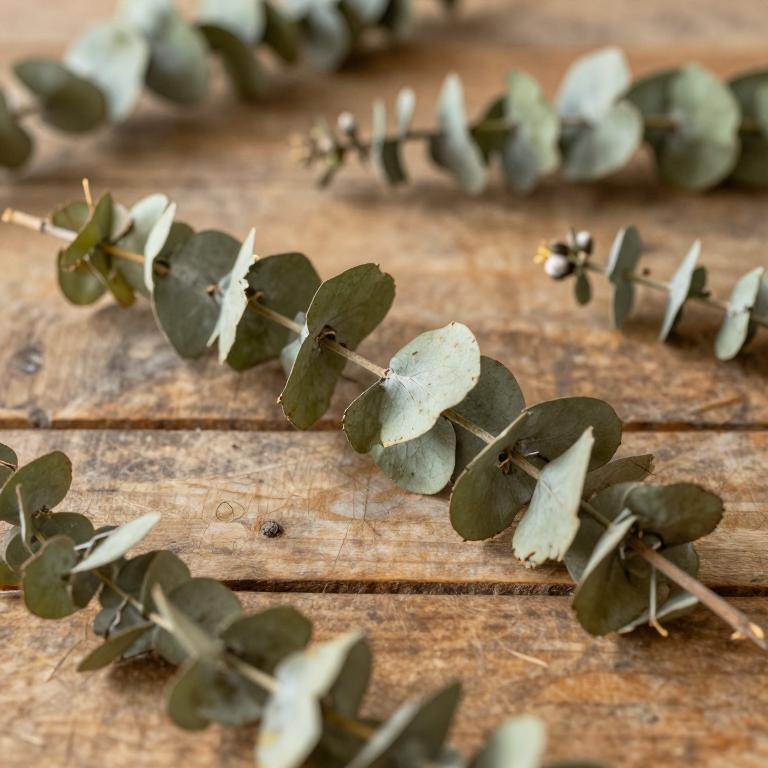
Sugar gum, scientifically known as Eucalyptus cladocalyx, is a majestic evergreen native to Australia. Renowned for its striking bark and fragrant foliage, this medicinal plant offers therapeutic benefits through its essential oils. Often used to support respiratory health and ease congestion, it remains a vital component in traditional herbalism.
- Family
- Myrtaceae
- Native range
- Africa
- Parts used
- Not available
- Common names
- Sugar-Gum · Sugar-Gum-Tree
- Scientific synonyms
- Not available
Names and Synonyms
Common Names
- sugar-gum
- sugar-gum-tree
Scientific Names
Accepted name
Eucalyptus cladocalyxRegional and Traditional Names
Spanish:
- Eucalyptus corynocalyx
- Eucalyptus langii
Sources: Wikidata, Catalogue of Life
Taxonomical Classification
This plant belongs to the kingdom Plantae and the phylum Streptophyta, falling under the class Equisetopsida and subclass Magnoliidae. Within the order Myrtales, it is classified under the family Myrtaceae and is identified by the genus Eucalyptus.
| Rank | Classification |
|---|---|
| Kingdom | Plantae |
| Phylum | Streptophyta |
| Class | Equisetopsida |
| Subclass | Magnoliidae |
| Order | Myrtales |
| Family | Myrtaceae |
| Genus | Eucalyptus |
Sources: The World Checklist of Vascular Plants (WCVP)
Distribution
This plant, Eucalyptus cladocalyx, exhibits a diverse geographical range spanning multiple continents. In Northern Africa, its presence is noted within the borders of Morocco. Moving toward East Tropical Africa, the species can be found in both Kenya and Tanzania. The distribution extends further south to the Cape Provinces of Southern Africa. Finally, its native habitat includes the region of South Australia.
| Region | Area |
|---|---|
| Northern Africa | Morocco |
| East Tropical Africa | Kenya |
| East Tropical Africa | Tanzania |
| Southern Africa | Cape Provinces |
| Australia | South Australia |
| North-Central Pacific | Hawaii |
| Southwestern U.S.A. | California |
| Caribbean | Trinidad-Tobago |
Sources: The World Checklist of Vascular Plants (WCVP)
Botanical Identification
Ecology
The ecology of Eucalyptus cladocalyx is characterized by its adaptation to specific topographical and altitudinal constraints, thriving primarily within a low-lying elevational range. This species is typically found at altitudes starting from 0 m AMSL and extending up to a maximum of 200 m AMSL. Within this specific altitudinal niche, the plant integrates into various environmental conditions, often favoring well-drained soils and temperate climates that support its growth patterns. Its distribution is closely tied to these lower elevations, where it plays a functional role in the local ecosystem, contributing to soil stability and providing habitat and resources for specialized fauna.
- Elevational range max:
- 200 m AMSL
- Elevational range min:
- 0 m AMSL
Genetics
The genetics of Eucalyptus cladocalyx are characterized by a complex chromosomal makeup that contributes to its evolutionary adaptability and morphological diversity. A defining feature of its genomic structure is the variation in its karyotype, specifically manifesting in chromosome numbers of 22 and 24. This numerical variation suggests a level of chromosomal polymorphism within the species, which may play a significant role in its genetic plasticity and its ability to thrive in diverse environmental conditions. Such cytogenetic diversity is often indicative of historical polyploidy events or chromosomal rearrangements that have shaped the lineage of this medicinal species.
- Chromosome number :
- 22, 24
Life history
The life history of Eucalyptus cladocalyx is characterized by its status as a perennial organism, ensuring its long-term presence within its native ecosystems through multiple growing seasons. As a phanerophyte, the plant maintains its photosynthetic organs on elevated structures, specifically large woody branches and a substantial trunk, which protects the vital meristematic tissues from various environmental stressors. This phanerophyte life form allows the species to achieve significant vertical growth, establishing a dominant canopy structure that is essential to its ecological role and survival strategy throughout its extended lifespan.
- Life form :
- phanerophyte
- Lifecycle :
- perennial
Morphology
The morphology of Eucalyptus cladocalyx is characterized by its growth form as a large, woody tree that is strictly self-supporting rather than acting as a climber, vine, or liana. As a terrestrial organism, it does not exhibit aquatic, semiaquatic, or epiphytic lifestyles, functioning instead as an independent species without parasitic tendencies. The plant is distinguished by its substantial stature, typically reaching a height ranging from a minimum of 12 m to a maximum of 35 m. Its structural development is defined by a robust, woody constitution, establishing it firmly within the category of arborescent vegetation.
- Aquatic :
- terrestrial
- Climber :
- self-supporting
- Epiphyte :
- terrestrial
- Growth form :
- tree
- Parasite :
- independent
- Plant height max:
- 35 m
- Plant height min:
- 12 m
- Woodiness :
- woody
Physiology
The physiology of Eucalyptus cladocalyx is characterized by a C3 photosynthetic pathway, which dictates its metabolic processes and carbon fixation strategies. Its vegetative morphology is defined by specific leaf dimensions that support its physiological functions, with leaf length ranging from a minimum of 11 cm to a maximum of 15 cm. Furthermore, the leaf width is constrained within a narrow physiological range, measuring between a minimum of 2 cm and a maximum of 2.5 cm.
- Leaf length max:
- 15 cm
- Leaf length min:
- 11 cm
- Leaf width max:
- 2.5 cm
- Leaf width min:
- 2 cm
- Photosynthetic pathway :
- C3
Reproduction
Reproduction in Eucalyptus cladocalyx is characterized by the development of specialized woody fruits and minute seeds. The fruit of this species exhibits specific dimensional variations, with a length ranging from a minimum of 0.9 cm to a maximum of 1.6 cm. In terms of width, the fruit dimensions are similarly variable, measuring as little as 0.6 cm and reaching a maximum of 1 cm. Following the maturation of the fruit, the plant produces seeds that are notable for their lightweight nature. These seeds display a mean mass of approximately 0.0047825 g, with individual seed masses fluctuating between a minimum of 0.00124 g and a maximum of 0.0084 g.
- Fruit length max:
- 1.6 cm
- Fruit length min:
- 0.9 cm
- Fruit width max:
- 1 cm
- Fruit width min:
- 0.6 cm
- Seed mass max:
- 0.0084 g
- Seed mass mean:
- 0.0047825 g
- Seed mass min:
- 0.00124 g
Sources: Global Inventory of Floras and Traits (GIFT)
Chemicals
Eucalyptus cladocalyx has 40 reported phytochemicals identified across 0 scientific publications and several other databases. The most consistently reported chemicals include 1,8-Cineole, ALPHA-PHELLANDRENE, ALPHA-PINENE, ALPHA-TERPINYL ACETATE, ALPHA-THUJENE.
| Chemical | Supporting sources | Consensus |
|---|---|---|
| 1,8-Cineole | 1 supporting sources | ★☆☆☆☆ |
| ALPHA-PHELLANDRENE | 1 supporting sources | ★☆☆☆☆ |
| ALPHA-PINENE | 1 supporting sources | ★☆☆☆☆ |
| ALPHA-TERPINYL ACETATE | 1 supporting sources | ★☆☆☆☆ |
| ALPHA-THUJENE | 1 supporting sources | ★☆☆☆☆ |
| Allo-Aromadendrene | 1 supporting sources | ★☆☆☆☆ |
| Alpha terpinene | 1 supporting sources | ★☆☆☆☆ |
| Aromadendrene | 1 supporting sources | ★☆☆☆☆ |
| BETA-CARYOPHYLLENE | 1 supporting sources | ★☆☆☆☆ |
| BETA-ELEMENE | 1 supporting sources | ★☆☆☆☆ |
1,8-Cineole
- Dr. Duke
ALPHA-PHELLANDRENE
- Dr. Duke
ALPHA-PINENE
- Dr. Duke
ALPHA-TERPINYL ACETATE
- Dr. Duke
ALPHA-THUJENE
- Dr. Duke
Allo-Aromadendrene
- Dr. Duke
Alpha terpinene
- Dr. Duke
Aromadendrene
- Dr. Duke
BETA-CARYOPHYLLENE
- Dr. Duke
BETA-ELEMENE
- Dr. Duke
Activities
Eucalyptus cladocalyx has 191 reported activities identified across 0 scientific publications and several other databases. The most consistently reported activities include Anticancer, Antioxidant, (-)-Chronotropic, (-)-Inotropic, ACE-Inhibitor.
| Activity | Supporting sources | Consensus |
|---|---|---|
| Anticancer | 2 supporting sources | ★☆☆☆☆ |
| Antioxidant | 2 supporting sources | ★☆☆☆☆ |
| (-)-Chronotropic | 1 supporting sources | ★☆☆☆☆ |
| (-)-Inotropic | 1 supporting sources | ★☆☆☆☆ |
| ACE-Inhibitor | 1 supporting sources | ★☆☆☆☆ |
| AChE-Inhibitor | 1 supporting sources | ★☆☆☆☆ |
| Acaricide | 1 supporting sources | ★☆☆☆☆ |
| Aldose-Reductase-Inhibitor | 1 supporting sources | ★☆☆☆☆ |
| Allelochemic | 1 supporting sources | ★☆☆☆☆ |
| Allelopathic | 1 supporting sources | ★☆☆☆☆ |
Anticancer
- Dr. Duke
- International journal of environmental health research
Antioxidant
- Dr. Duke
- International journal of environmental health research
(-)-Chronotropic
- Dr. Duke
(-)-Inotropic
- Dr. Duke
ACE-Inhibitor
- Dr. Duke
AChE-Inhibitor
- Dr. Duke
Acaricide
- Dr. Duke
Aldose-Reductase-Inhibitor
- Dr. Duke
Allelochemic
- Dr. Duke
Allelopathic
- Dr. Duke
Conditions
Eucalyptus cladocalyx has 1 reported investigations on conditions identified across 0 scientific publications and several other databases. The most consistently reported conditions include inflammation.
| Condition | Supporting sources | Consensus |
|---|---|---|
| Inflammation | 1 supporting sources | ★☆☆☆☆ |
Inflammation
- International journal of environmental health research
Preparations
Eucalyptus cladocalyx has 4 reported preparations identified across 0 scientific publications and several other databases. The most consistently reported preparations include EO, NE, essential oil, nanoemulsion.
| Preparation | Supporting sources | Consensus |
|---|---|---|
| Eo | 1 supporting sources | ★☆☆☆☆ |
| Ne | 1 supporting sources | ★☆☆☆☆ |
| Essential oil | 1 supporting sources | ★☆☆☆☆ |
| Nanoemulsion | 1 supporting sources | ★☆☆☆☆ |
Eo
- International journal of environmental health research
Ne
- International journal of environmental health research
Essential oil
- International journal of environmental health research
Nanoemulsion
- International journal of environmental health research