Northern River Red Gum
Eucalyptus camaldulensis subsp. obtusa · Accepted scientific name
Scientific literature: Very Sparse (20 studies) · ★☆☆☆☆
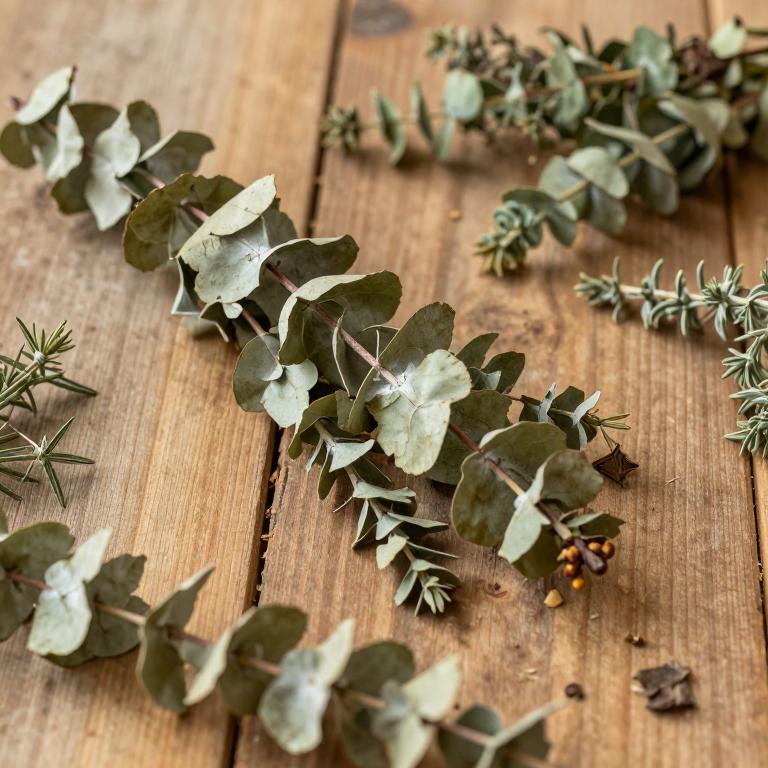
Northern River Red Gum, scientifically known as Eucalyptus camaldulenensis subsp. obtusa, is a resilient Australian native prized for its therapeutic properties. Renowned for its aromatic, antimicrobial essential oils, this subspecies offers significant medicinal potential, particularly in treating respiratory ailments and providing antiseptic benefits through traditional and modern applications.
- Family
- Myrtaceae
- Native range
- Australasia
- Parts used
- Leaf
- Common names
- Northern River Red Gum
- Scientific synonyms
- Eucalyptus Camaldulensis Var. Obtusa
Names and Synonyms
Common Names
- Northern River Red Gum
Scientific Names
Accepted name
Eucalyptus camaldulensis subsp. obtusaSynonyms
- Eucalyptus camaldulensis var. obtusa
Sources: Wikidata, Catalogue of Life
Taxonomical Classification
This plant belongs to the kingdom Plantae within the phylum Streptophyta and is classified under the class Equisetopsida. Within the subclass Magnoliidae, it is further categorized under the order Myrtales and the family Myrtaceae. Finally, its taxonomic identity is defined by the genus Eucalyptus, specifically as the subspecies obtusus.
| Rank | Classification |
|---|---|
| Kingdom | Plantae |
| Phylum | Streptophyta |
| Class | Equisetopsida |
| Subclass | Magnoliidae |
| Order | Myrtales |
| Family | Myrtaceae |
| Genus | Eucalyptus |
Sources: The World Checklist of Vascular Plants (WCVP)
Distribution
This plant is native to several distinct regions across the vast continent of Australia. Its geographical range includes significant portions of New South Wales where it thrives in specific environmental conditions. Additionally, the subspecies can be found growing within the Northern Territory. It is also widely distributed throughout the state of Queensland. Finally, its presence extends westward into the landscapes of Western Australia.
| Region | Area |
|---|---|
| Australia | New South Wales |
| Australia | Northern Territory |
| Australia | Queensland |
| Australia | Western Australia |
Sources: The World Checklist of Vascular Plants (WCVP)
Plant Parts
Eucalyptus camaldulensis subsp. obtusa has 1 reported plant parts identified across 2 scientific publications and several other databases that are studied for medicinal purposes. The most consistently reported plant part include leaf.
| Plant part | Supporting sources | Consensus |
|---|---|---|
| Leaf | 2 supporting sources | ★☆☆☆☆ |
Leaf
- Journal of natural products
- Phytochemistry
Chemicals
Eucalyptus camaldulensis subsp. obtusa has 13 reported phytochemicals identified across 2 scientific publications and several other databases. The most consistently reported chemicals include betulinic acid, ursolic acid lactone, BETA-SITOSTEROL, CHLOROGENIC ACID, OLEANOLIC ACID.
| Chemical | Supporting sources | Consensus |
|---|---|---|
| betulinic acid | 2 supporting sources | ★☆☆☆☆ |
| ursolic acid lactone | 2 supporting sources | ★☆☆☆☆ |
| BETA-SITOSTEROL | 1 supporting sources | ★☆☆☆☆ |
| CHLOROGENIC ACID | 1 supporting sources | ★☆☆☆☆ |
| OLEANOLIC ACID | 1 supporting sources | ★☆☆☆☆ |
| Quercetin 3-O-b-D-glucuronide | 1 supporting sources | ★☆☆☆☆ |
| Quercetin 3-O-rhamnoside | 1 supporting sources | ★☆☆☆☆ |
| Ursolic acid | 1 supporting sources | ★☆☆☆☆ |
| beta-sitosterol 3-O-beta-D-glucopyranoside | 1 supporting sources | ★☆☆☆☆ |
| caffeic acid | 1 supporting sources | ★☆☆☆☆ |
betulinic acid
- Journal of natural products
- Phytochemistry
ursolic acid lactone
- Journal of natural products
- Phytochemistry
BETA-SITOSTEROL
- Journal of natural products
CHLOROGENIC ACID
- Natural product research
OLEANOLIC ACID
- Phytochemistry
Quercetin 3-O-b-D-glucuronide
- Natural product research
Quercetin 3-O-rhamnoside
- Natural product research
Ursolic acid
- Phytochemistry
beta-sitosterol 3-O-beta-D-glucopyranoside
- Journal of natural products
caffeic acid
- Natural product research
Activities
Eucalyptus camaldulensis subsp. obtusa has 1 reported activities identified across 2 scientific publications and several other databases. The most consistently reported activities include Spasmolytic.
| Activity | Supporting sources | Consensus |
|---|---|---|
| Spasmolytic | 1 supporting sources | ★☆☆☆☆ |
Spasmolytic
- Journal of natural products
Preparations
Eucalyptus camaldulensis subsp. obtusa has 1 reported preparations identified across 2 scientific publications and several other databases. The most consistently reported preparations include fresh uncrushed leaves.
| Preparation | Supporting sources | Consensus |
|---|---|---|
| Fresh uncrushed leaves | 1 supporting sources | ★☆☆☆☆ |
Fresh uncrushed leaves
- Journal of natural products