Eucalyptus bridgesiana
Eucalyptus bridgesiana · Accepted scientific name
Scientific literature: Very Extensive (206 studies) · ★★★★★
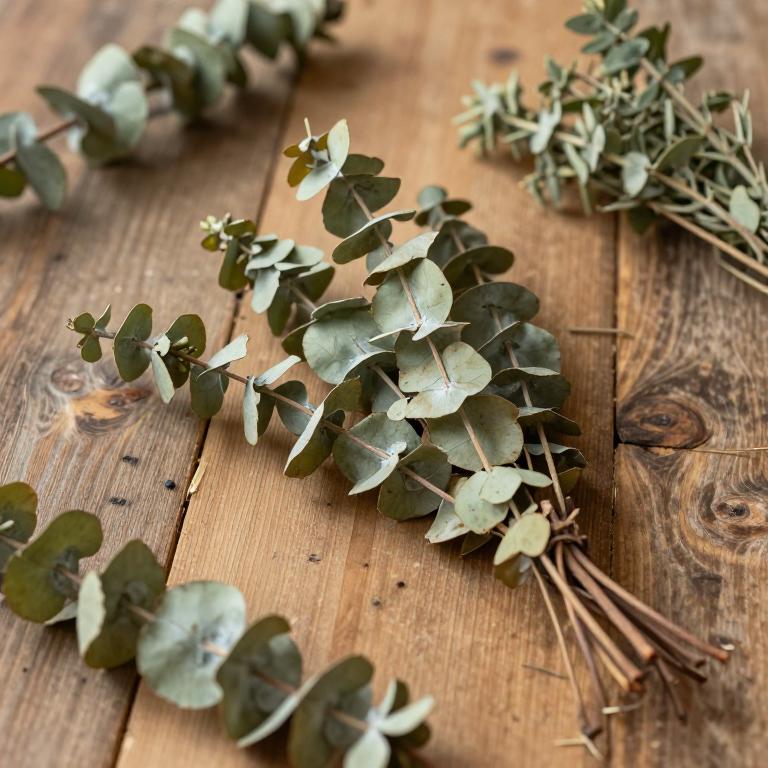
scientifically known as Eucalyptus bridgesiana, is a versatile evergreen tree native to Australia. Renowned for its aromatic foliage, it possesses significant medicinal properties, particularly in treating respiratory ailments. Its essential oils offer potent antiseptic and anti-inflammatory benefits, making it a valuable resource in traditional and modern herbal medicine.
- Family
- Not available
- Native range
- Australasia
- Parts used
- Not available
- Common names
- Not available
- Scientific synonyms
- Not available
Names and Synonyms
Scientific Names
Accepted name
Eucalyptus bridgesianaDistribution
This plant is native to several key regions across the Australian continent. Its natural range includes significant populations throughout the state of New South Wales. Additionally, it can be found growing within the borders of Queensland and Victoria. Beyond its native territory, the species has also established itself in the North-Central Pacific region of Hawaii. Therefore, its distribution spans both vast Australian landscapes and remote Pacific islands.
| Region | Area |
|---|---|
| Australia | New South Wales |
| Australia | Queensland |
| Australia | Victoria |
| North-Central Pacific | Hawaii |
Sources: The World Checklist of Vascular Plants (WCVP)
Botanical Identification
Genetics
The genetics of Eucalyptus bridgesiana are characterized by a specific chromosomal configuration that defines its cytogenetic profile. This species possesses a diploid chromosome number of 2n = 22, a fundamental genomic trait that distinguishes its reproductive biology and evolutionary lineage within the Eucalyptus genus. This chromosomal count serves as a key genetic marker for studying its inheritance patterns, genomic stability, and potential for hybridization with related taxa. The stability of this 22-chromosome arrangement plays a critical role in the plant's meiotic processes, influencing the genetic diversity and phenotypic expression of traits essential to its physiological development and medicinal efficacy.
- Chromosome number :
- 22
Life history
The life history of Eucalyptus bridgesiana is characterized by its status as a perennial species, ensuring its long-term presence and survival within its native ecosystem through multiple growing seasons. As a phanerophyte, its regenerative buds are located high above the ground on woody branches, a structural adaptation that allows the plant to reach significant heights and navigate environmental pressures. This phanerophyte life form, categorized both as a general phanerophyte and specifically as a phanerophyte in terms of its growth habit, enables the tree to maintain a dominant stature, facilitating efficient light capture and reproductive success throughout its extended lifespan.
- Life form :
- phanerophyte
- Lifecycle :
- perennial
Morphology
The morphology of Eucalyptus bridgesiana is characterized by its growth form as a woody tree that functions as a self-supporting, independent organism rather than a climber, parasite, or epiphyte. It is strictly a terrestrial species, lacking aquatic or semiaquatic tendencies. This tree reaches a significant stature, with a plant height ranging from a minimum of 12 meters to a maximum of 25 meters.
- Aquatic :
- terrestrial
- Climber :
- self-supporting
- Epiphyte :
- terrestrial
- Growth form :
- tree
- Parasite :
- independent
- Plant height max:
- 25 m
- Plant height min:
- 12 m
- Woodiness :
- woody
Physiology
The physiology of Eucalyptus bridgesiana is characterized by a C3 photosynthetic pathway, which dictates its metabolic processes and carbon fixation efficiency. The morphological dimensions of its foliage play a critical role in its gas exchange and light interception capabilities, with leaf lengths typically ranging from a minimum of 12 cm to a maximum of 20 cm. Complementing this longitudinal variation, the leaf width fluctuates between a minimum of 1.5 cm and a maximum of 2.5 cm, contributing to the overall surface area available for transpiration and photosynthetic activity.
- Leaf length max:
- 20 cm
- Leaf length min:
- 12 cm
- Leaf width max:
- 2.5 cm
- Leaf width min:
- 1.5 cm
- Photosynthetic pathway :
- C3
Reproduction
The reproduction of Eucalyptus bridgesiana is characterized by the production of specialized fruits and seeds with specific morphological dimensions. The fruits of this species exhibit measurable variation in size, with a minimum width of 0.4 cm and a maximum width of 0.7 cm, while their length ranges from a minimum of 0.5 cm to a maximum of 0.7 cm. Within these fruits, the seeds are produced in varying weights; the seed mass is highly variable, ranging from a minimum of 0.00037 g to a maximum of 0.00549 g, with a calculated mean seed mass of 0.002804 g. This variation in fruit and seed metrics plays a critical role in the plant's reproductive success and dispersal capabilities.
- Fruit length max:
- 0.7 cm
- Fruit length min:
- 0.5 cm
- Fruit width max:
- 0.7 cm
- Fruit width min:
- 0.4 cm
- Seed mass max:
- 0.00549 g
- Seed mass mean:
- 0.002804 g
- Seed mass min:
- 0.00037 g
Sources: Global Inventory of Floras and Traits (GIFT)
Chemicals
Eucalyptus bridgesiana has 28 reported phytochemicals identified across 0 scientific publications and several other databases. The most consistently reported chemicals include (E)-beta-ocimene, 1,8-Cineole, ALPHA-PINENE, Aromadendrene, CARVONE.
| Chemical | Supporting sources | Consensus |
|---|---|---|
| (E)-beta-ocimene | 1 supporting sources | ★☆☆☆☆ |
| 1,8-Cineole | 1 supporting sources | ★☆☆☆☆ |
| ALPHA-PINENE | 1 supporting sources | ★☆☆☆☆ |
| Aromadendrene | 1 supporting sources | ★☆☆☆☆ |
| CARVONE | 1 supporting sources | ★☆☆☆☆ |
| Campholenic aldehyde | 1 supporting sources | ★☆☆☆☆ |
| EO | 1 supporting sources | ★☆☆☆☆ |
| Fenchone | 1 supporting sources | ★☆☆☆☆ |
| GAMMA-TERPINENE | 1 supporting sources | ★☆☆☆☆ |
| Globulol | 1 supporting sources | ★☆☆☆☆ |
(E)-beta-ocimene
- Dr. Duke
1,8-Cineole
- Dr. Duke
ALPHA-PINENE
- Dr. Duke
Aromadendrene
- Dr. Duke
CARVONE
- Dr. Duke
Campholenic aldehyde
- Dr. Duke
EO
- Dr. Duke
Fenchone
- Dr. Duke
GAMMA-TERPINENE
- Dr. Duke
Globulol
- Dr. Duke
Activities
Eucalyptus bridgesiana has 178 reported activities identified across 0 scientific publications and several other databases. The most consistently reported activities include (-)-Chronotropic, (-)-Inotropic, ACE-Inhibitor, AChE-Inhibitor, Acaricide.
| Activity | Supporting sources | Consensus |
|---|---|---|
| (-)-Chronotropic | 1 supporting sources | ★☆☆☆☆ |
| (-)-Inotropic | 1 supporting sources | ★☆☆☆☆ |
| ACE-Inhibitor | 1 supporting sources | ★☆☆☆☆ |
| AChE-Inhibitor | 1 supporting sources | ★☆☆☆☆ |
| Acaricide | 1 supporting sources | ★☆☆☆☆ |
| Aldose-Reductase-Inhibitor | 1 supporting sources | ★☆☆☆☆ |
| Allelochemic | 1 supporting sources | ★☆☆☆☆ |
| Allelopathic | 1 supporting sources | ★☆☆☆☆ |
| Allergenic | 1 supporting sources | ★☆☆☆☆ |
| Analgesic | 1 supporting sources | ★☆☆☆☆ |
(-)-Chronotropic
- Dr. Duke
(-)-Inotropic
- Dr. Duke
ACE-Inhibitor
- Dr. Duke
AChE-Inhibitor
- Dr. Duke
Acaricide
- Dr. Duke
Aldose-Reductase-Inhibitor
- Dr. Duke
Allelochemic
- Dr. Duke
Allelopathic
- Dr. Duke
Allergenic
- Dr. Duke
Analgesic
- Dr. Duke