bangalay
Eucalyptus botryoides · Accepted scientific name
Scientific literature: Very Extensive (230 studies) · ★★★★★
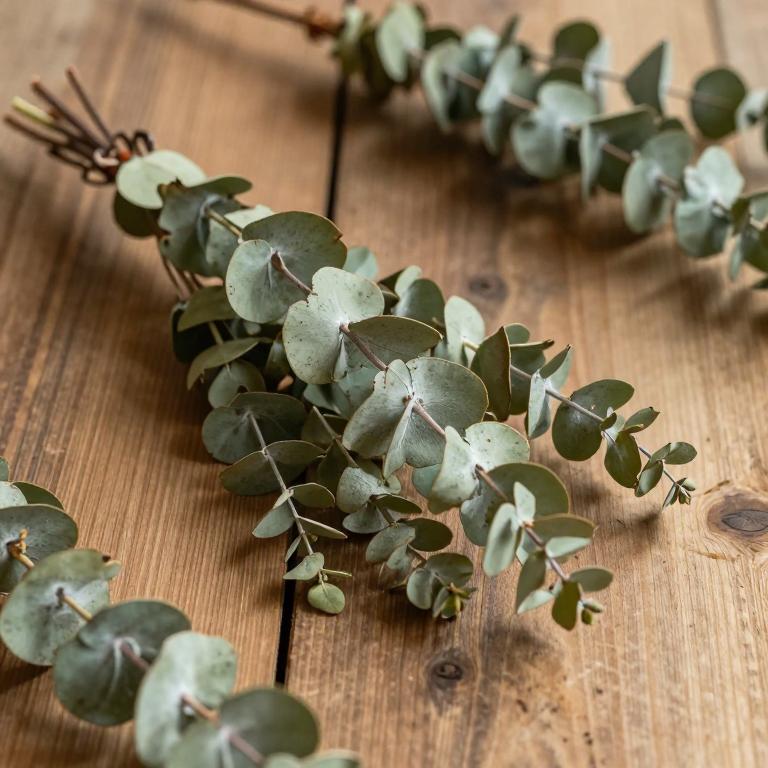
Bangalay, scientifically known as Eucalyptus botryoides, is a versatile Australian native tree prized for its medicinal properties. Renowned for its aromatic, oil-rich leaves, it offers potent antimicrobial and decongestant benefits. Traditionally used to treat respiratory ailments, this resilient species serves as a vital resource in natural healing practices.
Names and Synonyms
Common Names
- bangalay
- bastard-mahogany
- southern-mahogany
- swamp-mahogany
- woollybutt
- Southern Mahogany
- Gippsland-mahogany
Scientific Names
Accepted name
Eucalyptus botryoidesSynonyms
- Eucalyptus platypodos
- Eucalyptus botryoides var. platycarpa
- Eucalyptus saligna var. botryoides
- Eucalyptus saligna subsp. botryoides
Regional and Traditional Names
Spanish:
- Eucalyptus saligna var. botryoides
- Eucalyptus saligna subsp. botryoides
- Eucalyptus platypodos
- Eucalyptus botryoides var. platycarpa
- Bangalay
French:
- Bangalay
Sources: Wikidata, Catalogue of Life
Taxonomical Classification
This plant belongs to the kingdom Plantae within the phylum Streptophyta and the class Equisetopsida. It is further classified under the subclass Magnoliidae, the order Myrtales, and the family Myrtaceae. Finally, it is identified by its genus, Eucalyptus.
| Rank | Classification |
|---|---|
| Kingdom | Plantae |
| Phylum | Streptophyta |
| Class | Equisetopsida |
| Subclass | Magnoliidae |
| Order | Myrtales |
| Family | Myrtaceae |
| Genus | Eucalyptus |
Sources: The World Checklist of Vascular Plants (WCVP)
Distribution
This plant exhibits a diverse range of locations across the Mediterranean region. In Southwestern Europe, its presence is noted in Portugal and the island of Sardegna. Moving toward Southeastern Europe, the species can be found throughout Italy and Sicilia. Additionally, its distribution extends beyond the European continent into Northern Africa, specifically within Tunisia. These varied locations highlight the plant's ability to thrive in multiple coastal and Mediterranean environments.
| Region | Area |
|---|---|
| Southwestern Europe | Portugal |
| Southwestern Europe | Sardegna |
| Southeastern Europe | Italy |
| Southeastern Europe | Sicilia |
| Northern Africa | Tunisia |
| West-Central Tropical Africa | Rwanda |
| East Tropical Africa | Tanzania |
| East Tropical Africa | Uganda |
| South Tropical Africa | Zimbabwe |
| China | China South-Central |
Sources: The World Checklist of Vascular Plants (WCVP)
Botanical Identification
Ecology
The ecology of Eucalyptus botryoides is primarily defined by its preference for lowland environments, where it thrives in diverse topographical settings. It is frequently found inhabiting coastal regions, sand dunes, and rocky outcrops, often occurring in well-drained soils ranging from sandy to clay-based substrates. This species is well-adapted to various moisture regimes, often appearing in sclerophyll forests, woodlands, and even near riparian zones or coastal heathlands. Its distribution is heavily influenced by its ability to tolerate salt spray and wind exposure, making it a resilient component of lowland coastal ecosystems. Within these habitats, it plays a vital role in providing structural complexity and supporting local biodiversity through its nectar production and canopy cover.
- Habitat :
- Lowland
Genetics
The genetics of Eucalyptus botryoides are characterized by a specific chromosomal constitution, with a diploid chromosome number of 2n = 22. This genetic blueprint underpins the plant's ability to maintain its distinct morphological and biochemical profiles, which are essential to its medicinal properties. The stability of this chromosomal arrangement is a key factor in the species' evolutionary success and its ability to thrive within its specific ecological niche. Such genetic frameworks influence the expression of secondary metabolites, which are critical for the plant's biological activities.
- Chromosome number :
- 22
Life history
The life history of Eucalyptus botryoides is characterized by a perennial lifecycle, allowing the individual to persist through multiple growing seasons and establish a long-term presence in its ecosystem. As a phanerophyte, the plant maintains its photosynthetic organs on elevated structures, specifically growing as a tree with its buds and leaves positioned well above the ground level. This life form is further categorized under the phanerophyte classification, ensuring its survival through various environmental conditions by maintaining significant woody biomass. Additionally, the species exhibits an evergreen deciduousness, meaning it retains its foliage throughout the year without undergoing a seasonal shedding period, providing a continuous supply of biomass and maintaining its physiological activity across different climatic cycles.
- Deciduousness :
- evergreen
- Life form :
- phanerophyte
- Lifecycle :
- perennial
Morphology
The morphology of Eucalyptus botryoides is characterized by its growth form as a woody tree. It is a terrestrial, self-supporting species that functions as an independent organism rather than a parasite or epiphyte. The plant exhibits significant variation in its stature, with a plant height ranging from a minimum of 16 m to a maximum of 40 m, maintaining a mean height of approximately 17 m.
- Aquatic :
- terrestrial
- Climber :
- self-supporting
- Epiphyte :
- terrestrial
- Growth form :
- tree
- Parasite :
- independent
- Plant height max:
- 40 m
- Plant height mean:
- 17 m
- Plant height min:
- 16 m
- Woodiness :
- woody
Physiology
The physiology of Eucalyptus botryoides is characterized by a C3 photosynthetic pathway, which governs its carbon fixation processes and energy conversion efficiency. The morphological dimensions of its foliage play a critical role in its gas exchange and light interception capabilities, with leaf lengths typically averaging 10 cm, though they can range from a minimum of 8 cm to a maximum of 16 cm. The width of the leaves also shows significant variability, maintaining a mean of 5 cm with a range spanning from a minimum of 2.5 cm to a maximum of 6 cm. Furthermore, the structural integrity and resource allocation of the plant are reflected in its wood properties, specifically exhibiting a mean stem specific density (SSD) of 750 mg/cm³.
- Leaf length max:
- 16 cm
- Leaf length mean:
- 10 cm
- Leaf length min:
- 8 cm
- Leaf width max:
- 6 cm
- Leaf width mean:
- 5 cm
- Leaf width min:
- 2.5 cm
- Photosynthetic pathway :
- C3
- Stem specific density (SSD) mean:
- 750 mg/cm³
Reproduction
The reproduction of Eucalyptus botryoides is characterized by a biotic pollination syndrome, primarily facilitated by insects. The plant produces inflorescences that vary in length, ranging from a minimum of 0.006 m to a maximum of 0.01 m. Following successful pollination, the development of the fruit occurs, with dimensions showing significant variability; the fruit width ranges from a minimum of 0.5 cm to a maximum of 0.9 cm (averaging 0.7 cm), while the fruit length spans from 0.7 cm to a maximum of 1.2 cm (averaging 0.9 cm). The resulting seeds are quite small, possessing a mean seed mass of 0.00186 g, with individual seed weights fluctuating between a minimum of 0.00109 g and a maximum of 0.00263 g. Seed dispersal follows an unspecialized syndrome, meaning the plant does not rely on a highly specific mechanism for the distribution of its progeny.
- Dispersal syndrome :
- unspecialized
- Fruit length max:
- 1.2 cm
- Fruit length mean:
- 0.9 cm
- Fruit length min:
- 0.7 cm
- Fruit width max:
- 0.9 cm
- Fruit width mean:
- 0.7 cm
- Fruit width min:
- 0.5 cm
- Inflorescence length max:
- 0.01 m
- Inflorescence length min:
- 0.006 m
- Pollination syndrome :
- insect
- Pollination syndrome :
- biotic
- Seed mass max:
- 0.00263 g
- Seed mass mean:
- 0.00186 g
- Seed mass min:
- 0.00109 g
Sources: Global Inventory of Floras and Traits (GIFT)
Chemicals
Eucalyptus botryoides has 40 reported phytochemicals identified across 0 scientific publications and several other databases. The most consistently reported chemicals include 1,8-Cineole, ALPHA-PHELLANDRENE, ALPHA-PINENE, ALPHA-TERPINYL ACETATE, ALPHA-THUJENE.
| Chemical | Supporting sources | Consensus |
|---|---|---|
| 1,8-Cineole | 1 supporting sources | ★☆☆☆☆ |
| ALPHA-PHELLANDRENE | 1 supporting sources | ★☆☆☆☆ |
| ALPHA-PINENE | 1 supporting sources | ★☆☆☆☆ |
| ALPHA-TERPINYL ACETATE | 1 supporting sources | ★☆☆☆☆ |
| ALPHA-THUJENE | 1 supporting sources | ★☆☆☆☆ |
| Allo-Aromadendrene | 1 supporting sources | ★☆☆☆☆ |
| Alpha terpinene | 1 supporting sources | ★☆☆☆☆ |
| Aromadendrene | 1 supporting sources | ★☆☆☆☆ |
| BETA-CARYOPHYLLENE | 1 supporting sources | ★☆☆☆☆ |
| BETA-ELEMENE | 1 supporting sources | ★☆☆☆☆ |
1,8-Cineole
- Dr. Duke
ALPHA-PHELLANDRENE
- Dr. Duke
ALPHA-PINENE
- Dr. Duke
ALPHA-TERPINYL ACETATE
- Dr. Duke
ALPHA-THUJENE
- Dr. Duke
Allo-Aromadendrene
- Dr. Duke
Alpha terpinene
- Dr. Duke
Aromadendrene
- Dr. Duke
BETA-CARYOPHYLLENE
- Dr. Duke
BETA-ELEMENE
- Dr. Duke
Activities
Eucalyptus botryoides has 186 reported activities identified across 0 scientific publications and several other databases. The most consistently reported activities include (-)-Chronotropic, (-)-Inotropic, ACE-Inhibitor, AChE-Inhibitor, Acaricide.
| Activity | Supporting sources | Consensus |
|---|---|---|
| (-)-Chronotropic | 1 supporting sources | ★☆☆☆☆ |
| (-)-Inotropic | 1 supporting sources | ★☆☆☆☆ |
| ACE-Inhibitor | 1 supporting sources | ★☆☆☆☆ |
| AChE-Inhibitor | 1 supporting sources | ★☆☆☆☆ |
| Acaricide | 1 supporting sources | ★☆☆☆☆ |
| Aldose-Reductase-Inhibitor | 1 supporting sources | ★☆☆☆☆ |
| Allelochemic | 1 supporting sources | ★☆☆☆☆ |
| Allelopathic | 1 supporting sources | ★☆☆☆☆ |
| Allergenic | 1 supporting sources | ★☆☆☆☆ |
| Analgesic | 1 supporting sources | ★☆☆☆☆ |
(-)-Chronotropic
- Dr. Duke
(-)-Inotropic
- Dr. Duke
ACE-Inhibitor
- Dr. Duke
AChE-Inhibitor
- Dr. Duke
Acaricide
- Dr. Duke
Aldose-Reductase-Inhibitor
- Dr. Duke
Allelochemic
- Dr. Duke
Allelopathic
- Dr. Duke
Allergenic
- Dr. Duke
Analgesic
- Dr. Duke
Conditions
Eucalyptus botryoides has 4 reported investigations on conditions identified across 0 scientific publications and several other databases. The most consistently reported conditions include arthritis, asthma, fever, rheumatism.
| Condition | Supporting sources | Consensus |
|---|---|---|
| Arthritis | 1 supporting sources | ★☆☆☆☆ |
| Asthma | 1 supporting sources | ★☆☆☆☆ |
| Fever | 1 supporting sources | ★☆☆☆☆ |
| Rheumatism | 1 supporting sources | ★☆☆☆☆ |
Arthritis
- Evidence-based complementary and alternative medicine : eCAM
Asthma
- Evidence-based complementary and alternative medicine : eCAM
Fever
- Evidence-based complementary and alternative medicine : eCAM
Rheumatism
- Evidence-based complementary and alternative medicine : eCAM