Eucalyptus blakelyi
Eucalyptus blakelyi · Accepted scientific name
Scientific literature: Very Extensive (219 studies) · ★★★★★
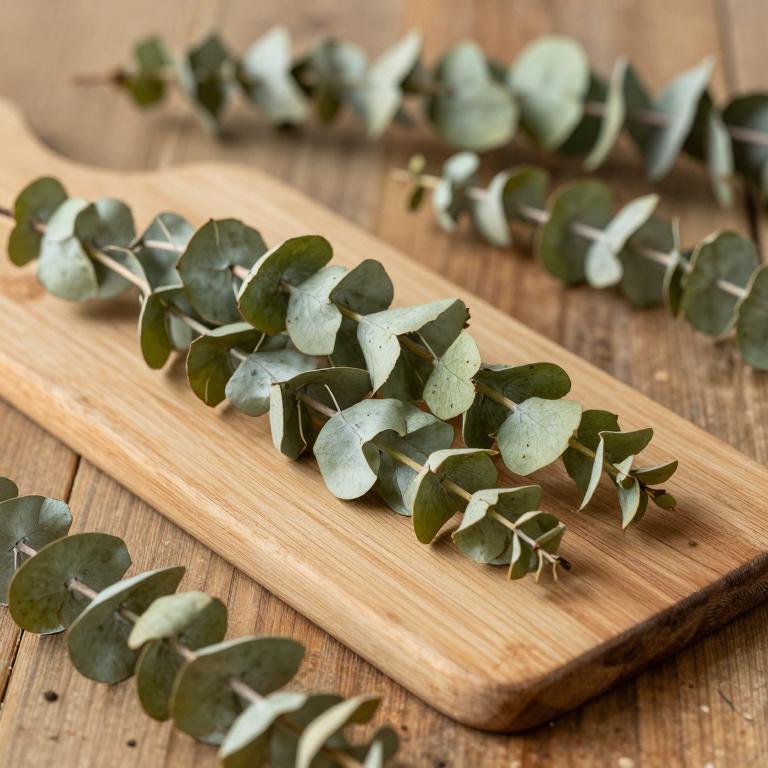
, scientifically known as Eucalyptus blakelyi, is a distinctive Australian tree prized for its medicinal potential. Commonly called Blakely's gum, its aromatic leaves contain essential oils with potent antimicrobial and decongestant properties. Often used in traditional remedies, it offers valuable therapeutic benefits for respiratory health and topical antiseptic applications.
- Family
- Not available
- Native range
- Africa
- Parts used
- Not available
- Common names
- Not available
- Scientific synonyms
- Not available
Names and Synonyms
Scientific Names
Accepted name
Eucalyptus blakelyiDistribution
This plant exhibits a broad and diverse geographical distribution across several distinct regions. In Australia, it can be found growing within the states of New South Wales and Queensland. Its range extends significantly into Asia, specifically covering South-Central China and Southeast China. Additionally, the species reaches far westward into the Macaronesia region, specifically the Canary Islands. Consequently, its habitat spans multiple continents and varied climatic zones.
| Region | Area |
|---|---|
| Macaronesia | Canary Is. |
| China | China South-Central |
| China | China Southeast |
| Australia | New South Wales |
| Australia | Queensland |
| Australia | Victoria |
Sources: The World Checklist of Vascular Plants (WCVP)
Botanical Identification
Life history
The life history of Eucalyptus blakelyi is characterized by its long-term existence as a perennial species, allowing it to maintain a stable presence within its ecological niche over many years. As a phanerophyte, its buds and growing points are elevated well above the ground level, typically on woody branches, which serves as a vital strategy for survival and continued growth in its native habitats. This phanerophyte life form ensures that the plant can reach significant heights, facilitating competition for sunlight and contributing to the structural complexity of its environment throughout its extensive life cycle.
- Life form :
- phanerophyte
- Lifecycle :
- perennial
Morphology
The morphology of Eucalyptus blakelyi is characterized by a woody, self-supporting growth form, specifically functioning as a tree that can reach a maximum height of 20 m. As a terrestrial species, it does not exhibit aquatic or semiaquatic tendencies, nor does it function as an epiphyte or a climber, such as a liana or vine. The plant is an independent organism, meaning it does not operate as a parasite, and its structural integrity is maintained through its robust, woody tissue.
- Aquatic :
- terrestrial
- Climber :
- self-supporting
- Epiphyte :
- terrestrial
- Growth form :
- tree
- Parasite :
- independent
- Plant height max:
- 20 m
- Woodiness :
- woody
Physiology
The physiology of Eucalyptus blackleyi is characterized by a C3 photosynthetic pathway, a metabolic strategy typical of many temperate and subtropical woody species that optimizes carbon fixation under moderate light and temperature conditions. The leaf morphology plays a critical role in its gas exchange and light interception capabilities, with leaf lengths exhibiting notable variation across the specimen. Specifically, the leaves typically maintain a mean length of 8.5 cm, though they can range from a minimum of 7 cm to a maximum of 10 cm. This variation in leaf dimensions contributes to the plant's ability to regulate transpiration and optimize its photosynthetic surface area in response to its environmental niche.
- Leaf length max:
- 10 cm
- Leaf length mean:
- 8.5 cm
- Leaf length min:
- 7 cm
- Photosynthetic pathway :
- C3
Reproduction
The reproduction of Eucalyptus blaekeyi is characterized by specific morphological dimensions regarding its inflorescence, fruit, and seeds. The inflorescence is relatively small, measuring between a minimum of 0.01 m and a maximum of 0.015 m in length. The resulting fruit exhibits highly consistent width, maintaining a uniform measurement of 0.5 cm across its minimum, mean, and maximum values. In terms of length, the fruit shows slightly more variation, with a minimum length of 0.5 cm, a mean length of 0.55 cm, and a maximum length of 0.6 cm. The seeds produced are minute, with a mean mass of 0.000775 g, though they range from a minimum of 0.0001 g to a maximum of 0.00157 g.
- Fruit length max:
- 0.6 cm
- Fruit length mean:
- 0.55 cm
- Fruit length min:
- 0.5 cm
- Fruit width max:
- 0.5 cm
- Inflorescence length max:
- 0.015 m
- Inflorescence length min:
- 0.01 m
- Seed mass max:
- 0.00157 g
- Seed mass mean:
- 0.000775 g
- Seed mass min:
- 1e-04 g
Sources: Global Inventory of Floras and Traits (GIFT)
Chemicals
Eucalyptus blakelyi has 36 reported phytochemicals identified across 0 scientific publications and several other databases. The most consistently reported chemicals include 1,8-Cineole, ALPHA-PHELLANDRENE, ALPHA-PINENE, ALPHA-TERPINYL ACETATE, ALPHA-THUJENE.
| Chemical | Supporting sources | Consensus |
|---|---|---|
| 1,8-Cineole | 1 supporting sources | ★☆☆☆☆ |
| ALPHA-PHELLANDRENE | 1 supporting sources | ★☆☆☆☆ |
| ALPHA-PINENE | 1 supporting sources | ★☆☆☆☆ |
| ALPHA-TERPINYL ACETATE | 1 supporting sources | ★☆☆☆☆ |
| ALPHA-THUJENE | 1 supporting sources | ★☆☆☆☆ |
| Allo-Aromadendrene | 1 supporting sources | ★☆☆☆☆ |
| Alpha terpinene | 1 supporting sources | ★☆☆☆☆ |
| Aromadendrene | 1 supporting sources | ★☆☆☆☆ |
| BETA-CARYOPHYLLENE | 1 supporting sources | ★☆☆☆☆ |
| BETA-ELEMENE | 1 supporting sources | ★☆☆☆☆ |
1,8-Cineole
- Dr. Duke
ALPHA-PHELLANDRENE
- Dr. Duke
ALPHA-PINENE
- Dr. Duke
ALPHA-TERPINYL ACETATE
- Dr. Duke
ALPHA-THUJENE
- Dr. Duke
Allo-Aromadendrene
- Dr. Duke
Alpha terpinene
- Dr. Duke
Aromadendrene
- Dr. Duke
BETA-CARYOPHYLLENE
- Dr. Duke
BETA-ELEMENE
- Dr. Duke
Activities
Eucalyptus blakelyi has 183 reported activities identified across 0 scientific publications and several other databases. The most consistently reported activities include (-)-Chronotropic, (-)-Inotropic, ACE-Inhibitor, AChE-Inhibitor, Acaricide.
| Activity | Supporting sources | Consensus |
|---|---|---|
| (-)-Chronotropic | 1 supporting sources | ★☆☆☆☆ |
| (-)-Inotropic | 1 supporting sources | ★☆☆☆☆ |
| ACE-Inhibitor | 1 supporting sources | ★☆☆☆☆ |
| AChE-Inhibitor | 1 supporting sources | ★☆☆☆☆ |
| Acaricide | 1 supporting sources | ★☆☆☆☆ |
| Aldose-Reductase-Inhibitor | 1 supporting sources | ★☆☆☆☆ |
| Allelochemic | 1 supporting sources | ★☆☆☆☆ |
| Allelopathic | 1 supporting sources | ★☆☆☆☆ |
| Allergenic | 1 supporting sources | ★☆☆☆☆ |
| Analgesic | 1 supporting sources | ★☆☆☆☆ |
(-)-Chronotropic
- Dr. Duke
(-)-Inotropic
- Dr. Duke
ACE-Inhibitor
- Dr. Duke
AChE-Inhibitor
- Dr. Duke
Acaricide
- Dr. Duke
Aldose-Reductase-Inhibitor
- Dr. Duke
Allelochemic
- Dr. Duke
Allelopathic
- Dr. Duke
Allergenic
- Dr. Duke
Analgesic
- Dr. Duke