bentham's-gum
Eucalyptus benthamii · Accepted scientific name
Scientific literature: Very Sparse (5 studies) · ★☆☆☆☆
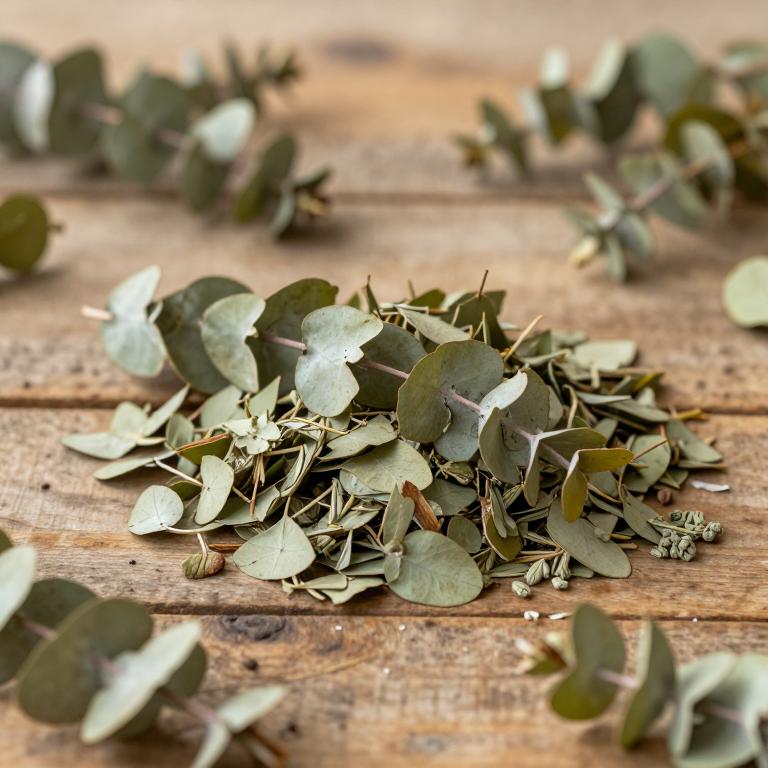
Bentham's-gum, scientifically known as Eucalyptus benthamii, is a distinctive Australian medicinal plant valued for its potent essential oils. Renowned for its therapeutic properties, it offers powerful antiseptic and decongestant benefits. Often used in traditional remedies to treat respiratory ailments, this hardy species remains a vital botanical resource.
- Family
- Myrtaceae
- Native range
- Australasia
- Parts used
- Not available
- Common names
- Bentham'S-Gum · Camden-White-Gum · 3 more
- Scientific synonyms
- Not available
Names and Synonyms
Common Names
- bentham's-gum
- camden-white-gum
- nepean-river-gum
- Camden White Gum
- Nepean River Gum
Scientific Names
Accepted name
Eucalyptus benthamiiSources: Wikidata, Catalogue of Life
Taxonomical Classification
This plant belongs to the kingdom Plantae and the phylum Streptophyta, situated within the class Equisetopsida and subclass Magnoliidae. It is further classified under the order Myrtales and the family Myrtaceae. Finally, its taxonomic identity is defined by the genus Eucalyptus.
| Rank | Classification |
|---|---|
| Kingdom | Plantae |
| Phylum | Streptophyta |
| Class | Equisetopsida |
| Subclass | Magnoliidae |
| Order | Myrtales |
| Family | Myrtaceae |
| Genus | Eucalyptus |
Sources: The World Checklist of Vascular Plants (WCVP)
Distribution
This plant, known as Eucalyptus benthamii, exhibits a very specific and limited natural range. Its geographical distribution is primarily concentrated within the continent of Australia. Specifically, this species is found inhabiting the diverse landscapes of New South Wales. Within this region, it occupies certain ecological niches that support its growth and survival. Consequently, its presence is a distinct characteristic of the local flora in that particular Australian state.
| Region | Area |
|---|---|
| Australia | New South Wales |
Sources: The World Checklist of Vascular Plants (WCVP)
Botanical Identification
Life history
The life history of Eucalyptus benthamii is characterized by its classification as a phanerophyte, specifically exhibiting traits consistent with both the phanerophyte and nanophanerophyte growth forms. As a phanerophyte, the plant maintains its perennial woody biomass above the ground level, protected by elevated buds that allow it to survive seasonal environmental stresses. Its developmental trajectory begins with seed germination in suitable soil conditions, leading to the establishment of a robust woody structure that defines its life cycle. The plant's growth habit allows it to occupy various ecological niches where its elevated reproductive and vegetative organs can access light and nutrients, ensuring long-term survival through successive growing seasons.
- Life form :
- phanerophyte
Morphology
The morphology of Eucalyptus benthamii is characterized by its growth form as a large, woody tree that reaches a maximum height of approximately 40 m. As a self-supporting species, it does not exhibit climbing or parasitic tendencies, functioning as an independent organism within its ecosystem. It is a terrestrial plant, lacking aquatic or semiaquatic adaptations, and does not function as an epiphyte. The structural integrity of the plant is defined by its robust, woody composition, which supports its substantial vertical stature.
- Aquatic :
- terrestrial
- Climber :
- self-supporting
- Epiphyte :
- terrestrial
- Growth form :
- tree
- Parasite :
- independent
- Plant height max:
- 40 m
- Woodiness :
- woody
Physiology
The physiology of Eucalyptus benthamii is characterized by a highly efficient metabolic framework adapted to the variable environmental conditions of its native habitats. Central to its energy production is its photosynthetic pathway, which functions exclusively through the C3 mechanism. In this process, carbon dioxide is initially fixed by the enzyme Rubisco to form a three-carbon compound, a characteristic typical of most woody sclerophyllous vegetation. This C3 pathway allows the plant to maximize carbon assimilation during periods of optimal temperature and moisture availability, although it necessitates sophisticated physiological adaptations to manage transpiration and photorespiration. To balance gas exchange with water conservation, the plant employs tight stomatal control and specialized leaf anatomy, ensuring that the metabolic demands of the C3 cycle are met even under significant evaporative demand.
- Photosynthetic pathway :
- C3
Reproduction
The reproduction of Eucalyptus benthamii is characterized by the production of minute seeds that exhibit notable variability in weight. The seed mass within the population fluctuates significantly, with a measured minimum value of 0.00053 g and a maximum value reaching up to 0.00219 g. When considering the population as a whole, the seed mass mean is recorded at 0.00136 g, reflecting the specific reproductive investment and dispersal potential inherent to this species.
- Seed mass max:
- 0.00219 g
- Seed mass mean:
- 0.00136 g
- Seed mass min:
- 0.00053 g
Sources: Global Inventory of Floras and Traits (GIFT)
Chemicals
Eucalyptus benthamii has 1 reported phytochemicals identified across 0 scientific publications and several other databases. The most consistently reported chemicals include nitric oxide.
| Chemical | Supporting sources | Consensus |
|---|---|---|
| nitric oxide | 1 supporting sources | ★☆☆☆☆ |
nitric oxide
- Evidence-based complementary and alternative medicine : eCAM
Conditions
Eucalyptus benthamii has 4 reported investigations on conditions identified across 0 scientific publications and several other databases. The most consistently reported conditions include arthritis, asthma, fever, rheumatism.
| Condition | Supporting sources | Consensus |
|---|---|---|
| Arthritis | 1 supporting sources | ★☆☆☆☆ |
| Asthma | 1 supporting sources | ★☆☆☆☆ |
| Fever | 1 supporting sources | ★☆☆☆☆ |
| Rheumatism | 1 supporting sources | ★☆☆☆☆ |
Arthritis
- Evidence-based complementary and alternative medicine : eCAM
Asthma
- Evidence-based complementary and alternative medicine : eCAM
Fever
- Evidence-based complementary and alternative medicine : eCAM
Rheumatism
- Evidence-based complementary and alternative medicine : eCAM