Eucalyptus behriana
Eucalyptus behriana · Accepted scientific name
Scientific literature: Very Extensive (250 studies) · ★★★★★
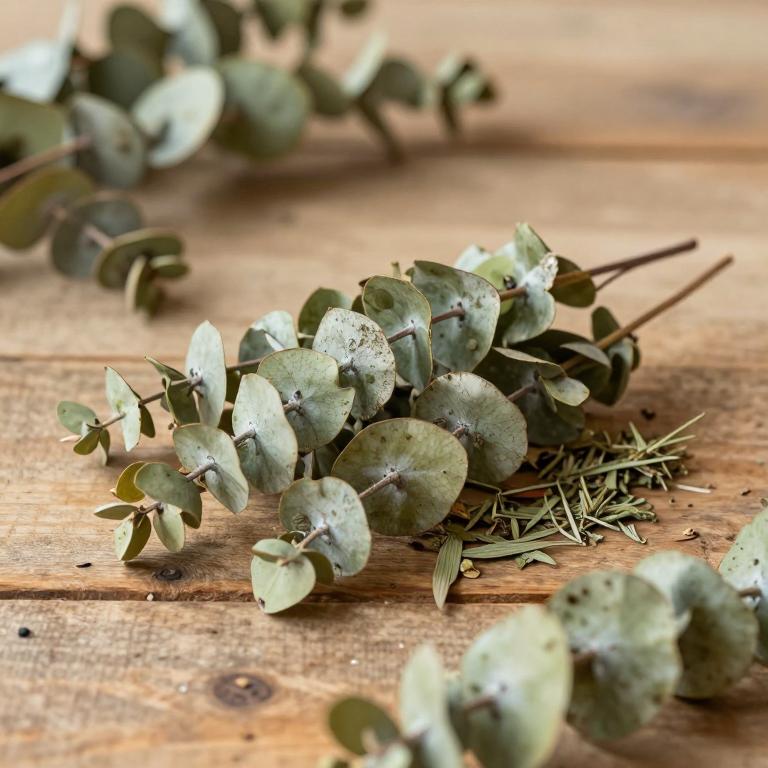
, scientifically known as Eucalyptus behriania, is a specialized medicinal plant native to specific ecological niches. Renowned for its potent essential oils, it possesses significant antimicrobial and anti-inflammatory properties. Traditional healers utilize its aromatic leaves to treat respiratory ailments, making it a valuable botanical resource in holistic pharmacology.
- Family
- Not available
- Native range
- Australasia
- Parts used
- Not available
- Common names
- Not available
- Scientific synonyms
- Not available
Names and Synonyms
Scientific Names
Accepted name
Eucalyptus behrianaDistribution
This plant, known scientifically as Eucalyptus behrianana, exhibits a specific distribution across the southeastern regions of Australia. Its presence is notably documented within the state of New South Wales. Furthermore, the species can be found extending into the territories of Victoria. The geographical range also encompasses parts of South Australia. Together, these locations define the natural habitat where this medicinal species thrives.
| Region | Area |
|---|---|
| Australia | New South Wales |
| Australia | South Australia |
| Australia | Victoria |
Sources: The World Checklist of Vascular Plants (WCVP)
Botanical Identification
Life history
The life history of Eucalyptus behrianana is characterized by its classification as a phanerophyte, a growth form where the perennating buds are located on aerial shoots well above the ground, allowing the plant to persist through unfavorable environmental conditions. Within this category, its developmental strategy aligns with the phanerophyte life form, signifying a woody perennial nature that invests heavily in structural biomass to elevate its photosynthetic organs. This life history allows the species to dominate its ecological niche, utilizing its elevated canopy to optimize light interception and reproductive success. As a perennial woody plant, it undergoes seasonal cycles of growth and maturation, maintaining its life cycle through robust above-ground structures that provide resilience against climatic fluctuations.
- Life form :
- phanerophyte
Morphology
The morphology of Eucalyptus behrianana is characterized by its growth form as a woody tree, reaching a maximum plant height of approximately 12 m. As a terrestrial organism, it exists as an independent species, neither functioning as a parasite nor an epiphyte. The plant is a self-supporting structure, lacking any climbing habits, and thrives in terrestrial environments rather than aquatic or semiaquatic habitats.
- Aquatic :
- terrestrial
- Climber :
- self-supporting
- Epiphyte :
- terrestrial
- Growth form :
- tree
- Parasite :
- independent
- Plant height max:
- 12 m
- Woodiness :
- woody
Physiology
The physiology of Eucalyptus behriana is characterized by a metabolic framework centered around the C3 photosynthetic pathway, a common mechanism in many woody perennial species that involves the direct fixation of atmospheric carbon dioxide by the enzyme RuBisCO. This C3 pathway dictates the plant's water-use efficiency and carbon assimilation patterns, as it relies on the opening of stomata to facilitate gas exchange, which inherently links photosynthetic activity to transpiration rates. The physiological efficiency of this pathway is heavily influenced by environmental variables such as light intensity, temperature, and water availability, which modulate the plant's ability to maintain carbon balance. Consequently, the metabolic processes of Eucalyptus behriana are finely tuned to optimize the conversion of light energy into chemical energy through the Calvin cycle, supporting its growth and structural development within its specific ecological niche.
- Photosynthetic pathway :
- C3
Reproduction
The reproduction of Eucalyptus behrianana is characterized by the production of highly uniform seeds, which play a critical role in its dispersal and establishment processes. Quantitative analysis of its reproductive output reveals a remarkably consistent seed mass across observed specimens. The seed mass mean is recorded at 0.00016 g, a value that is mirrored by both the seed mass maximum and the seed mass minimum, which are also 0.00016 g. This lack of variance in seed mass suggests a highly stabilized reproductive strategy, where each seed maintains a precise weight of 0.00016 g, ensuring predictable energetic investments for the progeny during germination.
- Seed mass mean:
- 0.00016 g
Sources: Global Inventory of Floras and Traits (GIFT)
Chemicals
Eucalyptus behriana has 74 reported phytochemicals identified across 0 scientific publications and several other databases. The most consistently reported chemicals include 1,8-Cineole, A-MUUROLENE, ALPHA-PHELLANDRENE, ALPHA-PINENE, ALPHA-SELINENE.
| Chemical | Supporting sources | Consensus |
|---|---|---|
| 1,8-Cineole | 1 supporting sources | ★☆☆☆☆ |
| A-MUUROLENE | 1 supporting sources | ★☆☆☆☆ |
| ALPHA-PHELLANDRENE | 1 supporting sources | ★☆☆☆☆ |
| ALPHA-PINENE | 1 supporting sources | ★☆☆☆☆ |
| ALPHA-SELINENE | 1 supporting sources | ★☆☆☆☆ |
| Allo-Aromadendrene | 1 supporting sources | ★☆☆☆☆ |
| Aromadendrene | 1 supporting sources | ★☆☆☆☆ |
| BETA-CARYOPHYLLENE | 1 supporting sources | ★☆☆☆☆ |
| BETA-ELEMENE | 1 supporting sources | ★☆☆☆☆ |
| BETA-PHELLANDRENE | 1 supporting sources | ★☆☆☆☆ |
1,8-Cineole
- Dr. Duke
A-MUUROLENE
- Dr. Duke
ALPHA-PHELLANDRENE
- Dr. Duke
ALPHA-PINENE
- Dr. Duke
ALPHA-SELINENE
- Dr. Duke
Allo-Aromadendrene
- Dr. Duke
Aromadendrene
- Dr. Duke
BETA-CARYOPHYLLENE
- Dr. Duke
BETA-ELEMENE
- Dr. Duke
BETA-PHELLANDRENE
- Dr. Duke
Activities
Eucalyptus behriana has 176 reported activities identified across 0 scientific publications and several other databases. The most consistently reported activities include (-)-Chronotropic, (-)-Inotropic, ACE-Inhibitor, AChE-Inhibitor, Acaricide.
| Activity | Supporting sources | Consensus |
|---|---|---|
| (-)-Chronotropic | 1 supporting sources | ★☆☆☆☆ |
| (-)-Inotropic | 1 supporting sources | ★☆☆☆☆ |
| ACE-Inhibitor | 1 supporting sources | ★☆☆☆☆ |
| AChE-Inhibitor | 1 supporting sources | ★☆☆☆☆ |
| Acaricide | 1 supporting sources | ★☆☆☆☆ |
| Aldose-Reductase-Inhibitor | 1 supporting sources | ★☆☆☆☆ |
| Allelochemic | 1 supporting sources | ★☆☆☆☆ |
| Allelopathic | 1 supporting sources | ★☆☆☆☆ |
| Allergenic | 1 supporting sources | ★☆☆☆☆ |
| Analgesic | 1 supporting sources | ★☆☆☆☆ |
(-)-Chronotropic
- Dr. Duke
(-)-Inotropic
- Dr. Duke
ACE-Inhibitor
- Dr. Duke
AChE-Inhibitor
- Dr. Duke
Acaricide
- Dr. Duke
Aldose-Reductase-Inhibitor
- Dr. Duke
Allelochemic
- Dr. Duke
Allelopathic
- Dr. Duke
Allergenic
- Dr. Duke
Analgesic
- Dr. Duke