Eucalyptus angulosa
Eucalyptus angulosa · Accepted scientific name
Scientific literature: Very Extensive (215 studies) · ★★★★★
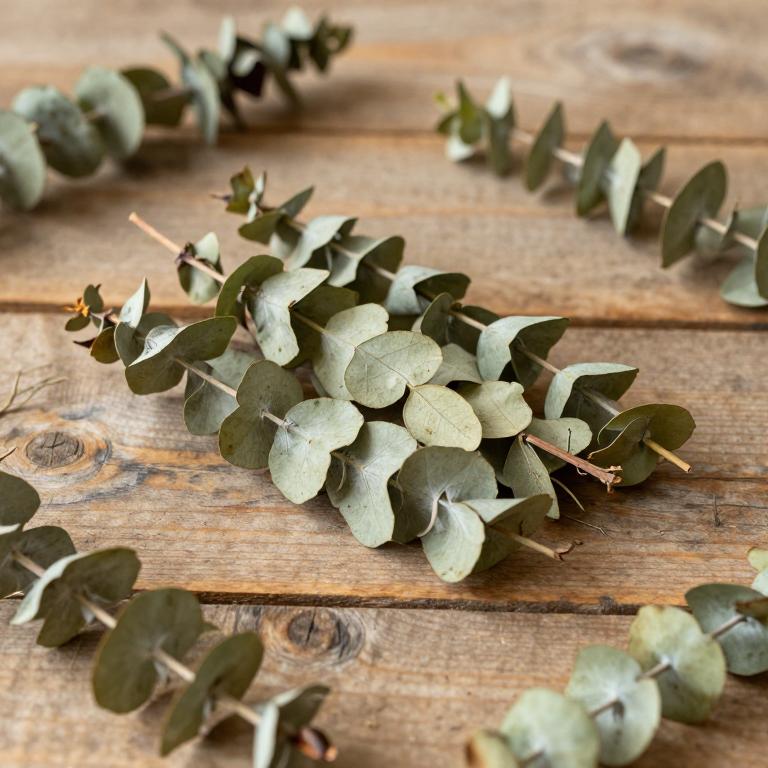
, scientifically known as Eucalyptus anguosa, is a resilient medicinal plant valued for its therapeutic properties. Often found in specific ecological niches, it contains essential oils with potent antimicrobial and anti-inflammatory benefits. This species serves as a vital resource in traditional medicine, offering natural remedies for respiratory and skin ailments.
- Family
- Not available
- Native range
- Australasia
- Parts used
- Not available
- Common names
- Not available
- Scientific synonyms
- Not available
Names and Synonyms
Scientific Names
Accepted name
Eucalyptus angulosaDistribution
This plant, known scientifically as Eucalyptus angulosa, possesses a specific and localized range within the Australian continent. Its natural occurrence is primarily restricted to certain regions of the southern and western parts of the country. Specifically, it can be found growing in the state of South Australia. Additionally, its population extends across parts of Western Australia. These two regions define the primary geographical distribution of this medicinal species.
| Region | Area |
|---|---|
| Australia | South Australia |
| Australia | Western Australia |
Sources: The World Checklist of Vascular Plants (WCVP)
Botanical Identification
Life history
The life history of Eucalyptus angulosa is characterized by its classification as a phanerophyte, specifically exhibiting traits associated with both phanerophyte and nanophanerophyte life forms. As a phanerophyte, the plant maintains its essential regenerative buds and growing points well above the soil surface, typically on woody branches, which allows it to withstand various environmental pressures. Its developmental strategy involves establishing a persistent woody structure that supports upward growth, distinguishing it from shorter-lived forms like chamaephytes or hemicryptophytes. By utilizing this phanerophyte life form, the species can effectively manage resources and structural integrity throughout its life cycle, ensuring its survival through seasonal changes and its ability to reach significant heights within its ecological niche.
- Life form :
- phanerophyte
Morphology
The morphology of Eucalyptus angulosa is characterized by its growth form as a woody tree that is entirely self-supporting. As an independent organism, it does not function as a parasite or an epiphyte, maintaining a strictly terrestrial existence rather than an aquatic or semiaquatic one. The plant exhibits a robust, woody structure with a height that typically ranges from a minimum of 1 meter to a maximum of 5 meters.
- Aquatic :
- terrestrial
- Climber :
- self-supporting
- Epiphyte :
- terrestrial
- Growth form :
- tree
- Parasite :
- independent
- Plant height max:
- 5 m
- Plant height min:
- 1 m
- Woodiness :
- woody
Physiology
The physiology of Eucalyptus angulosa is characterized by its specialized adaptations to semi-arid environments, most notably through its utilization of the C3 photosynthetic pathway. As a C3 plant, the initial carbon fixation occurs via the enzyme Rubisco, which incorporates atmospheric carbon dioxide directly into a three-carbon compound within the mesophyll cells. To mitigate the physiological stresses associated with this pathway in high-temperature or water-limited habitats, the plant exhibits sophisticated stomatal control and leaf anatomical adaptations to optimize the trade-off between carbon dioxide uptake and transpirational water loss. Its metabolic processes are further supported by a robust hydraulic system designed to maintain leaf water potential and facilitate nutrient transport under fluctuating environmental conditions.
- Photosynthetic pathway :
- C3
Reproduction
The reproduction of Eucalyptus angulosa is centered around the production and dispersal of specialized seeds that exhibit significant morphological variation in terms of weight. The seed mass within this species is characterized by a wide range, with a recorded minimum value of 0.00189 g and a maximum value reaching up to 0.0153 g. On average, the seed mass for this plant is approximately 0.008595 g, a metric that plays a critical role in determining the plant's dispersal capabilities and its ability to establish in diverse environmental niches.
- Seed mass max:
- 0.0153 g
- Seed mass mean:
- 0.008595 g
- Seed mass min:
- 0.00189 g
Sources: Global Inventory of Floras and Traits (GIFT)
Chemicals
Eucalyptus angulosa has 56 reported phytochemicals identified across 0 scientific publications and several other databases. The most consistently reported chemicals include 1,8-Cineole, ALPHA-PHELLANDRENE, ALPHA-PINENE, ALPHA-SELINENE, Allo-Aromadendrene.
| Chemical | Supporting sources | Consensus |
|---|---|---|
| 1,8-Cineole | 1 supporting sources | ★☆☆☆☆ |
| ALPHA-PHELLANDRENE | 1 supporting sources | ★☆☆☆☆ |
| ALPHA-PINENE | 1 supporting sources | ★☆☆☆☆ |
| ALPHA-SELINENE | 1 supporting sources | ★☆☆☆☆ |
| Allo-Aromadendrene | 1 supporting sources | ★☆☆☆☆ |
| Aromadendrene | 1 supporting sources | ★☆☆☆☆ |
| BETA-CARYOPHYLLENE | 1 supporting sources | ★☆☆☆☆ |
| BETA-ELEMENE | 1 supporting sources | ★☆☆☆☆ |
| BETA-PHELLANDRENE | 1 supporting sources | ★☆☆☆☆ |
| BETA-PINENE | 1 supporting sources | ★☆☆☆☆ |
1,8-Cineole
- Dr. Duke
ALPHA-PHELLANDRENE
- Dr. Duke
ALPHA-PINENE
- Dr. Duke
ALPHA-SELINENE
- Dr. Duke
Allo-Aromadendrene
- Dr. Duke
Aromadendrene
- Dr. Duke
BETA-CARYOPHYLLENE
- Dr. Duke
BETA-ELEMENE
- Dr. Duke
BETA-PHELLANDRENE
- Dr. Duke
BETA-PINENE
- Dr. Duke
Activities
Eucalyptus angulosa has 159 reported activities identified across 0 scientific publications and several other databases. The most consistently reported activities include (-)-Chronotropic, (-)-Inotropic, ACE-Inhibitor, AChE-Inhibitor, Acaricide.
| Activity | Supporting sources | Consensus |
|---|---|---|
| (-)-Chronotropic | 1 supporting sources | ★☆☆☆☆ |
| (-)-Inotropic | 1 supporting sources | ★☆☆☆☆ |
| ACE-Inhibitor | 1 supporting sources | ★☆☆☆☆ |
| AChE-Inhibitor | 1 supporting sources | ★☆☆☆☆ |
| Acaricide | 1 supporting sources | ★☆☆☆☆ |
| Aldose-Reductase-Inhibitor | 1 supporting sources | ★☆☆☆☆ |
| Allelochemic | 1 supporting sources | ★☆☆☆☆ |
| Allelopathic | 1 supporting sources | ★☆☆☆☆ |
| Allergenic | 1 supporting sources | ★☆☆☆☆ |
| Analgesic | 1 supporting sources | ★☆☆☆☆ |
(-)-Chronotropic
- Dr. Duke
(-)-Inotropic
- Dr. Duke
ACE-Inhibitor
- Dr. Duke
AChE-Inhibitor
- Dr. Duke
Acaricide
- Dr. Duke
Aldose-Reductase-Inhibitor
- Dr. Duke
Allelochemic
- Dr. Duke
Allelopathic
- Dr. Duke
Allergenic
- Dr. Duke
Analgesic
- Dr. Duke