black-peppermint
Eucalyptus amygdalina · Accepted scientific name
Scientific literature: Very Sparse (1 studies) · ★☆☆☆☆
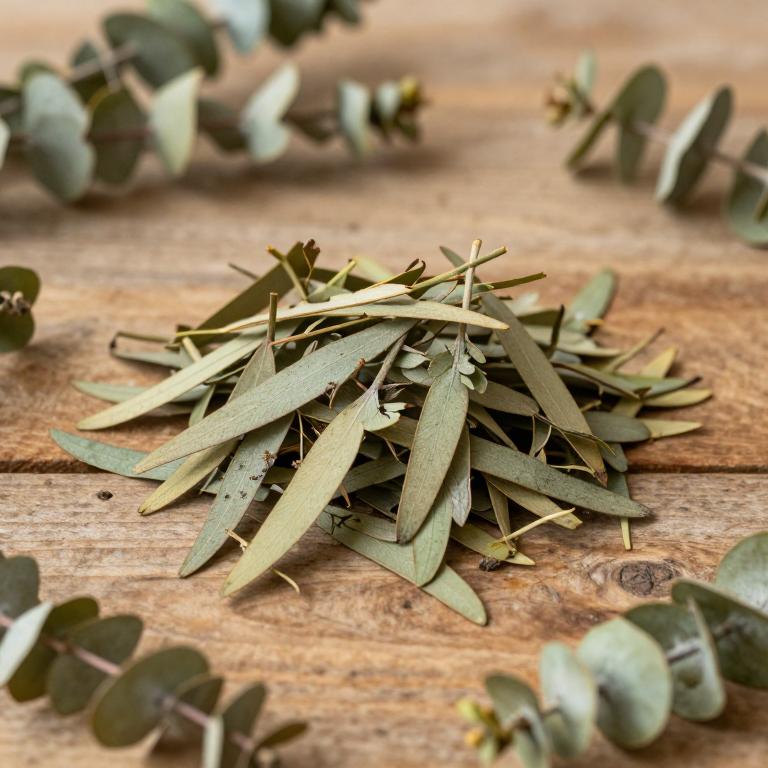
Black-peppermint, scientifically known as Eucalyptus amygdalina, is a remarkable medicinal plant prized for its potent aromatic properties. Native to specific ecological niches, it contains unique essential oils used in traditional healing to alleviate respiratory issues, reduce inflammation, and provide antimicrobial benefits, making it a vital resource in ethnobotany.
Names and Synonyms
Common Names
- black-peppermint
- brown-peppermint
- giant-eucalypt
- peppermint-tree
- white-peppermint
- Black Peppermint
- black peppermint gum
Scientific Names
Accepted name
Eucalyptus amygdalinaSynonyms
- Eucalyptus amygdalina var. alpina
- Eucalyptus amygdalina var. numerosa
- Eucalyptus calyculata
- Eucalyptus numerosa
- Eucalyptus glandulosa
- Eucalyptus salicifolia
Sources: Wikidata, Catalogue of Life
Taxonomical Classification
This plant belongs to the kingdom Plantae and is classified under the phylum Streptophyta and class Equisetopsida. Within the subclass Magnoliidae, it is organized under the order Myrtales and the family Myrtaceae. Finally, it is identified by the genus Eucalyptus.
| Rank | Classification |
|---|---|
| Kingdom | Plantae |
| Phylum | Streptophyta |
| Class | Equisetopsida |
| Subclass | Magnoliidae |
| Order | Myrtales |
| Family | Myrtaceae |
| Genus | Eucalyptus |
Sources: The World Checklist of Vascular Plants (WCVP)
Distribution
This plant exhibits a specific geographical distribution that spans across distinct oceanic regions. In its native range, it can be found growing within the island state of Tasmania in Australia. Beyond its primary habitat, the species has also expanded into the North-Central Pacific region. Specifically, it is documented as growing in the tropical environment of Hawaii. These two locations represent the primary areas where the plant is currently distributed.
| Region | Area |
|---|---|
| Australia | Tasmania |
| North-Central Pacific | Hawaii |
Sources: The World Checklist of Vascular Plants (WCVP)
Botanical Identification
Life history
The life history of Eucalyptus amygdalina is characterized by a perennial lifecycle, allowing the plant to persist through multiple growing seasons and establish long-term presence in its ecosystem. As a phanerophyte, its regenerative buds are elevated well above the ground level, a structural adaptation that supports its growth into a significant woody form. Specifically, its classification as a phanerophyte in both its primary life form categorization and its detailed structural designation indicates a growth habit where the vital parts of the plant are held high on stems or branches, protected from surface-level environmental disturbances.
- Life form :
- phanerophyte
- Lifecycle :
- perennial
Morphology
The morphology of Eucalyptus amygdalina is characterized by its growth form as a woody tree, which functions as a self-supporting organism rather than a climber or liana. It is a terrestrial plant, existing independently without parasitic or epiphytic dependencies, and it thrives in non-aquatic environments. The plant exhibits significant vertical development, with a height ranging from a minimum of 3 meters to a maximum of 30 meters. Its structure is defined by its robust, woody nature, providing the necessary stability for its stature as a large tree.
- Aquatic :
- terrestrial
- Climber :
- self-supporting
- Epiphyte :
- terrestrial
- Growth form :
- tree
- Parasite :
- independent
- Plant height max:
- 30 m
- Plant height min:
- 3 m
- Woodiness :
- woody
Physiology
The physiology of Eucalyptus amygdalina is characterized by a specialized photosynthetic mechanism and distinct morphological adaptations of its foliage. The plant utilizes the C3 photosynthetic pathway, a fundamental metabolic process for carbon fixation that dictates its efficiency in various environmental conditions. Morphologically, the leaves exhibit a narrow, lanceolate structure, with dimensions ranging from a minimum length of 7 cm to a maximum length of 12 cm. The width of these leaves is similarly constrained, varying from a minimum of 0.5 cm to a maximum of 1.3 cm, reflecting a leaf architecture optimized for specific gas exchange and transpiration requirements.
- Leaf length max:
- 12 cm
- Leaf length min:
- 7 cm
- Leaf width max:
- 1.3 cm
- Leaf width min:
- 0.5 cm
- Photosynthetic pathway :
- C3
Reproduction
The reproduction of Eucalyptus amygdalina is characterized by the development of specialized fruiting structures and minute seeds. The plant produces fruits that vary in dimension, with a minimum fruit length of 0.4 cm and a maximum length reaching 0.7 cm. Similarly, the fruit width fluctuates between a minimum of 0.5 cm and a maximum of 0.7 cm. Within these fruits, the seeds exhibit significant variability in mass; while the mean seed mass is approximately 0.005243333 g, individual seeds can be as light as 0.00044 g or as heavy as 0.0083 g, reflecting a diverse range of reproductive outputs.
- Fruit length max:
- 0.7 cm
- Fruit length min:
- 0.4 cm
- Fruit width max:
- 0.7 cm
- Fruit width min:
- 0.5 cm
- Seed mass max:
- 0.0083 g
- Seed mass mean:
- 0.005243333 g
- Seed mass min:
- 0.00044 g
Sources: Global Inventory of Floras and Traits (GIFT)
Chemicals
Eucalyptus amygdalina has 1 reported phytochemicals identified across 0 scientific publications and several other databases. The most consistently reported chemicals include Terpenoids.
| Chemical | Supporting sources | Consensus |
|---|---|---|
| Terpenoids | 1 supporting sources | ★☆☆☆☆ |
Terpenoids
- Evolution; international journal of organic evolution