white box
Eucalyptus albens · Accepted scientific name
Scientific literature: Very Extensive (226 studies) · ★★★★★
White box, scientifically known as Eucalyptus albens, is a resilient Australian native tree prized for its medicinal properties. Its aromatic leaves contain essential oils with potent antiseptic and decongestant qualities. Traditionally used to treat respiratory ailments, this versatile species offers significant therapeutic potential in both folk medicine and modern pharmacology.
- Family
- Myrtaceae
- Native range
- Africa
- Parts used
- Flower
- Common names
- White Box
- Scientific synonyms
- Eucalyptus Hemiphloia Var. Albens · Eucalyptus Albens Var. Elongata
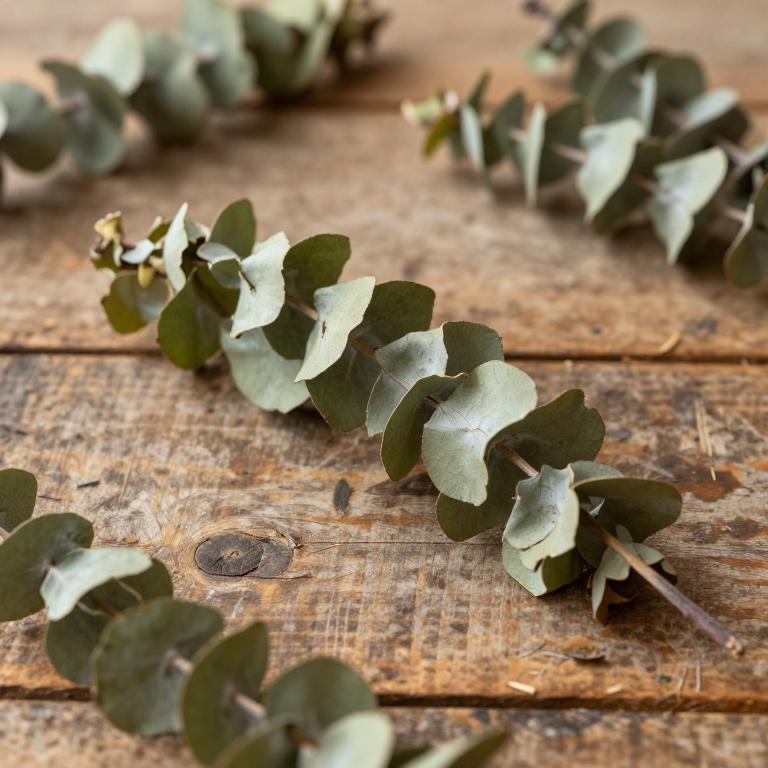
Names and Synonyms
Common Names
- white box
Scientific Names
Accepted name
Eucalyptus albensSynonyms
- Eucalyptus hemiphloia var. albens
- Eucalyptus albens var. elongata
Regional and Traditional Names
Spanish:
- Eucalyptus hemiphloia var. albens
- Eucalyptus albens var. elongata
Sources: Wikidata, Catalogue of Life
Taxonomical Classification
This plant belongs to the kingdom Plantae and the phylum Streptophyta, falling under the class Equisetopsida and subclass Magnoliidae. Within the order Myrtales, it is classified under the family Myrtaceae and the genus Eucalyptus.
| Rank | Classification |
|---|---|
| Kingdom | Plantae |
| Phylum | Streptophyta |
| Class | Equisetopsida |
| Subclass | Magnoliidae |
| Order | Myrtales |
| Family | Myrtaceae |
| Genus | Eucalyptus |
Sources: The World Checklist of Vascular Plants (WCVP)
Distribution
This plant exhibits a wide geographical distribution that spans across two different continents. In Australia, it is commonly found within the regions of New South Wales, Queensland, and South Australia. Its presence also extends into East Tropical Africa, where it can be located in Kenya. Furthermore, the species is established within the borders of Uganda. This diverse range highlights the plant's ability to adapt to varied environments across the globe.
| Region | Area |
|---|---|
| East Tropical Africa | Kenya |
| East Tropical Africa | Uganda |
| Australia | New South Wales |
| Australia | Queensland |
| Australia | South Australia |
| Australia | Victoria |
| North-Central Pacific | Hawaii |
Sources: The World Checklist of Vascular Plants (WCVP)
Botanical Identification
Genetics
The genetics of Eucalyptus albens are characterized by a specific chromosomal configuration, with a documented chromosome number of 22. This diploid number serves as a fundamental component of its genomic structure, influencing the inheritance patterns and evolutionary stability of the species within its natural habitats. Such genetic data is critical for understanding the plant's reproductive biology, potential for hybridization, and its capacity for adaptation to varying environmental pressures. The stability of this chromosomal count plays a significant role in maintaining the species' identity and its physiological responses to the ecosystems it inhabits.
- Chromosome number :
- 22
Life history
The life history of Eucalyptus albens is characterized by its status as a perennial species, allowing it to persist in its environment over many years through successive growing seasons. As a phanerophyte, its regenerative buds are elevated well above the ground on woody stems, a structural adaptation that facilitates its growth as a substantial tree. This phanerophyte life form is consistent across its developmental stages, ensuring that its vital growing points remain protected and positioned to maximize light interception and environmental interaction throughout its extended lifespan.
- Life form :
- phanerophyte
- Lifecycle :
- perennial
Morphology
The morphology of Eucalyptus albens is characterized by its robust, woody growth form, functioning as a self-supporting tree. As a terrestrial species, it does not exhibit aquatic, semiaquatic, or epiphytic tendencies, maintaining an independent existence without acting as a parasite. The plant's physical stature is substantial, typically reaching a height ranging from a minimum of 15 meters to a maximum of 25 meters. Its structure is defined by its woody nature, providing the necessary stability for its large-scale arboreal habit.
- Aquatic :
- terrestrial
- Climber :
- self-supporting
- Epiphyte :
- terrestrial
- Growth form :
- tree
- Parasite :
- independent
- Plant height max:
- 25 m
- Plant height min:
- 15 m
- Woodiness :
- woody
Physiology
The physiology of Eucalyptus albens is characterized by a C3 photosynthetic pathway, a metabolic strategy typical of many temperate woody species that facilitates carbon fixation under varying environmental conditions. The leaf morphology plays a critical role in its physiological efficiency and water management, with individual leaves exhibiting a specific size range. The leaf length typically varies between a minimum of 10 cm and a maximum of 16 cm, while the leaf width scales from a minimum of 1.7 cm to a maximum of 3 cm. These dimensions contribute to the total surface area available for gas exchange and light interception, which are fundamental to the plant's energy production and overall metabolic rate.
- Leaf length max:
- 16 cm
- Leaf length min:
- 10 cm
- Leaf width max:
- 3 cm
- Leaf width min:
- 1.7 cm
- Photosynthetic pathway :
- C3
Reproduction
The reproduction of Eucalyptus albens involves the production of specialized woody fruits and microscopic seeds. The fruits produced by this species exhibit significant morphological variation, with lengths ranging from a minimum of 0.6 cm to a maximum of 1.5 cm. In terms of diameter, the fruit width fluctuates between a minimum of 0.5 cm and a maximum of 1 cm. Within these structures, the plant produces highly lightweight seeds that play a critical role in dispersal. The seed mass shows a wide distribution, with a minimum weight of 0.00049 g and a maximum weight reaching up to 0.00509 g, resulting in an overall mean seed mass of approximately 0.0026525 g.
- Fruit length max:
- 1.5 cm
- Fruit length min:
- 0.6 cm
- Fruit width max:
- 1 cm
- Fruit width min:
- 0.5 cm
- Seed mass max:
- 0.00509 g
- Seed mass mean:
- 0.0026525 g
- Seed mass min:
- 0.00049 g
Sources: Global Inventory of Floras and Traits (GIFT)
Plant Parts
Eucalyptus albens has 1 reported plant parts identified across 1 scientific publications and several other databases that are studied for medicinal purposes. The most consistently reported plant part include flower.
| Plant part | Supporting sources | Consensus |
|---|---|---|
| Flower | 1 supporting sources | ★☆☆☆☆ |
Flower
- Journal of natural products
Chemicals
Eucalyptus albens has 39 reported phytochemicals identified across 1 scientific publications and several other databases. The most consistently reported chemicals include 1,8-Cineole, ALPHA-PHELLANDRENE, ALPHA-PINENE, ALPHA-TERPINYL ACETATE, ALPHA-THUJENE.
| Chemical | Supporting sources | Consensus |
|---|---|---|
| 1,8-Cineole | 1 supporting sources | ★☆☆☆☆ |
| ALPHA-PHELLANDRENE | 1 supporting sources | ★☆☆☆☆ |
| ALPHA-PINENE | 1 supporting sources | ★☆☆☆☆ |
| ALPHA-TERPINYL ACETATE | 1 supporting sources | ★☆☆☆☆ |
| ALPHA-THUJENE | 1 supporting sources | ★☆☆☆☆ |
| Allo-Aromadendrene | 1 supporting sources | ★☆☆☆☆ |
| Alpha terpinene | 1 supporting sources | ★☆☆☆☆ |
| Aromadendrene | 1 supporting sources | ★☆☆☆☆ |
| BETA-CARYOPHYLLENE | 1 supporting sources | ★☆☆☆☆ |
| BETA-ELEMENE | 1 supporting sources | ★☆☆☆☆ |
1,8-Cineole
- Dr. Duke
ALPHA-PHELLANDRENE
- Dr. Duke
ALPHA-PINENE
- Dr. Duke
ALPHA-TERPINYL ACETATE
- Dr. Duke
ALPHA-THUJENE
- Dr. Duke
Allo-Aromadendrene
- Dr. Duke
Alpha terpinene
- Dr. Duke
Aromadendrene
- Dr. Duke
BETA-CARYOPHYLLENE
- Dr. Duke
BETA-ELEMENE
- Dr. Duke
Activities
Eucalyptus albens has 186 reported activities identified across 1 scientific publications and several other databases. The most consistently reported activities include (-)-Chronotropic, (-)-Inotropic, ACE-Inhibitor, AChE-Inhibitor, Acaricide.
| Activity | Supporting sources | Consensus |
|---|---|---|
| (-)-Chronotropic | 1 supporting sources | ★☆☆☆☆ |
| (-)-Inotropic | 1 supporting sources | ★☆☆☆☆ |
| ACE-Inhibitor | 1 supporting sources | ★☆☆☆☆ |
| AChE-Inhibitor | 1 supporting sources | ★☆☆☆☆ |
| Acaricide | 1 supporting sources | ★☆☆☆☆ |
| Aldose-Reductase-Inhibitor | 1 supporting sources | ★☆☆☆☆ |
| Allelochemic | 1 supporting sources | ★☆☆☆☆ |
| Allelopathic | 1 supporting sources | ★☆☆☆☆ |
| Allergenic | 1 supporting sources | ★☆☆☆☆ |
| Analgesic | 1 supporting sources | ★☆☆☆☆ |
(-)-Chronotropic
- Dr. Duke
(-)-Inotropic
- Dr. Duke
ACE-Inhibitor
- Dr. Duke
AChE-Inhibitor
- Dr. Duke
Acaricide
- Dr. Duke
Aldose-Reductase-Inhibitor
- Dr. Duke
Allelochemic
- Dr. Duke
Allelopathic
- Dr. Duke
Allergenic
- Dr. Duke
Analgesic
- Dr. Duke