Erythroxylum campestre
Erythroxylum campestre · Accepted scientific name
Scientific literature: Very Sparse (29 studies) · ★☆☆☆☆
scientifically known as Erythroxylum campestre, is a significant medicinal shrub native to tropical regions. Frequently utilized in traditional healing practices, it is valued for its diverse bioactive compounds. This plant offers promising therapeutic potential, particularly in treating various ailments, making it a subject of great botanical interest.
- Family
- Not available
- Native range
- Southern America
- Parts used
- Leaf
- Common names
- Not available
- Scientific synonyms
- Not available
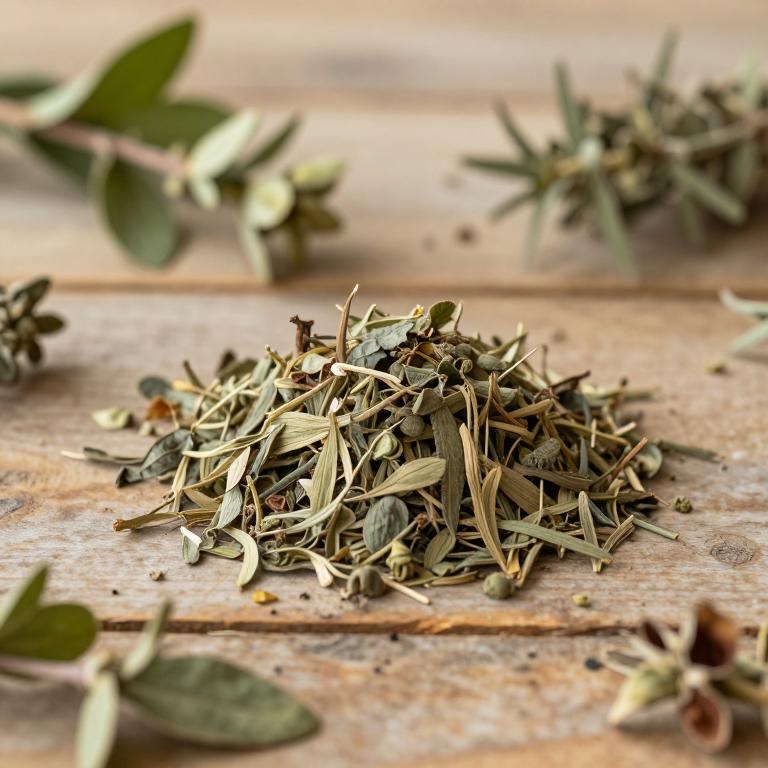
Names and Synonyms
Scientific Names
Accepted name
Erythroxylum campestreDistribution
This plant exhibits a diverse geographical range across several regions of the South American continent. In Northern South America, its presence is documented within the borders of Guyana. Moving toward the western part of the continent, it can be found in the nation of Bolivia. Within Brazil, the species is widely distributed across the West-Central, Northeast, and Southeast regions. Collectively, these locations highlight the broad environmental adaptability of the species across different South American landscapes.
| Region | Area |
|---|---|
| Northern South America | Guyana |
| Western South America | Bolivia |
| Brazil | Brazil West-Central |
| Brazil | Brazil Northeast |
| Brazil | Brazil Southeast |
| Brazil | Brazil South |
| Southern South America | Paraguay |
Sources: The World Checklist of Vascular Plants (WCVP)
Botanical Identification
Ecology
The ecology of Erythroxylum campestre is characterized by its presence in distinct Brazilian biomes, specifically inhabiting the Campo Rupestre and Cerrado (latu sensu) environments. This species thrives across a broad altitudinal gradient, ranging from sea level up to an elevation of 1000 m AMSL.
- Elevational range max:
- 1000 m AMSL
- Elevational range min:
- 0 m AMSL
- Habitat :
- Campo Rupestre, Cerrado (lato sensu)
Life history
The life history of Erythroxylum campestre is characterized by its status as a perennial organism, allowing it to persist in its environment through multiple growing seasons. As a phanerophyte, it maintains its photosynthetic organs well above the ground level, exhibiting a life form categorized under both phanerophyte and phanerophyte classifications, which typically involves a woody structure that protects its buds during unfavorable conditions.
- Life form :
- phanerophyte
- Lifecycle :
- perennial
Morphology
The morphology of Erythroxylum campestre is characterized by its distinct growth forms and structural adaptations, primarily manifesting as a woody plant that can range from a subshrub to a small tree. It is categorized as a terrestrial species, existing within terrestrial habitats rather than aquatic or semiaquatic environments. In terms of its structural support and climbing habits, it is classified as a self-supporting plant, lacking the characteristics of an obligatory or facultative climber such as a liana or vine. Furthermore, it does not exhibit epiphytic behavior, remaining strictly terrestrial rather than acting as a holoepiphyte, hemiepiphyte, or any other form of epiphyte. As a non-parasitic organism, it maintains an independent existence, relying on its own physiological processes rather than functioning as an obligatory or facultative parasite.
- Aquatic :
- terrestrial
- Climber :
- self-supporting
- Epiphyte :
- terrestrial
- Growth form :
- tree
- Growth form :
- subshrub
- Parasite :
- independent
- Woodiness :
- woody
Physiology
The physiology of Erythroxylum campesina is characterized by a specialized metabolic framework optimized for its specific environmental niche, most notably defined by its photosynthetic pathway. This plant utilizes the C3 photosynthetic pathway, a process wherein the first stable intermediate formed during carbon fixation is a three-carbon molecule, typically facilitated by the enzyme Rubisco within the mesophyll cells. This metabolic strategy dictates its water-use efficiency and carbon assimilation rates, as the plant must balance gas exchange through its stomata to acquire CO2 while minimizing transpiration. Beyond carbon fixation, the physiological processes of Erythroxylum campesina involve complex secondary metabolism, specifically the biosynthesis of alkaloids within specialized cells, which are regulated by various enzymatic pathways to serve defensive or adaptive functions. The integration of these C3-driven energy production processes with specialized chemical synthesis governs the plant's overall growth, development, and survival in its native habitat.
- Photosynthetic pathway :
- C3
Sources: Global Inventory of Floras and Traits (GIFT)
Plant Parts
Erythroxylum campestre has 1 reported plant parts identified across 1 scientific publications and several other databases that are studied for medicinal purposes. The most consistently reported plant part include leaf.
| Plant part | Supporting sources | Consensus |
|---|---|---|
| Leaf | 1 supporting sources | ★☆☆☆☆ |
Leaf
- Pharmaceuticals (Basel, Switzerland)
Chemicals
Erythroxylum campestre has 1 reported phytochemicals identified across 1 scientific publications and several other databases. The most consistently reported chemicals include cocaine.
| Chemical | Supporting sources | Consensus |
|---|---|---|
| cocaine | 1 supporting sources | ★☆☆☆☆ |
cocaine
- Dr. Duke
Activities
Erythroxylum campestre has 26 reported activities identified across 1 scientific publications and several other databases. The most consistently reported activities include Anesthetic, Anorexic, Antiarrhythmic, Antibacterial, Antiepistactic.
| Activity | Supporting sources | Consensus |
|---|---|---|
| Anesthetic | 1 supporting sources | ★☆☆☆☆ |
| Anorexic | 1 supporting sources | ★☆☆☆☆ |
| Antiarrhythmic | 1 supporting sources | ★☆☆☆☆ |
| Antibacterial | 1 supporting sources | ★☆☆☆☆ |
| Antiepistactic | 1 supporting sources | ★☆☆☆☆ |
| Antifeedant | 1 supporting sources | ★☆☆☆☆ |
| Arterioconstrictor | 1 supporting sources | ★☆☆☆☆ |
| CNS-Stimulant | 1 supporting sources | ★☆☆☆☆ |
| Cardiotonic | 1 supporting sources | ★☆☆☆☆ |
| Convulsant | 1 supporting sources | ★☆☆☆☆ |
Anesthetic
- Dr. Duke
Anorexic
- Dr. Duke
Antiarrhythmic
- Dr. Duke
Antibacterial
- Dr. Duke
Antiepistactic
- Dr. Duke
Antifeedant
- Dr. Duke
Arterioconstrictor
- Dr. Duke
CNS-Stimulant
- Dr. Duke
Cardiotonic
- Dr. Duke
Convulsant
- Dr. Duke
Conditions
Erythroxylum campestre has 1 reported investigations on conditions identified across 1 scientific publications and several other databases. The most consistently reported conditions include hypertension.
| Condition | Supporting sources | Consensus |
|---|---|---|
| Hypertension | 1 supporting sources | ★☆☆☆☆ |
Hypertension
- Pharmaceuticals (Basel, Switzerland)