Mysorethorn
Erythrostemon gilliesii · Accepted scientific name
Scientific literature: Very Sparse (2 studies) · ★☆☆☆☆
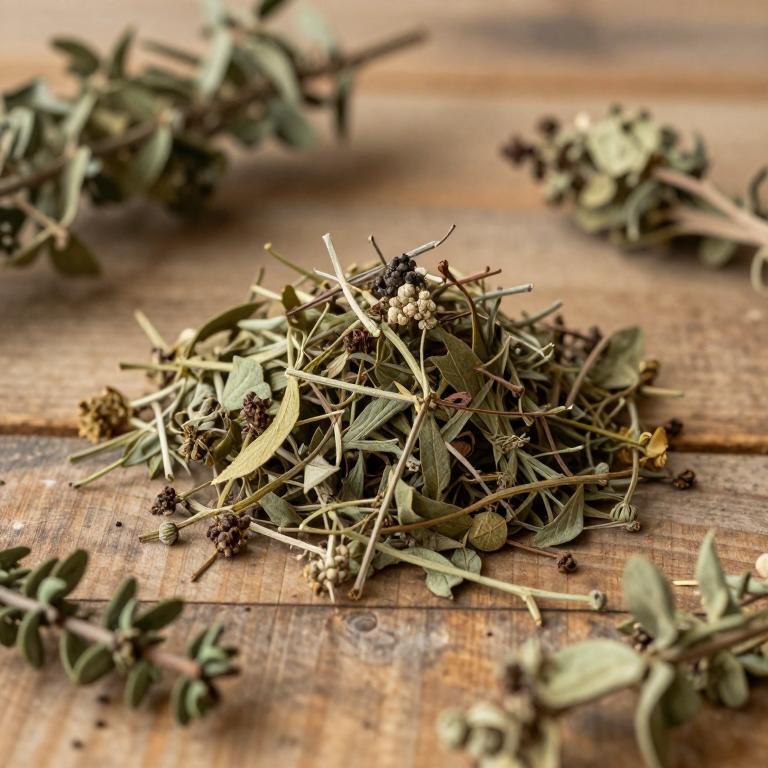
Mysorethorn, scientifically known as Erythrostemon gilliesii, is a versatile medicinal shrub native to tropical regions. Renowned for its therapeutic properties, this plant is traditionally utilized in various herbal remedies to treat skin ailments, inflammatory conditions, and digestive issues. Its unique botanical characteristics make it a significant subject in ethnopharmacology.
Names and Synonyms
Common Names
- Mysorethorn
- bird-of-paradise
- cat's-claw
- desert bird-of-paradise
- hardy bird-of-paradise tree
- yellow bird-of-paradise bush
- yellow bird-of-paradise shrub
- Bird of Paradise
Scientific Names
Accepted name
Erythrostemon gilliesiiSynonyms
- Caesalpinia macrantha
- Poinciana gilliesii
- Prosopis gillesii
- Caesalpinia gilliesii
Regional and Traditional Names
Spanish:
- Barba de chivo
- Lagaña de perro
German:
- Paradiesvogelbusch
French:
- Césalpinie de Gillies
- Oiseaux de paradis
Sources: Wikidata, Catalogue of Life
Taxonomical Classification
This plant belongs to the kingdom Plantae and the phylum Streptophyta, specifically classified within the class Equisetopsida and subclass Magnoliidae. As a member of the order Fabales and the family Fabaceae, it is further identified by its genus, Erythrostemon.
| Rank | Classification |
|---|---|
| Kingdom | Plantae |
| Phylum | Streptophyta |
| Class | Equisetopsida |
| Subclass | Magnoliidae |
| Order | Fabales |
| Family | Fabaceae |
| Genus | Erythrostemon |
Sources: The World Checklist of Vascular Plants (WCVP)
Distribution
This plant exhibits a specific geographical distribution spanning several regions across Europe. In Southwestern Europe, its presence is documented within the borders of Spain. Moving toward Southeastern Europe, it can be found in Bulgaria and throughout Italy. The plant also inhabits the island of Sicilia, which is located in the southeastern portion of the continent. Finally, its range extends to the European territory of Türkiye.
| Region | Area |
|---|---|
| Southwestern Europe | Spain |
| Southeastern Europe | Bulgaria |
| Southeastern Europe | Italy |
| Southeastern Europe | Sicilia |
| Southeastern Europe | Türkiye-in-Europe |
| Eastern Europe | Ukraine |
| Northern Africa | Libya |
| Macaronesia | Canary Is. |
| Macaronesia | Madeira |
| Northeast Tropical Africa | Ethiopia |
Sources: The World Checklist of Vascular Plants (WCVP)
Botanical Identification
Ecology
The ecology of Erythrostemon gilliesii is characterized by a broad altitudinal distribution, spanning from sea level up to a maximum elevation of 2500 m AMSL. While it naturally occupies various environments within this range, it is also frequently documented in anthropogenic habitats such as gardens.
- Elevational range max:
- 2500 m AMSL
- Elevational range min:
- 0 m AMSL
- Habitat :
- garden
Life history
The life history of Erythrostemon gilliesiii is characterized by its classification as a perennial plant, allowing it to persist through multiple growing seasons. Throughout its existence, the species exhibits a deciduous nature, shedding its foliage as part of its seasonal biological cycle.
- Deciduousness :
- deciduous
- Lifecycle :
- perennial
Morphology
The morphology of Erythrostemon gilliesii is characterized by a woody growth form, primarily manifesting as a shrub. The plant exhibits significant variation in stature, with a minimum height of 0.15 m and a maximum height reaching up to 5 m, though it can reach a mean height of approximately 7 m in certain conditions. It is categorized as a terrestrial species rather than an aquatic or semiaquatic one, and it does not function as an epiphyte. In terms of its climbing habit, the plant is self-supporting, lacking the characteristics of an obligatory or facultative vine or liana. Furthermore, Erythrostemon gilliesii is an independent organism, meaning it does not exhibit parasitic behavior.
- Aquatic :
- terrestrial
- Climber :
- self-supporting
- Epiphyte :
- terrestrial
- Growth form :
- shrub
- Parasite :
- independent
- Plant height max:
- 5 m
- Plant height mean:
- 7 m
- Plant height min:
- 0.15 m
- Woodiness :
- woody
Physiology
The physiology of Erythrostemon gilliesii is characterized by a C3 photosynthetic pathway, which dictates its carbon fixation processes and metabolic efficiency. The plant exhibits specific morphological dimensions in its foliage, featuring ovate leaf forms that typically range in length from a minimum of 0.5 cm to a maximum of 0.6 cm. Correspondingly, the leaf width is quite narrow, fluctuating between a minimum of 0.2 cm and a maximum of 0.4 cm. Furthermore, the plant possesses the physiological capability to function as a nitrogen fixer, allowing it to convert atmospheric nitrogen into a usable form to support its growth and nutrient requirements.
- Leaf form :
- ovate
- Leaf length max:
- 0.6 cm
- Leaf length min:
- 0.5 cm
- Leaf width max:
- 0.4 cm
- Leaf width min:
- 0.2 cm
- Nitrogen fixer :
- yes
- Photosynthetic pathway :
- C3
Reproduction
The reproduction of Erythrostemon gilliesii is characterized by a flowering period that typically begins in January and concludes in August, though the timing can be variable. The plant produces yellow flowers arranged in a raceme inflorescence, which can reach a maximum length of 0.3 meters. These flowers are small, with a maximum length of only 0.3 cm, and the pollination process is driven by biotic factors, specifically through an insect pollination syndrome. Following successful pollination, the plant develops fruit in the form of a pod. These pods vary in size, ranging from a minimum length of 5 cm up to a maximum of 10 cm, and a width between 2 cm and 3 cm. The fruit is classified as dehiscence, meaning it opens at maturity to release its contents. The resulting seeds are quite small, with a mean mass of approximately 0.0512575 g, while individual seed masses range from a minimum of 0.0617 g to a maximum of 0.12821 g.
- Dehiscence :
- dehiscent
- Flower colour :
- yellow
- Flower length max:
- 0.3 cm
- Flowering time :
- Jan
- Flowering time :
- Aug
- Fruit length max:
- 10 cm
- Fruit length min:
- 5 cm
- Fruit type :
- pod
- Fruit width max:
- 3 cm
- Fruit width min:
- 2 cm
- Inflorescence :
- raceme
- Inflorescence length max:
- 0.3 m
- Pollination syndrome :
- insect
- Pollination syndrome :
- biotic
- Seed mass max:
- 0.12821 g
- Seed mass mean:
- 0.0512575 g
- Seed mass min:
- 0.0617 g
Sources: Global Inventory of Floras and Traits (GIFT)
Plant Parts
Erythrostemon gilliesii has 1 reported plant parts identified across 1 scientific publications and several other databases that are studied for medicinal purposes. The most consistently reported plant part include seed.
| Plant part | Supporting sources | Consensus |
|---|---|---|
| Seed | 1 supporting sources | ★☆☆☆☆ |
Seed
- Molecular and cellular biochemistry
Chemicals
Erythrostemon gilliesii has 1 reported phytochemicals identified across 1 scientific publications and several other databases. The most consistently reported chemicals include Galactomannan.
| Chemical | Supporting sources | Consensus |
|---|---|---|
| Galactomannan | 1 supporting sources | ★☆☆☆☆ |
Galactomannan
- Molecular and cellular biochemistry
Preparations
Erythrostemon gilliesii has 2 reported preparations identified across 1 scientific publications and several other databases. The most consistently reported preparations include aqueous extract, ethanolic extracts.
| Preparation | Supporting sources | Consensus |
|---|---|---|
| Aqueous extract | 1 supporting sources | ★☆☆☆☆ |
| Ethanolic extracts | 1 supporting sources | ★☆☆☆☆ |
Aqueous extract
- Molecular and cellular biochemistry
Ethanolic extracts
- Parasitology research