Ordeal Tree
Erythrophleum suaveolens · Accepted scientific name
Scientific literature: Very Sparse (28 studies) · ★☆☆☆☆
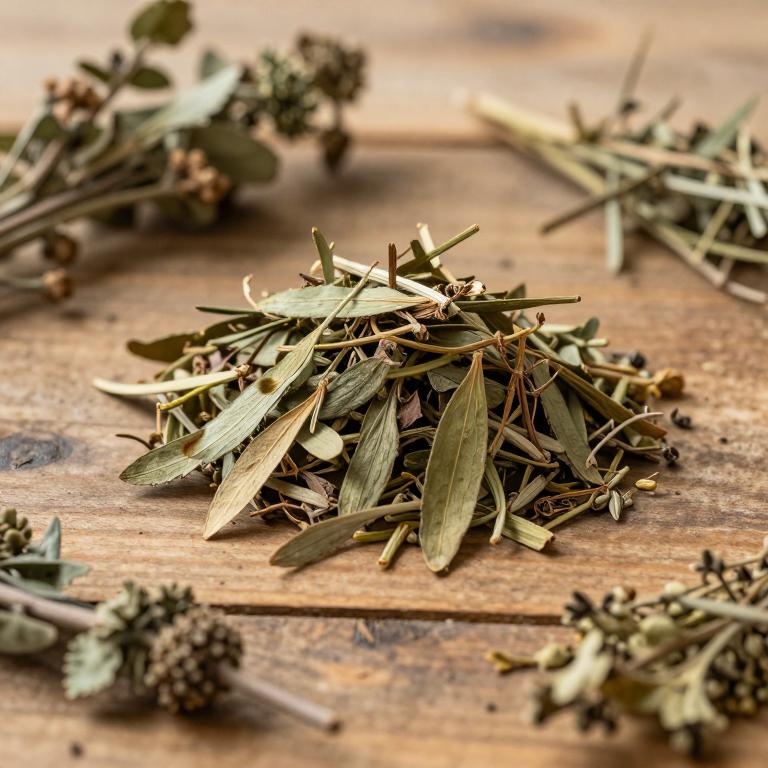
Ordeal Tree, scientifically known as Erythrophleum suaveolens, is a versatile medicinal plant native to tropical regions. Renowned for its diverse therapeutic properties, its bark, leaves, and roots are traditionally used to treat various ailments, including skin infections and digestive issues, serving as a vital resource in many ethnomedical practices.
Names and Synonyms
Common Names
- Ordeal Tree
- erun
- red-water-tree
- sasswoodtree
- sassy-bark-tree
- sassybark
- Forest ordeal tree
- sasswood
Scientific Names
Accepted name
Erythrophleum suaveolensSynonyms
- Fillaea suaveolens
- Afzelia grandis
- Erythrophleum judiciale
- Mavia judicialis
- Erythrophleum ordale
- Erythrophleum guineense
Regional and Traditional Names
French:
- Tali
- bois rouge
Sources: Wikidata, Catalogue of Life
Taxonomical Classification
This plant belongs to the kingdom Plantae and is classified under the phylum Streptophyta and the class Equisetopsida. Within the subclass Magnoliidae, it is placed in the order Fabales and the family Fabaceae. Its scientific classification is completed by its designation within the genus Erythrophleum.
| Rank | Classification |
|---|---|
| Kingdom | Plantae |
| Phylum | Streptophyta |
| Class | Equisetopsida |
| Subclass | Magnoliidae |
| Order | Fabales |
| Family | Fabaceae |
| Genus | Erythrophleum |
Sources: The World Checklist of Vascular Plants (WCVP)
Distribution
This plant, known as Erythropheleum suaveolens, exhibits a specific distribution pattern across the West Tropical Africa region. Its presence is well-documented in the nation of Benin, where it grows within local ecosystems. The species can also be found in the territories of Burkina and Gambia. Furthermore, its geographical range extends into the country of Ghana. Finally, the plant is recorded as part of the flora in Guinea-Bissau.
| Region | Area |
|---|---|
| West Tropical Africa | Benin |
| West Tropical Africa | Burkina |
| West Tropical Africa | Gambia |
| West Tropical Africa | Ghana |
| West Tropical Africa | Guinea-Bissau |
| West Tropical Africa | Guinea |
| West Tropical Africa | Ivory Coast |
| West Tropical Africa | Liberia |
| West Tropical Africa | Mali |
| West Tropical Africa | Nigeria |
Sources: The World Checklist of Vascular Plants (WCVP)
Botanical Identification
Ecology
The ecology of Erythrophleum suaveolens is characterized by its presence in diverse, moisture-rich environments, ranging from evergreen wet forests and swamp forests to (Hyphaene) wooded grasslands. This species thrives across a broad altitudinal gradient, occupying an elevational range that begins at sea level (0 m AMSL) and extends up to a maximum of 1000 m AMSL.
- Elevational range max:
- 1000 m AMSL
- Elevational range min:
- 0 m AMSL
- Habitat :
- evergreen wet forest, swamp forest, (Hyphaene) wooded grassland
Life history
The life history of Erythrophleum suaveolenens is characterized by a perennial lifecycle, allowing the plant to persist through multiple growing seasons. In terms of its structural growth habit and ecological positioning, it is classified as a phanerophyte, specifically categorized under both the broader phanerophyte and the more specific nanophanerophyte life forms. This indicates that its perennating buds are elevated above the ground level, a trait that defines its survival strategy and physical architecture within its natural habitat.
- Life form :
- phanerophyte
- Lifecycle :
- perennial
Morphology
The morphology of Erythrophleum suaveolens is characterized by its stature as a large, woody tree, reaching a mean height of approximately 17.5 m, with a maximum recorded height of up to 30.48 m. This species exhibits a self-supporting growth habit, functioning as an independent organism rather than a parasite or a climber such as a liana or vine. It is classified as a terrestrial plant, lacking aquatic or epiphytic tendencies, and maintains a robust, woody structure throughout its development.
- Aquatic :
- terrestrial
- Climber :
- self-supporting
- Epiphyte :
- terrestrial
- Growth form :
- tree
- Parasite :
- independent
- Plant height max:
- 30.48037064 m
- Plant height mean:
- 17.5 m
- Woodiness :
- woody
Physiology
The physiology of Erythropheleum suaveolens is characterized by a C3 photosynthetic pathway, a mechanism where carbon fixation occurs primarily through the enzyme Rubisco within the mesophyll cells during the Calvin cycle. This pathway dictates the plant's metabolic efficiency and its specific requirements for water and light intensity to sustain biomass production. Furthermore, the species does not function as a nitrogen fixer, meaning it lacks the symbiotic relationship with diazotrophic bacteria, such as Rhizobium, necessary to convert atmospheric nitrogen into bioavailable forms; consequently, its nutritional physiological processes are entirely dependent on the uptake of nitrogenous compounds available within the soil substrate.
- Nitrogen fixer :
- no
- Photosynthetic pathway :
- C3
Reproduction
The reproduction of Erythrophleum suaveolens is characterized by the production of dry fruits and seeds that exhibit significant morphological variation. The seeds are relatively substantial, with a mean mass of 0.66218 g, ranging from a minimum of 0.40291 g to a maximum of 0.92145 g. In terms of physical dimensions, the seed volume is consistently sized, with a mean volume of 1050 mm³, falling within a specific range between a minimum of 1000 mm³ and a maximum of 1100 mm³. The dispersal syndrome of this species is classified as unspecialized, utilizing a diverse combination of mechanisms including anemochory (wind dispersal), zoochory (animal dispersal), autochory (self-dispersal), and hydrochory (water dispersal) to ensure the distribution of its offspring across various environments.
- Dispersal syndrome :
- unspecialized
- Fruit dryness :
- dry
- Seed mass max:
- 0.92145 g
- Seed mass mean:
- 0.66218 g
- Seed mass min:
- 0.40291 g
- Seed volume max:
- 1100 mm³
- Seed volume mean:
- 1050 mm³
- Seed volume min:
- 1000 mm³
Sources: Global Inventory of Floras and Traits (GIFT)
Plant Parts
Erythrophleum suaveolens has 1 reported plant parts identified across 1 scientific publications and several other databases that are studied for medicinal purposes. The most consistently reported plant part include leaf.
| Plant part | Supporting sources | Consensus |
|---|---|---|
| Leaf | 1 supporting sources | ★☆☆☆☆ |
Leaf
- Journal of ethnopharmacology
Chemicals
Erythrophleum suaveolens has 9 reported phytochemicals identified across 1 scientific publications and several other databases. The most consistently reported chemicals include CASSAINE, Cassaidine, Cassamine, ERYTHROPHLEINE, Erythrophlamine.
| Chemical | Supporting sources | Consensus |
|---|---|---|
| CASSAINE | 1 supporting sources | ★☆☆☆☆ |
| Cassaidine | 1 supporting sources | ★☆☆☆☆ |
| Cassamine | 1 supporting sources | ★☆☆☆☆ |
| ERYTHROPHLEINE | 1 supporting sources | ★☆☆☆☆ |
| Erythrophlamine | 1 supporting sources | ★☆☆☆☆ |
| Erythrophleguine | 1 supporting sources | ★☆☆☆☆ |
| Norcassamidide | 1 supporting sources | ★☆☆☆☆ |
| Norcassamine | 1 supporting sources | ★☆☆☆☆ |
| Norerythrosuamine | 1 supporting sources | ★☆☆☆☆ |
CASSAINE
- Dr. Duke
Cassaidine
- Dr. Duke
Cassamine
- Dr. Duke
ERYTHROPHLEINE
- Dr. Duke
Erythrophlamine
- Dr. Duke
Erythrophleguine
- Dr. Duke
Norcassamidide
- Dr. Duke
Norcassamine
- Dr. Duke
Norerythrosuamine
- Dr. Duke
Activities
Erythrophleum suaveolens has 17 reported activities identified across 1 scientific publications and several other databases. The most consistently reported activities include Cytotoxic, Abortifacient, Analgesic, Anesthetic, Antifungal.
| Activity | Supporting sources | Consensus |
|---|---|---|
| Cytotoxic | 2 supporting sources | ★☆☆☆☆ |
| Abortifacient | 1 supporting sources | ★☆☆☆☆ |
| Analgesic | 1 supporting sources | ★☆☆☆☆ |
| Anesthetic | 1 supporting sources | ★☆☆☆☆ |
| Antifungal | 1 supporting sources | ★☆☆☆☆ |
| Antiseptic | 1 supporting sources | ★☆☆☆☆ |
| Cardiac | 1 supporting sources | ★☆☆☆☆ |
| Cardiotonic | 1 supporting sources | ★☆☆☆☆ |
| Convulsant | 1 supporting sources | ★☆☆☆☆ |
| Digitalic | 1 supporting sources | ★☆☆☆☆ |
Cytotoxic
- Dr. Duke
- Journal of ethnopharmacology
Abortifacient
- Dr. Duke
Analgesic
- Dr. Duke
Anesthetic
- Dr. Duke
Antifungal
- Mycoses
Antiseptic
- Dr. Duke
Cardiac
- Dr. Duke
Cardiotonic
- Dr. Duke
Convulsant
- Dr. Duke
Digitalic
- Dr. Duke
Preparations
Erythrophleum suaveolens has 1 reported preparations identified across 1 scientific publications and several other databases. The most consistently reported preparations include extracts.
| Preparation | Supporting sources | Consensus |
|---|---|---|
| Extracts | 1 supporting sources | ★☆☆☆☆ |
Extracts
- Mycoses