Coraltrees
Erythrina · Accepted scientific name
Scientific literature: Very Sparse (33 studies) · ★☆☆☆☆
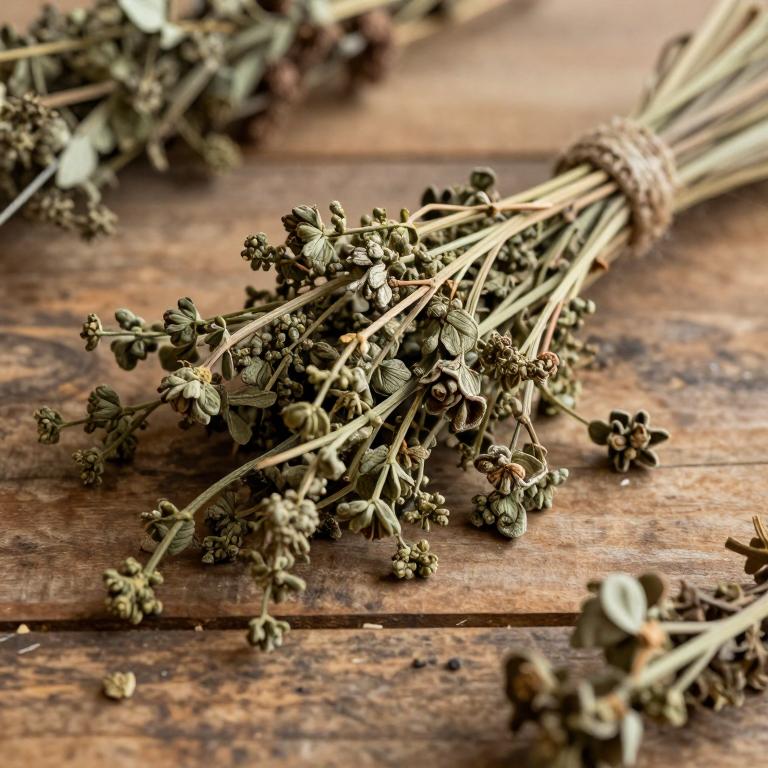
Coraltrees, scientifically known as Erythrina, is a genus of flowering plants renowned for their striking, vibrant blooms. Beyond their ornamental beauty, many species possess significant medicinal properties. Used in traditional practices to treat ailments ranging from inflammation to digestive issues, these plants offer fascinating potential for modern pharmacological research.
Names and Synonyms
Common Names
- Coral trees
- Corallodendron
- Coral tree
Scientific Names
Accepted name
ErythrinaSynonyms
- Chirocalyx
- Mouricou
- Xyphanthus
- Micropteryx
- Tetradapa
- Duchassaingia
- Macrocymbium
- Stenotropis
- Corallodendron
- Hypaphorus
Regional and Traditional Names
Spanish:
- Chirocalyx
- Corallodendron
- Hypaphorus
- Erythina
- Duchassaingia
- Tetradapa
- Micropteryx
- Ceibos
- Colorines
- Cámbulos
German:
- Korallenbäume
- Hahnenkammbäume
- Hahnenkammbaum
- Korallenbaum
- Korallenbäume
Sources: Wikidata, Catalogue of Life
Taxonomical Classification
This plant belongs to the kingdom Plantae and the phylum Streptophyta, falling under the class Equisetopsida and subclass Magnoliidae. Within the order Fabales, it is classified under the family Fabaceae and is specifically identified by the genus Erythrina.
| Rank | Classification |
|---|---|
| Kingdom | Plantae |
| Phylum | Streptophyta |
| Class | Equisetopsida |
| Subclass | Magnoliidae |
| Order | Fabales |
| Family | Fabaceae |
| Genus | Erythrina |
Sources: The World Checklist of Vascular Plants (WCVP)
Distribution
This plant exhibits a diverse range of habitats across several distinct global regions. In Northern Africa, its presence is noted within the borders of Egypt. The species also extends into Macaronesia, where it can be found in both Cape Verde and Madeira. Moving toward West Tropical Africa, the plant is distributed through the territories of Benin and Burkina. Together, these locations highlight a broad geographical spread spanning multiple continents.
| Region | Area |
|---|---|
| Northern Africa | Egypt |
| Macaronesia | Cape Verde |
| Macaronesia | Madeira |
| West Tropical Africa | Benin |
| West Tropical Africa | Burkina |
| West Tropical Africa | Gambia |
| West Tropical Africa | Ghana |
| West Tropical Africa | Guinea-Bissau |
| West Tropical Africa | Guinea |
| West Tropical Africa | Ivory Coast |
Sources: The World Checklist of Vascular Plants (WCVP)
Plant Parts
Erythrina has 2 reported plant parts identified across 2 scientific publications and several other databases that are studied for medicinal purposes. The most consistently reported plant part include root, stem.
| Plant part | Supporting sources | Consensus |
|---|---|---|
| Root | 1 supporting sources | ★☆☆☆☆ |
| Stem | 1 supporting sources | ★☆☆☆☆ |
Root
- Heliyon
Stem
- Heliyon
Chemicals
Erythrina has 6 reported phytochemicals identified across 2 scientific publications and several other databases. The most consistently reported chemicals include Isoflavones, Isoflavans, apigenin, daidzein, genistein.
| Chemical | Supporting sources | Consensus |
|---|---|---|
| Isoflavones | 3 supporting sources | ★★☆☆☆ |
| Isoflavans | 1 supporting sources | ★☆☆☆☆ |
| apigenin | 1 supporting sources | ★☆☆☆☆ |
| daidzein | 1 supporting sources | ★☆☆☆☆ |
| genistein | 1 supporting sources | ★☆☆☆☆ |
| luteolin | 1 supporting sources | ★☆☆☆☆ |
Isoflavones
- Heliyon
- International journal of molecular sciences
- Plants (Basel, Switzerland)
Isoflavans
- Heliyon
apigenin
- Heliyon
daidzein
- Heliyon
genistein
- Heliyon
luteolin
- Heliyon
Activities
Erythrina has 7 reported activities identified across 2 scientific publications and several other databases. The most consistently reported activities include Antibacterial, Antifungal, Antioxidant, Antiplasmodial, Antiviral.
| Activity | Supporting sources | Consensus |
|---|---|---|
| Antibacterial | 1 supporting sources | ★☆☆☆☆ |
| Antifungal | 1 supporting sources | ★☆☆☆☆ |
| Antioxidant | 1 supporting sources | ★☆☆☆☆ |
| Antiplasmodial | 1 supporting sources | ★☆☆☆☆ |
| Antiviral | 1 supporting sources | ★☆☆☆☆ |
| Anxiolytic | 1 supporting sources | ★☆☆☆☆ |
| Sedative | 1 supporting sources | ★☆☆☆☆ |
Antibacterial
- Plants (Basel, Switzerland)
Antifungal
- Plants (Basel, Switzerland)
Antioxidant
- Pakistan journal of biological sciences : PJBS
Antiplasmodial
- Plants (Basel, Switzerland)
Antiviral
- Plants (Basel, Switzerland)
Anxiolytic
- BMC complementary and alternative medicine
Sedative
- BMC complementary and alternative medicine
Conditions
Erythrina has 11 reported investigations on conditions identified across 2 scientific publications and several other databases. The most consistently reported conditions include HIV, inflammation, Candida albicans, Plasmodium falciparum, SARS-CoV-2.
| Condition | Supporting sources | Consensus |
|---|---|---|
| Hiv | 2 supporting sources | ★☆☆☆☆ |
| Inflammation | 2 supporting sources | ★☆☆☆☆ |
| Candida albicans | 1 supporting sources | ★☆☆☆☆ |
| Plasmodium falciparum | 1 supporting sources | ★☆☆☆☆ |
| Sars-cov-2 | 1 supporting sources | ★☆☆☆☆ |
| Staphylococcus aureus | 1 supporting sources | ★☆☆☆☆ |
| Bacteria | 1 supporting sources | ★☆☆☆☆ |
| Cancer | 1 supporting sources | ★☆☆☆☆ |
| Obesity | 1 supporting sources | ★☆☆☆☆ |
| Pain | 1 supporting sources | ★☆☆☆☆ |
Hiv
- Journal of natural products
- Plants (Basel, Switzerland)
Inflammation
- Pakistan journal of biological sciences : PJBS
- International journal of molecular sciences
Candida albicans
- Plants (Basel, Switzerland)
Plasmodium falciparum
- Plants (Basel, Switzerland)
Sars-cov-2
- Plants (Basel, Switzerland)
Staphylococcus aureus
- Plants (Basel, Switzerland)
Bacteria
- Pakistan journal of biological sciences : PJBS
Cancer
- Pakistan journal of biological sciences : PJBS
Obesity
- Pakistan journal of biological sciences : PJBS
Pain
- International journal of molecular sciences