Red Bean Tree
Erythrina velutina · Accepted scientific name
Scientific literature: Very Sparse (23 studies) · ★☆☆☆☆
Red Bean Tree, scientifically known as Erythrina velutina, is a striking medicinal plant native to tropical regions. Renowned for its vibrant crimson blooms, it holds significant ethnobotanical value. Various parts of the tree are utilized in traditional medicine to treat ailments ranging from inflammation to digestive and skin disorders.
- Family
- Fabaceae
- Native range
- Africa
- Parts used
- Leaf · Seed
- Common names
- Red Bean Tree
- Scientific synonyms
- Chirocalyx Velutinus · Corallodendron Velutinum · 4 more
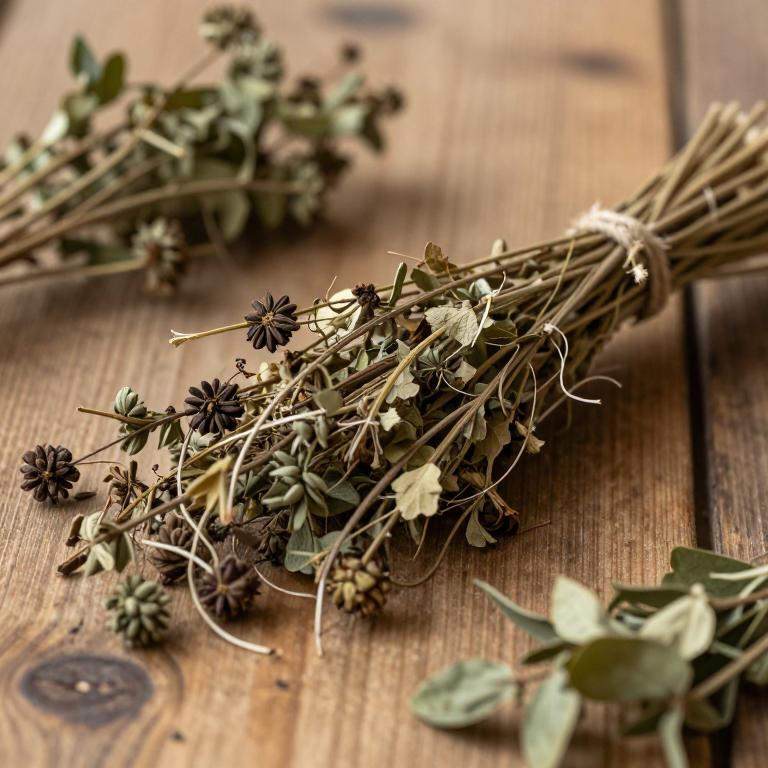
Names and Synonyms
Common Names
- Red Bean Tree
Scientific Names
Accepted name
Erythrina velutinaSynonyms
- Chirocalyx velutinus
- Corallodendron velutinum
- Erythrina aurantiaca
- Erythrina aculeatissima
- Erythrina splendida
- Erythrina velutina f. aurantiaca
Regional and Traditional Names
Spanish:
- Huayrul
French:
- immortelle
Sources: Wikidata, Catalogue of Life
Taxonomical Classification
This plant belongs to the kingdom Plantae and the phylum Streptophyta, falling under the class Equisetopsida and subclass Magnoliidae. Within the order Fabales, it is a member of the family Fabaceae and is classified under the genus Erythrina. Specifically, Erythrina velutina represents a unique species within this taxonomic hierarchy.
| Rank | Classification |
|---|---|
| Kingdom | Plantae |
| Phylum | Streptophyta |
| Class | Equisetopsida |
| Subclass | Magnoliidae |
| Order | Fabales |
| Family | Fabaceae |
| Genus | Erythrina |
Sources: The World Checklist of Vascular Plants (WCVP)
Distribution
This plant exhibits a diverse geographical distribution spanning several continents and distinct ecological zones. In West-Central Tropical Africa, it can be found inhabiting the Gulf of Guinea Islands. Its presence extends to East Tropical Africa, specifically within the borders of Uganda. Moving toward the Indian Subcontinent, the species is documented growing in Sri Lanka. Finally, it reaches the Caribbean region, where it is located in both Aruba and the Cayman Islands.
| Region | Area |
|---|---|
| West-Central Tropical Africa | Gulf of Guinea Is. |
| East Tropical Africa | Uganda |
| Indian Subcontinent | Sri Lanka |
| Caribbean | Aruba |
| Caribbean | Cayman Is. |
| Caribbean | Cuba |
| Caribbean | Dominican Republic |
| Caribbean | Haiti |
| Caribbean | Jamaica |
| Caribbean | Leeward Is. |
Sources: The World Checklist of Vascular Plants (WCVP)
Botanical Identification
Ecology
The ecology of Erythrina velutina is characterized by its presence in specific biomes, primarily occurring within the Caatinga (strictu sensu), Carrasco, and Floresta Estacional Decidual habitats. This species thrives within a relatively low-altitude environmental niche, occupying an elevational range that extends from a minimum of 10 m AMSL to a maximum of 150 m AMSL.
- Elevational range max:
- 150 m AMSL
- Elevational range min:
- 10 m AMSL
- Habitat :
- Caatinga (stricto sensu), Carrasco, Floresta Estacional Decidual
Life history
The life history of Erythrina velutinina is characterized by its status as a perennial species, allowing it to persist in its environment over many years through repeated growth cycles. Its phenology is distinctly marked by a deciduous nature, meaning it sheds its foliage seasonally, typically in response to environmental stressors or changes in moisture availability. This cycle of leaf senescence and regrowth is a fundamental aspect of its survival strategy, ensuring the plant can manage its resources effectively throughout its long-lived existence.
- Deciduousness :
- deciduous
- Lifecycle :
- perennial
Morphology
The morphology of Erythrina velutina is characterized by its stature as a woody tree, typically reaching a mean height of 10 m, though it can attain a maximum height of up to 18 m. It functions as a self-supporting plant rather than a climber or a liana, exhibiting a growth form that is entirely independent and non-parasitic. As a strictly terrestrial species, it does not exhibit epiphytic tendencies, whether obligatory or facultative, and thrives in terrestrial environments. The plant's structural integrity is defined by its woody nature, supporting its significant vertical development within its habitat.
- Aquatic :
- terrestrial
- Climber :
- self-supporting
- Epiphyte :
- terrestrial
- Growth form :
- tree
- Parasite :
- independent
- Plant height max:
- 18 m
- Plant height mean:
- 10 m
- Woodiness :
- woody
Physiology
The physiology of Erythrina velutina is characterized by a C3 photosynthetic pathway, utilizing the standard Calvin cycle to fix atmospheric carbon dioxide during glucose synthesis. As a member of the Fabaceae family, this species functions as a nitrogen fixer, maintaining a symbiotic relationship with rhizobia bacteria in its root nodules to convert atmospheric nitrogen into bioavailable forms, which enhances its nutrient uptake and growth in nitrogen-poor soils.
- Nitrogen fixer :
- yes
- Photosynthetic pathway :
- C3
Reproduction
The reproduction of Erythrina velutina is characterized by a biotic pollination syndrome, specifically relying on avian vectors for successful fertilization. Detailed observations of its pollination mechanisms indicate a strong dependency on birds, which act as the primary biological agents in the transfer of pollen. The reproductive output of the species is reflected in its seed characteristics, where the seeds exhibit a highly consistent morphology. Specifically, the seed mass is uniform across observations, with a mean, maximum, and minimum value all recorded at 0.54645 g, suggesting a standardized energetic investment in each individual seed produced.
- Pollination syndrome :
- bird
- Pollination syndrome :
- biotic
- Seed mass mean:
- 0.54645 g
Sources: Global Inventory of Floras and Traits (GIFT)
Plant Parts
Erythrina velutina has 3 reported plant parts identified across 4 scientific publications and several other databases that are studied for medicinal purposes. The most consistently reported plant part include leaf, seed, stem.
| Plant part | Supporting sources | Consensus |
|---|---|---|
| Leaf | 2 supporting sources | ★☆☆☆☆ |
| Seed | 1 supporting sources | ★☆☆☆☆ |
| Stem | 1 supporting sources | ★☆☆☆☆ |
Leaf
- Pharmaceutical biology
- Journal of advanced research
Seed
- Journal of advanced research
Stem
- The Journal of pharmacy and pharmacology
Chemicals
Erythrina velutina has 3 reported phytochemicals identified across 4 scientific publications and several other databases. The most consistently reported chemicals include Flavonoids, Hypaphorine, Indole alkaloid.
| Chemical | Supporting sources | Consensus |
|---|---|---|
| Flavonoids | 1 supporting sources | ★☆☆☆☆ |
| Hypaphorine | 1 supporting sources | ★☆☆☆☆ |
| Indole alkaloid | 1 supporting sources | ★☆☆☆☆ |
Flavonoids
- Journal of ethnopharmacology
Hypaphorine
- Bioorganic & medicinal chemistry letters
Indole alkaloid
- Bioorganic & medicinal chemistry letters
Activities
Erythrina velutina has 6 reported activities identified across 4 scientific publications and several other databases. The most consistently reported activities include Analgesic, Anticonvulsant, Antimicrobial, Antioxidant, Anxiolytic.
| Activity | Supporting sources | Consensus |
|---|---|---|
| Analgesic | 1 supporting sources | ★☆☆☆☆ |
| Anticonvulsant | 1 supporting sources | ★☆☆☆☆ |
| Antimicrobial | 1 supporting sources | ★☆☆☆☆ |
| Antioxidant | 1 supporting sources | ★☆☆☆☆ |
| Anxiolytic | 1 supporting sources | ★☆☆☆☆ |
| Neuroprotective | 1 supporting sources | ★☆☆☆☆ |
Analgesic
- Journal of ethnopharmacology
Anticonvulsant
- Journal of ethnopharmacology
Antimicrobial
- Journal of ethnopharmacology
Antioxidant
- Journal of ethnopharmacology
Anxiolytic
- Journal of ethnopharmacology
Neuroprotective
- Journal of ethnopharmacology
Conditions
Erythrina velutina has 9 reported investigations on conditions identified across 4 scientific publications and several other databases. The most consistently reported conditions include central nervous system disorders, anxiety, central nervous system, central nervous system depressants, convulsion.
| Condition | Supporting sources | Consensus |
|---|---|---|
| Central nervous system disorders | 2 supporting sources | ★☆☆☆☆ |
| Anxiety | 1 supporting sources | ★☆☆☆☆ |
| Central nervous system | 1 supporting sources | ★☆☆☆☆ |
| Central nervous system depressants | 1 supporting sources | ★☆☆☆☆ |
| Convulsion | 1 supporting sources | ★☆☆☆☆ |
| Convulsions | 1 supporting sources | ★☆☆☆☆ |
| Depression | 1 supporting sources | ★☆☆☆☆ |
| Inflammation | 1 supporting sources | ★☆☆☆☆ |
| Insomnia | 1 supporting sources | ★☆☆☆☆ |
Central nervous system disorders
- Journal of ethnopharmacology
- Pharmaceutical biology
Anxiety
- Journal of ethnopharmacology
Central nervous system
- The Journal of pharmacy and pharmacology
Central nervous system depressants
- Journal of advanced research
Convulsion
- Journal of ethnopharmacology
Convulsions
- Journal of ethnopharmacology
Depression
- Heliyon
Inflammation
- Journal of ethnopharmacology
Insomnia
- Journal of ethnopharmacology
Preparations
Erythrina velutina has 3 reported preparations identified across 4 scientific publications and several other databases. The most consistently reported preparations include hydroalcoholic extracts, EV leaf aqueous extract (AE), alkaloid-rich extracts (AKEs).
| Preparation | Supporting sources | Consensus |
|---|---|---|
| Hydroalcoholic extracts | 2 supporting sources | ★☆☆☆☆ |
| Ev leaf aqueous extract (ae) | 1 supporting sources | ★☆☆☆☆ |
| Alkaloid-rich extracts (akes) | 1 supporting sources | ★☆☆☆☆ |
Hydroalcoholic extracts
- Journal of ethnopharmacology
- The Journal of pharmacy and pharmacology
Ev leaf aqueous extract (ae)
- Pharmaceutical biology
Alkaloid-rich extracts (akes)
- Pharmaceutical biology