Senegal coraltree
Erythrina senegalensis · Accepted scientific name
Scientific literature: Very Sparse (43 studies) · ★☆☆☆☆
Senegal coraltree, scientifically known as Erythrina senelegensis, is a versatile medicinal plant native to Africa. Renowned for its vibrant orange blossoms, it holds significant ethnobotanical value. Various parts, including its bark and leaves, are utilized in traditional medicine to treat ailments ranging from inflammation to digestive disorders and infections.
- Family
- Fabaceae
- Native range
- Africa
- Parts used
- Stem · Leaf
- Common names
- Senegal Coraltree
- Scientific synonyms
- Chirocalyx Latifolius · Corallodendron Senegalense · 4 more
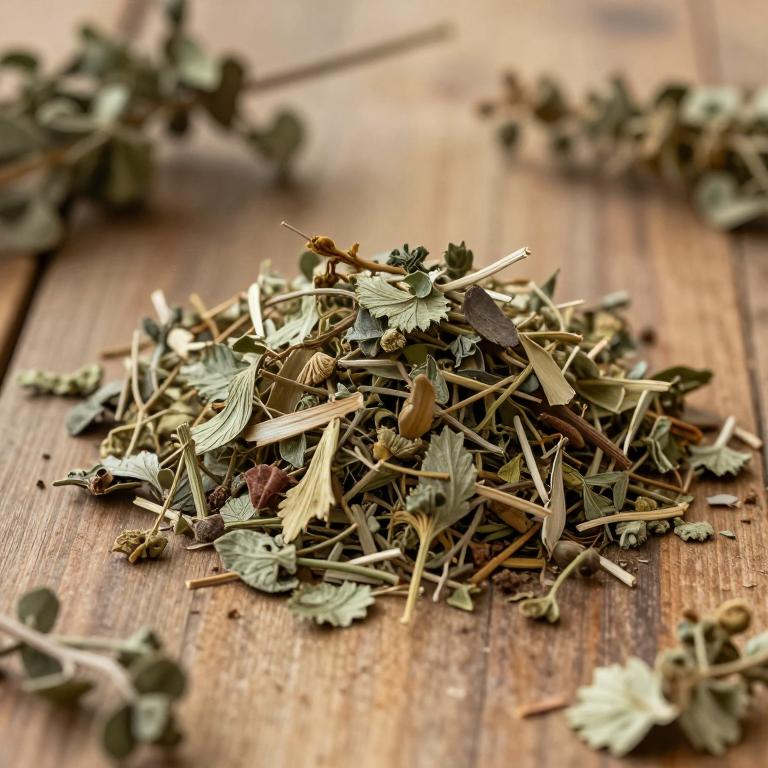
Names and Synonyms
Common Names
- Senegal coraltree
Scientific Names
Accepted name
Erythrina senegalensisSynonyms
- Chirocalyx latifolius
- Corallodendron senegalense
- Erythrina senegalensis var. camerounensis
- Macrocymbium vogelii
- Erythrina latifolia
- Erythrina guineensis
Sources: Wikidata, Catalogue of Life
Taxonomical Classification
This plant belongs to the kingdom Plantae within the phylum Streptophyta and the class Equisetopsida. Classified under the subclass Magnoliidae and the order Fabales, it is a member of the Fabaceae family. Finally, it is identified by the genus Erythrina.
| Rank | Classification |
|---|---|
| Kingdom | Plantae |
| Phylum | Streptophyta |
| Class | Equisetopsida |
| Subclass | Magnoliidae |
| Order | Fabales |
| Family | Fabaceae |
| Genus | Erythrina |
Sources: The World Checklist of Vascular Plants (WCVP)
Distribution
This plant is primarily distributed across the diverse landscapes of West Tropical Africa. Specifically, its presence can be documented within the borders of Benin. It also grows naturally throughout the territories of Burkina and Gambia. Furthermore, the species is found in the regions of Ghana. Finally, its geographical range extends into Guinea-Bissau.
| Region | Area |
|---|---|
| West Tropical Africa | Benin |
| West Tropical Africa | Burkina |
| West Tropical Africa | Gambia |
| West Tropical Africa | Ghana |
| West Tropical Africa | Guinea-Bissau |
| West Tropical Africa | Guinea |
| West Tropical Africa | Ivory Coast |
| West Tropical Africa | Liberia |
| West Tropical Africa | Mali |
| West Tropical Africa | Mauritania |
Sources: The World Checklist of Vascular Plants (WCVP)
Botanical Identification
Life history
The life history of Erythrina senegalensis is characterized by its status as a perennial organism, allowing it to persist in its environment over many growing seasons. As a phanerophyte, its regenerative buds are elevated well above the ground surface, typically manifesting as a woody shrub or small tree. This phanerophyte life form ensures its structural stability and long-term survival, enabling the plant to maintain its stature and reproductive capacity throughout its extended lifespan.
- Life form :
- phanerophyte
- Lifecycle :
- perennial
Morphology
The morphology of Erythrina senegalensis is characterized by its growth form as a woody tree that functions as a self-supporting structure. As a terrestrial species, it is an independent organism and does not exhibit parasitic or epiphytic behaviors. The plant's stature varies significantly depending on environmental conditions, with recorded heights ranging from a minimum of approximately 3.05 meters to a maximum of 15.24 meters, maintaining a mean height of roughly 4 meters.
- Aquatic :
- terrestrial
- Climber :
- self-supporting
- Epiphyte :
- terrestrial
- Growth form :
- tree
- Parasite :
- independent
- Plant height max:
- 15.24018532 m
- Plant height mean:
- 4 m
- Plant height min:
- 3.048037064 m
- Woodiness :
- woody
Physiology
The physiology of Erythrina senegalensis is characterized by a C3 photosynthetic pathway, which dictates its carbon fixation processes and metabolic efficiency within its natural habitat. As a member of the Fabaceae family, the plant exhibits a specialized symbiotic relationship with soil microorganisms, functioning as a nitrogen fixer. This ability to convert atmospheric nitrogen into a bioavailable form provides a significant physiological advantage, enhancing its nutrient uptake and supporting robust growth even in nitrogen-limited soils.
- Nitrogen fixer :
- yes
- Photosynthetic pathway :
- C3
Reproduction
Reproduction in Erythrina senegalensis is characterized by the production of seeds that exhibit a highly consistent morphological profile regarding their weight. The seed mass is uniform across the observed population, with a recorded mean seed mass of 0.14434 g. This consistency is reflected in the maximum and minimum recorded values, which both align at 0.14434 g, indicating a lack of variance in seed weight within the studied parameters. Such precision in seed mass suggests a stabilized reproductive strategy aimed at producing offspring with standardized nutrient reserves.
- Seed mass mean:
- 0.14434 g
Sources: Global Inventory of Floras and Traits (GIFT)
Plant Parts
Erythrina senegalensis has 3 reported plant parts identified across 5 scientific publications and several other databases that are studied for medicinal purposes. The most consistently reported plant part include stem, leaf, root.
| Plant part | Supporting sources | Consensus |
|---|---|---|
| Stem | 3 supporting sources | ★★☆☆☆ |
| Leaf | 1 supporting sources | ★☆☆☆☆ |
| Root | 1 supporting sources | ★☆☆☆☆ |
Stem
- Planta medica
- Journal of ethnopharmacology
- Journal of natural products
Leaf
- Journal of ethnopharmacology
Root
- Planta medica
Chemicals
Erythrina senegalensis has 18 reported phytochemicals identified across 5 scientific publications and several other databases. The most consistently reported chemicals include Senegalensin, Alpinumisoflavone, Carpachromene, Derrone, Erysenegalensein M.
| Chemical | Supporting sources | Consensus |
|---|---|---|
| Senegalensin | 2 supporting sources | ★☆☆☆☆ |
| Alpinumisoflavone | 1 supporting sources | ★☆☆☆☆ |
| Carpachromene | 1 supporting sources | ★☆☆☆☆ |
| Derrone | 1 supporting sources | ★☆☆☆☆ |
| Erysenegalensein M | 1 supporting sources | ★☆☆☆☆ |
| Erysodine | 1 supporting sources | ★☆☆☆☆ |
| Erythrisenegalone | 1 supporting sources | ★☆☆☆☆ |
| Erythrodiol | 1 supporting sources | ★☆☆☆☆ |
| Glycosides | 1 supporting sources | ★☆☆☆☆ |
| Maniladiol | 1 supporting sources | ★☆☆☆☆ |
Senegalensin
- Journal of natural products
- Plants (Basel, Switzerland)
Alpinumisoflavone
- Plants (Basel, Switzerland)
Carpachromene
- Plants (Basel, Switzerland)
Derrone
- Plants (Basel, Switzerland)
Erysenegalensein M
- Plants (Basel, Switzerland)
Erysodine
- Plants (Basel, Switzerland)
Erythrisenegalone
- Plants (Basel, Switzerland)
Erythrodiol
- Plants (Basel, Switzerland)
Glycosides
- Journal of ethnopharmacology
Maniladiol
- Plants (Basel, Switzerland)
Activities
Erythrina senegalensis has 2 reported activities identified across 5 scientific publications and several other databases. The most consistently reported activities include Analgesic, Antiplasmodial.
| Activity | Supporting sources | Consensus |
|---|---|---|
| Analgesic | 1 supporting sources | ★☆☆☆☆ |
| Antiplasmodial | 1 supporting sources | ★☆☆☆☆ |
Analgesic
- Journal of ethnopharmacology
Antiplasmodial
- Journal of ethnopharmacology
Conditions
Erythrina senegalensis has 12 reported investigations on conditions identified across 5 scientific publications and several other databases. The most consistently reported conditions include Alzheimer's disease, Plasmodium berghei, Pneumococcus, Streptococcus pneumoniae, bacterial diseases.
| Condition | Supporting sources | Consensus |
|---|---|---|
| Alzheimer's disease | 1 supporting sources | ★☆☆☆☆ |
| Plasmodium berghei | 1 supporting sources | ★☆☆☆☆ |
| Pneumococcus | 1 supporting sources | ★☆☆☆☆ |
| Streptococcus pneumoniae | 1 supporting sources | ★☆☆☆☆ |
| Bacterial diseases | 1 supporting sources | ★☆☆☆☆ |
| Cancer | 1 supporting sources | ★☆☆☆☆ |
| Dysentery | 1 supporting sources | ★☆☆☆☆ |
| Fevers | 1 supporting sources | ★☆☆☆☆ |
| Liver diseases | 1 supporting sources | ★☆☆☆☆ |
| Malaria | 1 supporting sources | ★☆☆☆☆ |
Alzheimer's disease
- American journal of neurodegenerative disease
Plasmodium berghei
- Journal of ethnopharmacology
Pneumococcus
- African journal of traditional, complementary, and alternative medicines : AJTCAM
Streptococcus pneumoniae
- African journal of traditional, complementary, and alternative medicines : AJTCAM
Bacterial diseases
- Journal of ethnopharmacology
Cancer
- Plants (Basel, Switzerland)
Dysentery
- Journal of ethnopharmacology
Fevers
- Journal of ethnopharmacology
Liver diseases
- Natural product communications
Malaria
- Natural product communications
Preparations
Erythrina senegalensis has 3 reported preparations identified across 5 scientific publications and several other databases. The most consistently reported preparations include Aqueous extracts of the stem bark, decoction, stem bark.
| Preparation | Supporting sources | Consensus |
|---|---|---|
| Aqueous extracts of the stem bark | 1 supporting sources | ★☆☆☆☆ |
| Decoction | 1 supporting sources | ★☆☆☆☆ |
| Stem bark | 1 supporting sources | ★☆☆☆☆ |
Aqueous extracts of the stem bark
- Journal of ethnopharmacology
Decoction
- Journal of ethnopharmacology
Stem bark
- Journal of natural products