Common coral tree
Erythrina lysistemon · Accepted scientific name
Scientific literature: Very Sparse (9 studies) · ★☆☆☆☆
Common coral tree, scientifically known as Erythrina lysistemon, is a striking medicinal plant renowned for its vibrant blooms and therapeutic potential. Traditionally utilized in various cultures, its bark and leaves possess significant bioactive properties, offering diverse pharmacological benefits ranging from wound healing to managing systemic inflammation and various ailments.
- Family
- Fabaceae
- Native range
- Africa
- Parts used
- Leaf
- Common names
- Common Coral Tree · Sacred Coral Tree · 6 more
- Scientific synonyms
- Erythrina Afra Var. Mossambicensis
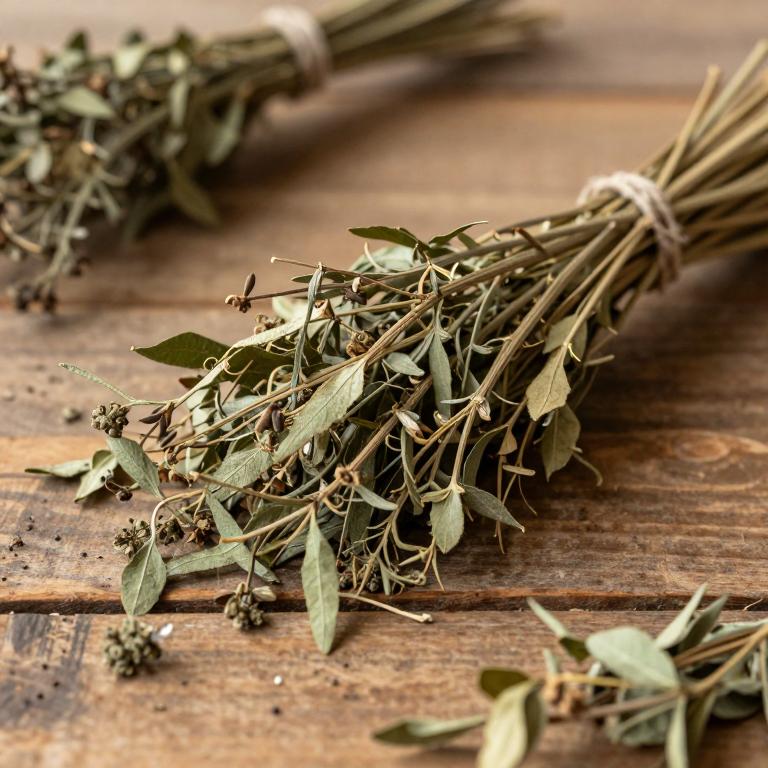
Names and Synonyms
Common Names
- Common Coral Tree
- Sacred Coral Tree
- Eastern Border Luckybush
- Eastern Districts Luckybean
- Gewone Koraalboom
- Sacred Coral-tree
- South African common coral tree
- Lucky bean tree
Scientific Names
Accepted name
Erythrina lysistemonSynonyms
- Erythrina afra var. mossambicensis
Regional and Traditional Names
German:
- Gemeiner Korallenbaum
Sources: Wikidata, Catalogue of Life
Taxonomical Classification
This plant belongs to the kingdom Plantae and the phylum Streptophyta, falling under the class Equisetopsida and subclass Magnoliidae. It is further classified within the order Fabales and the family Fabaceae. Finally, it is categorized under the genus Erythrina as the species Erythrina lysistemon.
| Rank | Classification |
|---|---|
| Kingdom | Plantae |
| Phylum | Streptophyta |
| Class | Equisetopsida |
| Subclass | Magnoliidae |
| Order | Fabales |
| Family | Fabaceae |
| Genus | Erythrina |
Sources: The World Checklist of Vascular Plants (WCVP)
Distribution
This plant exhibits a diverse geographical distribution spanning several distinct regions. Within the Macaronesia archipelago, it can be found growing in Madeira. Moving to Northeast Tropical Africa, the species is documented in Ethiopia. Its range also extends across East Tropical Africa, where it inhabits both Kenya and Tanzania. Finally, the plant is recorded in the southern reaches of the continent within Malawi.
| Region | Area |
|---|---|
| Macaronesia | Madeira |
| Northeast Tropical Africa | Ethiopia |
| East Tropical Africa | Kenya |
| East Tropical Africa | Tanzania |
| South Tropical Africa | Malawi |
| South Tropical Africa | Mozambique |
| South Tropical Africa | Zimbabwe |
| Southern Africa | Botswana |
| Southern Africa | Cape Provinces |
| Southern Africa | KwaZulu-Natal |
Sources: The World Checklist of Vascular Plants (WCVP)
Botanical Identification
Ecology
The ecology of Erythrina lysistemon is characterized by a broad altitudinal adaptability, allowing it to thrive across diverse topographical landscapes. It occupies a significant vertical gradient, ranging from sea level up to a maximum elevation of 1800 m AMSL. This expansive elevational range suggests that the species is capable of colonizing various ecological niches, from coastal lowlands to higher-altitude montane regions. Such versatility in its habitat preference enables the plant to endure a variety of environmental conditions and microclimates found within its distribution zone.
- Elevational range max:
- 1800 m AMSL
- Elevational range min:
- 0 m AMSL
Life history
The life history of Erythrina lysistemon is characterized by its status as a perennial species, allowing it to persist in its environment over many years rather than completing a single reproductive cycle. As a long-lived woody plant, it establishes itself through seed germination and develops into a robust structure capable of enduring multiple growing seasons. Its lifecycle involves seasonal rhythms, typically marked by significant flowering periods that occur during the dry season, often before the leaves fully emerge. This perennial nature enables the plant to build substantial biomass, supporting a complex reproductive strategy that relies on long-term survival to ensure successful pollination and seed dispersal across successive years.
- Lifecycle :
- perennial
Morphology
The morphology of Erythrina lysistemon is characterized by its growth form as a woody tree, which maintains a self-supporting structure rather than acting as a climber, liana, or vine. It is a terrestrial plant, existing neither as an aquatic, semiaquatic, nor epiphytic species (including holoepiphytes or hemiepiphytes), and it functions as an independent organism rather than a parasite. The plant exhibits significant vertical development, with a height ranging from a minimum of 1.79 m to a maximum of 10 m.
- Aquatic :
- terrestrial
- Climber :
- self-supporting
- Epiphyte :
- terrestrial
- Growth form :
- tree
- Parasite :
- independent
- Plant height max:
- 10 m
- Plant height min:
- 1.79 m
- Woodiness :
- woody
Physiology
The physiology of Erythrina lysistemon is characterized by a metabolic framework driven by a C3 photosynthetic pathway, which dictates its carbon fixation processes and resource management. As a member of the Fabaceae family, its physiological efficiency is heavily influenced by its ability to perform nitrogen fixation through symbiotic relationships with rhizobia in its root nodules, a process that supplements its nutrient uptake and supports robust growth. This nitrogen-fixing capability works in tandem with its C3 metabolism, where CO2 is initially fixed into a three-carbon compound during the Calvin cycle, making the plant particularly responsive to environments with moderate temperatures and sufficient water availability. The plant's vascular system is optimized for the efficient translocation of these photosynthates from the leaves to the woody tissues and reproductive structures, ensuring the development of its characteristic bright red flowers. Furthermore, its physiological adaptations include a regulated transpiration rate and specialized secondary metabolite production, which serve as both defense mechanisms and key components of its medicinal profile.
- Photosynthetic pathway :
- C3
Reproduction
Reproduction in Erythrina lysistemon is centered around the production and dispersal of seeds that exhibit specific morphological consistency. The seeds produced by this species possess a measurable mass that varies within a narrow biological range, indicating a controlled investment in reproductive output. On average, the seed mass is approximately 0.1594875 g, with individual specimens ranging from a minimum of 0.14025 g to a maximum of 0.17872 g. This quantitative data reflects the physical characteristics of the seeds during their developmental stages and their subsequent readiness for dispersal within their natural habitat.
- Seed mass max:
- 0.17872 g
- Seed mass mean:
- 0.1594875 g
- Seed mass min:
- 0.14025 g
Sources: Global Inventory of Floras and Traits (GIFT)
Plant Parts
Erythrina lysistemon has 1 reported plant parts identified across 1 scientific publications and several other databases that are studied for medicinal purposes. The most consistently reported plant part include leaf.
| Plant part | Supporting sources | Consensus |
|---|---|---|
| Leaf | 1 supporting sources | ★☆☆☆☆ |
Leaf
- Journal of ethnopharmacology
Chemicals
Erythrina lysistemon has 4 reported phytochemicals identified across 1 scientific publications and several other databases. The most consistently reported chemicals include Alpinumisoflavone, Abyssinone V 4'-methyl ether, DICHLOROMETHANE, IL-6.
| Chemical | Supporting sources | Consensus |
|---|---|---|
| Alpinumisoflavone | 2 supporting sources | ★☆☆☆☆ |
| Abyssinone V 4'-methyl ether | 1 supporting sources | ★☆☆☆☆ |
| DICHLOROMETHANE | 1 supporting sources | ★☆☆☆☆ |
| IL-6 | 1 supporting sources | ★☆☆☆☆ |
Alpinumisoflavone
- Phytotherapy research : PTR
- Biological & pharmaceutical bulletin
Abyssinone V 4'-methyl ether
- Phytotherapy research : PTR
DICHLOROMETHANE
- Antibiotics (Basel, Switzerland)
IL-6
- Journal of ethnopharmacology
Conditions
Erythrina lysistemon has 1 reported investigations on conditions identified across 1 scientific publications and several other databases. The most consistently reported conditions include inflammation.
| Condition | Supporting sources | Consensus |
|---|---|---|
| Inflammation | 1 supporting sources | ★☆☆☆☆ |
Inflammation
- Journal of ethnopharmacology
Preparations
Erythrina lysistemon has 2 reported preparations identified across 1 scientific publications and several other databases. The most consistently reported preparations include Alpinumisoflavone, crude extract.
| Preparation | Supporting sources | Consensus |
|---|---|---|
| Alpinumisoflavone | 1 supporting sources | ★☆☆☆☆ |
| Crude extract | 1 supporting sources | ★☆☆☆☆ |
Alpinumisoflavone
- Biological & pharmaceutical bulletin
Crude extract
- Phytotherapy research : PTR