small wallflower
Erysimum inconspicuum · Accepted scientific name
Scientific literature: Very Sparse (3 studies) · ★☆☆☆☆
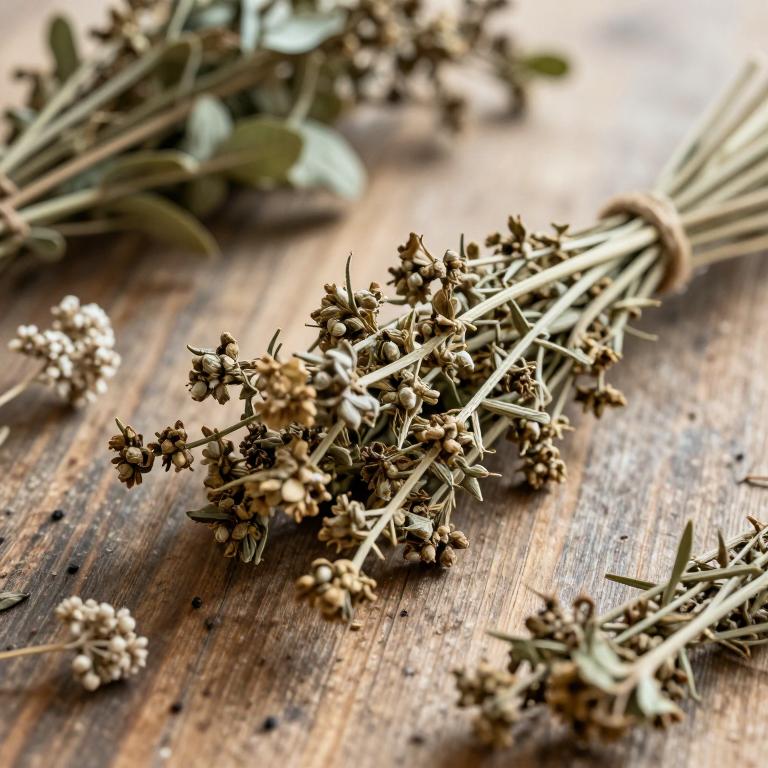
Small wallflower, scientifically known as Erysimum inconspicuum, is a resilient perennial native to North American landscapes. Characterized by its delicate yellow blooms and fragrant foliage, this plant offers unique botanical interest. While primarily ornamental, its hardy nature makes it a fascinating subject for those studying regional medicinal flora.
Names and Synonyms
Common Names
- small wallflower
- small-flowered prairie rocket
- small-flowered prairie wallflower
- small-flowered wallflower
- small-flowered prairie-rocket
- Small-flower Prairie Wallflower
Scientific Names
Accepted name
Erysimum inconspicuumSynonyms
- Cheiranthus syrticola
- Erysimum asperum var. parviflorum
- Cheiranthus inconspicuus
- Erysimum inconspicuum var. syrticola
- Erysimum asperum var. inconspicuum
- Erysimum syrticola
- Cheirinia syrticola
- Cheirinia parviflora
Regional and Traditional Names
French:
- vélar à petites fleurs
Sources: Wikidata, Catalogue of Life
Taxonomical Classification
This plant belongs to the kingdom Plantae and the phylum Streptophyta. Within the class Equisetopsida and subclass Magnoliidae, it is classified under the order Brassicales and the family Brassicaceae. Finally, it is identified by its specific genus, Erysimum.
| Rank | Classification |
|---|---|
| Kingdom | Plantae |
| Phylum | Streptophyta |
| Class | Equisetopsida |
| Subclass | Magnoliidae |
| Order | Brassicales |
| Family | Brassicaceae |
| Genus | Erysimum |
Sources: The World Checklist of Vascular Plants (WCVP)
Distribution
This plant is primarily distributed across the vast regions of Subarctic America. Within this northern territory, its range extends through the state of Alaska and into the Yukon. The species also makes a significant presence throughout various parts of Western Canada. Specifically, it can be found growing in the provinces of Alberta and British Columbia. Additionally, its geographical footprint includes the prairie landscapes of Manitoba.
| Region | Area |
|---|---|
| Subarctic America | Alaska |
| Subarctic America | Yukon |
| Western Canada | Alberta |
| Western Canada | British Columbia |
| Western Canada | Manitoba |
| Western Canada | Saskatchewan |
| Eastern Canada | Nova Scotia |
| Eastern Canada | Ontario |
| Eastern Canada | Québec |
| Northwestern U.S.A. | Colorado |
Sources: The World Checklist of Vascular Plants (WCVP)
Botanical Identification
Life history
The life history of Erysimum inconspicuum is characterized by a biennial lifecycle, meaning the plant typically completes its biological processes over a period of two years. During its first year, the plant focuses on vegetative growth, establishing a robust root system and developing a basal rosette of leaves to store necessary nutrients. In its second year, the plant undergoes a reproductive phase, utilizing its stored energy to produce an elongated flowering stalk, blooming with characteristic cruciform flowers to facilitate pollination. Following successful fertilization, the plant produces seeds to ensure the next generation before eventually completing its life cycle.
- Lifecycle :
- biennial
Morphology
The morphology of Erysimum inconspicuum is characterized by its growth form as a non-woody herb and forb, functioning as an independent organism that does not rely on a parasitic or epiphytic lifestyle. As a terrestrial species, it does not exhibit aquatic or semiaquatic tendencies, maintaining its presence in land-based habitats. The plant is strictly self-supporting in its structure, lacking any climbing, vine, or liana-like characteristics that would require external support. Its physical composition is entirely non-woody, consistent with its classification as a herbaceous plant.
- Aquatic :
- terrestrial
- Climber :
- self-supporting
- Epiphyte :
- terrestrial
- Growth form :
- herb
- Growth form :
- forb
- Parasite :
- independent
- Woodiness :
- non-woody
Physiology
The physiology of Erysimum inconspicuum is characterized by its utilization of the C3 photosynthetic pathway, a fundamental metabolic process wherein carbon dioxide is fixed directly by the enzyme RuBisCO during the Calvin cycle. As a C3 plant, it performs carbon fixation primarily in the mesophyll cells, relying on a direct conversion of atmospheric $\text{CO}_2$ into three-carbon sugar molecules, which dictates its resource management strategies regarding water use efficiency and temperature adaptation. This metabolic framework influences the plant's transpiration rates and its ability to thrive in specific ecological niches where light intensity and moisture availability are balanced. Consequently, its physiological performance is tightly linked to environmental factors that affect the efficiency of the C3 cycle, such as ambient temperature and the availability of water, which in turn regulate its growth patterns and overall metabolic vigor.
- Photosynthetic pathway :
- C3
Sources: Global Inventory of Floras and Traits (GIFT)
Plant Parts
Erysimum inconspicuum has 1 reported plant parts identified across 1 scientific publications and several other databases that are studied for medicinal purposes. The most consistently reported plant part include fruit.
| Plant part | Supporting sources | Consensus |
|---|---|---|
| Fruit | 1 supporting sources | ★☆☆☆☆ |
Fruit
- Journal of natural products
Chemicals
Erysimum inconspicuum has 2 reported phytochemicals identified across 1 scientific publications and several other databases. The most consistently reported chemicals include Uzarigenin, strophanthidin.
| Chemical | Supporting sources | Consensus |
|---|---|---|
| Uzarigenin | 1 supporting sources | ★☆☆☆☆ |
| strophanthidin | 1 supporting sources | ★☆☆☆☆ |
Uzarigenin
- Journal of natural products
strophanthidin
- Journal of natural products