Eryngium thyrsoideum
Eryngium thyrsoideum · Accepted scientific name
Scientific literature: Very Sparse (8 studies) · ★☆☆☆☆
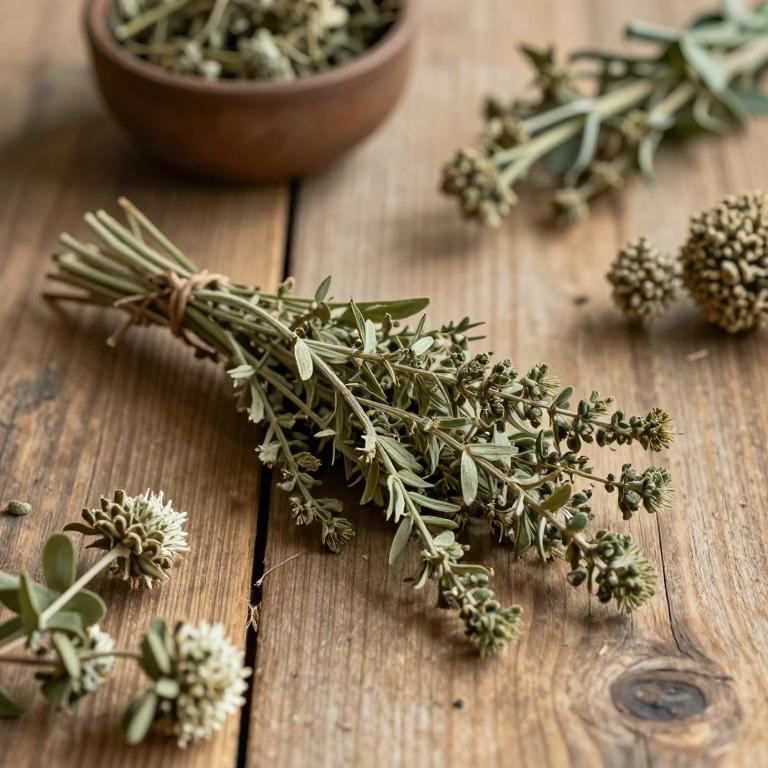
, scientifically known as Eryngium thyrsoideum, is a remarkable medicinal herb valued for its therapeutic potential. Often found in specific regional ecosystems, this plant contains unique bioactive compounds used in traditional remedies. It is frequently studied for its diverse pharmacological properties, offering promising insights into natural healing and wellness.
- Family
- Apiaceae
- Native range
- Asia-Temperate
- Parts used
- Not available
- Common names
- Not available
- Scientific synonyms
- Not available
Names and Synonyms
Scientific Names
Accepted name
Eryngium thyrsoideumSources: Wikidata
Taxonomical Classification
This plant belongs to the kingdom Plantae within the phylum Streptophyta and is classified under the class Equisetopsida. Following the subclass Magnoliidae, it is placed in the order Apiales and the family Apiaceae. Finally, it is categorized under the genus Eryngium.
| Rank | Classification |
|---|---|
| Kingdom | Plantae |
| Phylum | Streptophyta |
| Class | Equisetopsida |
| Subclass | Magnoliidae |
| Order | Apiales |
| Family | Apiaceae |
| Genus | Eryngium |
Sources: The World Checklist of Vascular Plants (WCVP)
Distribution
This plant exhibits a specific geographical distribution spanning parts of Western Asia and the Caucasus region. Within the Caucasus, its presence is specifically noted in the Transcaucasus area. Moving into Western Asia, it can be found growing across the landscape of Türkiye. The species also inhabits significant portions of Iran within the same western territory. Finally, its range extends further into Western Asia to include the country of Iraq.
| Region | Area |
|---|---|
| Caucasus | Transcaucasus |
| Western Asia | Iran |
| Western Asia | Iraq |
| Western Asia | Türkiye |
Sources: The World Checklist of Vascular Plants (WCVP)
Chemicals
Eryngium thyrsoideum has 3 reported phytochemicals identified across 0 scientific publications and several other databases. The most consistently reported chemicals include 5-HYDROXYMETHYLFURFURAL, Antioxidants, ascorbic acid.
| Chemical | Supporting sources | Consensus |
|---|---|---|
| 5-HYDROXYMETHYLFURFURAL | 1 supporting sources | ★☆☆☆☆ |
| Antioxidants | 1 supporting sources | ★☆☆☆☆ |
| ascorbic acid | 1 supporting sources | ★☆☆☆☆ |
5-HYDROXYMETHYLFURFURAL
- Die Naturwissenschaften
Antioxidants
- Die Naturwissenschaften
ascorbic acid
- Die Naturwissenschaften
Activities
Eryngium thyrsoideum has 3 reported activities identified across 0 scientific publications and several other databases. The most consistently reported activities include Antibacterial, Antioxidant, Cytotoxic.
| Activity | Supporting sources | Consensus |
|---|---|---|
| Antibacterial | 1 supporting sources | ★☆☆☆☆ |
| Antioxidant | 1 supporting sources | ★☆☆☆☆ |
| Cytotoxic | 1 supporting sources | ★☆☆☆☆ |
Antibacterial
- Die Naturwissenschaften
Antioxidant
- Die Naturwissenschaften
Cytotoxic
- Die Naturwissenschaften
Conditions
Eryngium thyrsoideum has 1 reported investigations on conditions identified across 0 scientific publications and several other databases. The most consistently reported conditions include Staphylococcus epidermidis.
| Condition | Supporting sources | Consensus |
|---|---|---|
| Staphylococcus epidermidis | 1 supporting sources | ★☆☆☆☆ |
Staphylococcus epidermidis
- Iranian journal of pharmaceutical research : IJPR
Preparations
Eryngium thyrsoideum has 1 reported preparations identified across 0 scientific publications and several other databases. The most consistently reported preparations include n-hexane extracts.
| Preparation | Supporting sources | Consensus |
|---|---|---|
| N-hexane extracts | 1 supporting sources | ★☆☆☆☆ |
N-hexane extracts
- Iranian journal of pharmaceutical research : IJPR