Eryngium montanum
Eryngium montanum · Accepted scientific name
Scientific literature: Very Sparse (7 studies) · ★☆☆☆☆
, scientifically known as Eryngium montanum, is a remarkable medicinal herb valued in traditional healing practices. Belonging to the Apiaceae family, this plant is recognized for its diverse therapeutic properties, often utilized to treat various ailments. Its unique botanical characteristics make it a significant subject in ethnopharmacological studies worldwide.
- Family
- Apiaceae
- Native range
- Northern America
- Parts used
- Root
- Common names
- Not available
- Scientific synonyms
- Not available
Names and Synonyms
Scientific Names
Accepted name
Eryngium montanumSources: Wikidata
Taxonomical Classification
This plant belongs to the kingdom Plantae and the phylum Streptophyta within the class Equisetopsida. It is further classified under the subclass Magnoliidae and the order Apiales. Finally, it is a member of the family Apiaceae and falls under the genus Eryngium.
| Rank | Classification |
|---|---|
| Kingdom | Plantae |
| Phylum | Streptophyta |
| Class | Equisetopsida |
| Subclass | Magnoliidae |
| Order | Apiales |
| Family | Apiaceae |
| Genus | Eryngium |
Sources: The World Checklist of Vascular Plants (WCVP)
Distribution
This plant is characterized by a specific and localized geographical distribution. It is found naturally within the country of Mexico. More specifically, its presence is concentrated in the southwestern region of the nation. This limited range suggests that the species thrives in the unique environmental conditions of that area. Therefore, the southwestern part of Mexico serves as its primary habitat.
| Region | Area |
|---|---|
| Mexico | Mexico Southwest |
Sources: The World Checklist of Vascular Plants (WCVP)
Botanical Identification
Morphology
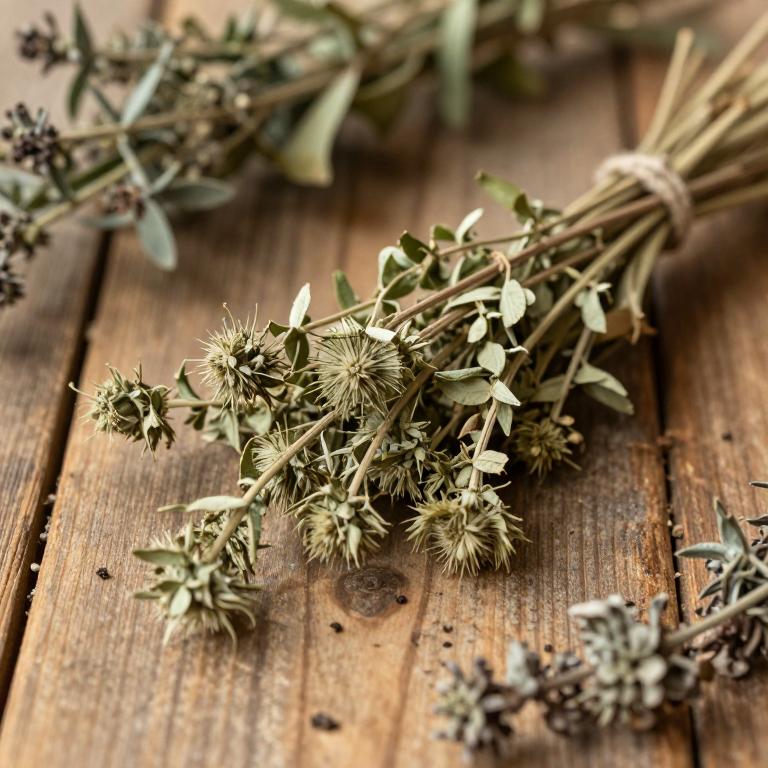
The morphology of Eryngium montanum is characterized by its growth form as a non-woody herb, exhibiting a predominantly terrestrial habit rather than aquatic or semiaquatic lifestyles. It functions as an independent organism, lacking any parasitic tendencies, and maintains a terrestrial existence rather than acting as an epiphyte. Structurally, the plant is self-supporting, meaning it does not possess the climbing mechanisms of a liana or vine, but instead maintains its upright posture through its own herbaceous tissue.
- Aquatic :
- terrestrial
- Climber :
- self-supporting
- Epiphyte :
- terrestrial
- Growth form :
- herb
- Parasite :
- independent
- Woodiness :
- non-woody
Sources: Global Inventory of Floras and Traits (GIFT)
Plant Parts
Eryngium montanum has 1 reported plant parts identified across 1 scientific publications and several other databases that are studied for medicinal purposes. The most consistently reported plant part include root.
| Plant part | Supporting sources | Consensus |
|---|---|---|
| Root | 1 supporting sources | ★☆☆☆☆ |
Root
- Plants (Basel, Switzerland)
Chemicals
Eryngium montanum has 6 reported phytochemicals identified across 1 scientific publications and several other databases. The most consistently reported chemicals include CATECHIN, CHLOROGENIC ACID, Flavonoids, caffeic acid, quercetin.
| Chemical | Supporting sources | Consensus |
|---|---|---|
| CATECHIN | 1 supporting sources | ★☆☆☆☆ |
| CHLOROGENIC ACID | 1 supporting sources | ★☆☆☆☆ |
| Flavonoids | 1 supporting sources | ★☆☆☆☆ |
| caffeic acid | 1 supporting sources | ★☆☆☆☆ |
| quercetin | 1 supporting sources | ★☆☆☆☆ |
| rosmarinic acid | 1 supporting sources | ★☆☆☆☆ |
CATECHIN
- Plants (Basel, Switzerland)
CHLOROGENIC ACID
- Plants (Basel, Switzerland)
Flavonoids
- Plants (Basel, Switzerland)
caffeic acid
- Plants (Basel, Switzerland)
quercetin
- Plants (Basel, Switzerland)
rosmarinic acid
- Plants (Basel, Switzerland)