Eryngium comosum
Eryngium comosum · Accepted scientific name
Scientific literature: Very Sparse (5 studies) · ★☆☆☆☆
Eryngium comosum, scientifically known as Eryngium comosum, is a versatile medicinal plant valued in traditional healing practices. Often recognized by its unique structure, this species offers significant therapeutic potential. It is frequently utilized for its bioactive compounds, which contribute to various health benefits and support holistic wellness across cultures.
- Family
- Apiaceae
- Native range
- Northern America
- Parts used
- Not available
- Common names
- Not available
- Scientific synonyms
- Not available
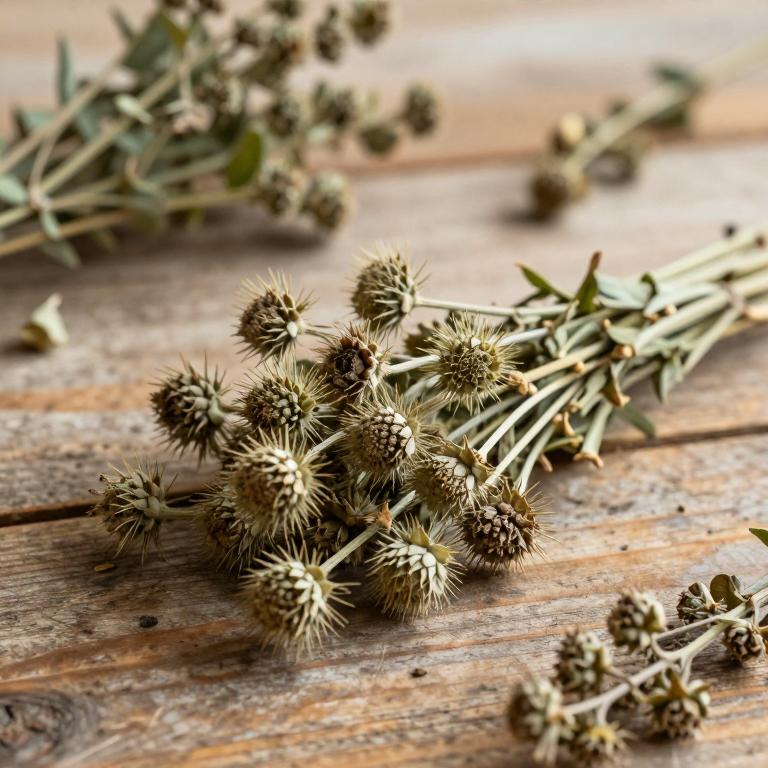
Names and Synonyms
Scientific Names
Accepted name
Eryngium comosumRegional and Traditional Names
Spanish:
- Raíz del sapo
Sources: Wikidata, Catalogue of Life
Taxonomical Classification
This plant belongs to the kingdom Plantae and the phylum Streptophyta, falling under the class Equisetopsida and subclass Magnoliidae. Within the order Apiales, it is classified under the family Apiaceae. Its specific taxonomic identity is defined by the genus Eryngium.
| Rank | Classification |
|---|---|
| Kingdom | Plantae |
| Phylum | Streptophyta |
| Class | Equisetopsida |
| Subclass | Magnoliidae |
| Order | Apiales |
| Family | Apiaceae |
| Genus | Eryngium |
Sources: The World Checklist of Vascular Plants (WCVP)
Distribution
This plant exhibits a diverse distribution across several key regions within Mexico. It can be found growing throughout the central part of the country in Mexico Central. Additionally, its presence extends into the northeastern territories of Mexico Northeast. The species also inhabits the coastal and inland areas of Mexico Gulf. Finally, the plant is documented within the southwestern landscapes of Mexico Southwest.
| Region | Area |
|---|---|
| Mexico | Mexico Central |
| Mexico | Mexico Northeast |
| Mexico | Mexico Gulf |
| Mexico | Mexico Southwest |
Sources: The World Checklist of Vascular Plants (WCVP)
Botanical Identification
Morphology
The morphology of Eryngium consanguineum (noted here as Eryngium comosum) is characterized by its growth form as a non-woody herb. It functions as a self-supporting plant, exhibiting neither climbing nor liana-like tendencies, as it is categorized as self-supporting rather than an obligatory or facultative climber. The species is strictly terrestrial in its habitat, lacking aquatic or semiaquatic adaptations, and it does not function as an epiphyte. Furthermore, the plant is an independent organism, showing no parasitic behavior, and maintains a non-woody structural composition throughout its vegetative development.
- Aquatic :
- terrestrial
- Climber :
- self-supporting
- Epiphyte :
- terrestrial
- Growth form :
- herb
- Parasite :
- independent
- Woodiness :
- non-woody
Sources: Global Inventory of Floras and Traits (GIFT)
Activities
Eryngium comosum has 2 reported activities identified across 0 scientific publications and several other databases. The most consistently reported activities include Hypocholesterolemic, Hypoglycemic.
| Activity | Supporting sources | Consensus |
|---|---|---|
| Hypocholesterolemic | 1 supporting sources | ★☆☆☆☆ |
| Hypoglycemic | 1 supporting sources | ★☆☆☆☆ |
Hypocholesterolemic
- Molecules (Basel, Switzerland)
Hypoglycemic
- Molecules (Basel, Switzerland)
Conditions
Eryngium comosum has 3 reported investigations on conditions identified across 0 scientific publications and several other databases. The most consistently reported conditions include E. coli, Listeria monocytogenes, dyslipidemia.
| Condition | Supporting sources | Consensus |
|---|---|---|
| E. coli | 1 supporting sources | ★☆☆☆☆ |
| Listeria monocytogenes | 1 supporting sources | ★☆☆☆☆ |
| Dyslipidemia | 1 supporting sources | ★☆☆☆☆ |
E. coli
- Journal of equine veterinary science
Listeria monocytogenes
- Journal of equine veterinary science
Dyslipidemia
- Molecules (Basel, Switzerland)