Eryngium bourgatii
Eryngium bourgatii · Accepted scientific name
Scientific literature: Very Sparse (7 studies) · ★☆☆☆☆
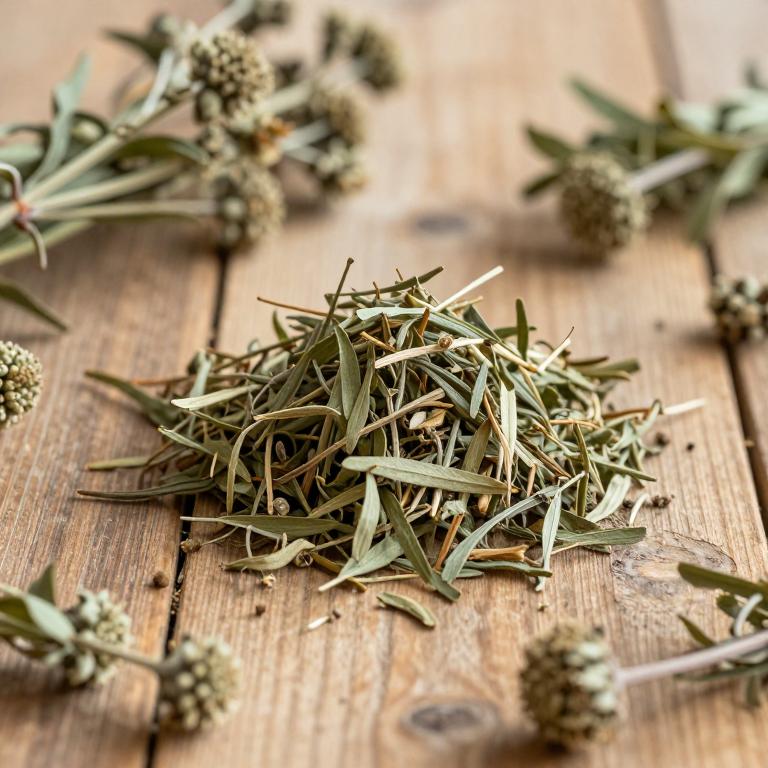
, scientifically known as Eryngium bourgatii, is a remarkable medicinal plant celebrated for its potent therapeutic properties. Often recognized by its distinctive foliage and hardy nature, this species is utilized in traditional herbalism to support various wellness functions, offering a unique blend of phytochemical benefits for holistic health integration.
- Family
- Apiaceae
- Native range
- Europe
- Parts used
- Not available
- Common names
- Not available
- Scientific synonyms
- Not available
Names and Synonyms
Scientific Names
Accepted name
Eryngium bourgatiiRegional and Traditional Names
Spanish:
- Alguerrico
- Cardo de la Magdalena
- Cardo de puerto
- Panical
- Eryngium pallescens
- Eryngium tournefortii
- Eryngium bourgati
German:
- Eryngium bourgati
- Pyrenäendistel
- spanischer Mannstreu
French:
- Panicaut de Bourgat
- Chardon bleu des Pyrénées
- Chardon bleu des pyrénées
- Chardon Bleu Des Pyrénées
- Panicaut de bourgat
- Eryngium bourgati
- panicaut de Bourgat
Sources: Wikidata, Catalogue of Life
Taxonomical Classification
This plant belongs to the kingdom Plantae and the phylum Streptophyta, placing it within the class Equisetopsida and subclass Magnoliidae. It is further classified under the order Apiales and the family Apiaceae. Within this group, it is identified by its specific genus, Eryngium.
| Rank | Classification |
|---|---|
| Kingdom | Plantae |
| Phylum | Streptophyta |
| Class | Equisetopsida |
| Subclass | Magnoliidae |
| Order | Apiales |
| Family | Apiaceae |
| Genus | Eryngium |
Sources: The World Checklist of Vascular Plants (WCVP)
Distribution
This plant exhibits a diverse geographical distribution across several distinct regions. In Northern Europe, its presence can be noted within Great Britain. Moving into Middle Europe, the species is found inhabiting parts of Germany. The range extends further into Southwestern Europe, specifically covering areas in France and Spain. Finally, its distribution reaches into Northern Africa, where it is located in Morocco.
| Region | Area |
|---|---|
| Northern Europe | Great Britain |
| Middle Europe | Germany |
| Southwestern Europe | France |
| Southwestern Europe | Spain |
| Northern Africa | Morocco |
Sources: The World Checklist of Vascular Plants (WCVP)
Botanical Identification
Life history
The life history of Eryngium bourgatii is characterized by its status as a perennial plant, allowing it to persist through multiple growing seasons. As a perennial, it establishes a robust root system that enables the plant to survive dormant periods and re-emerge annually to continue its reproductive cycle. This long-lived life strategy facilitates a steady presence within its ecological niche, as the plant can invest energy into structural longevity and repeated flowering efforts rather than the rapid, single-season completion typical of annuals. Through this perennial lifecycle, Eryngium bourgatii maintains a stable population, utilizing its established perennial structure to withstand environmental fluctuations over several years.
- Lifecycle :
- perennial
Morphology
The morphology of Eryngium bourgatii is characterized by its growth form as a herb, manifesting as a non-woody plant structure. In terms of its ecological habitat and moisture preference, it is classified as terrestrial, though it exists within a spectrum that includes aquatic and semiaquatic environments. Furthermore, the plant functions as an independent organism, meaning it does not exhibit obligatory or facultative parasitic behaviors.
- Aquatic :
- terrestrial
- Growth form :
- herb
- Parasite :
- independent
- Woodiness :
- non-woody
Reproduction
Reproduction in Eryngium bourgatii is facilitated through the production of seeds, which serve as the primary mechanism for species propagation and genetic dispersal. The seeds produced by this plant are characterized by a highly consistent and uniform size profile. Based on quantitative analysis, the seed mass exhibits no variance across observed samples, with a mean seed mass of 0.00311 g. This consistency is further evidenced by the fact that both the maximum and minimum recorded seed mass values are identical at 0.00311 g. Such precise measurements indicate a highly standardized reproductive output regarding the individual weight of each seed produced during the plant's life cycle.
- Seed mass mean:
- 0.00311 g
Sources: Global Inventory of Floras and Traits (GIFT)
Chemicals
Eryngium bourgatii has 1 reported phytochemicals identified across 0 scientific publications and several other databases. The most consistently reported chemicals include compound 12.
| Chemical | Supporting sources | Consensus |
|---|---|---|
| compound 12 | 1 supporting sources | ★☆☆☆☆ |
compound 12
- Journal of ethnopharmacology
Activities
Eryngium bourgatii has 4 reported activities identified across 0 scientific publications and several other databases. The most consistently reported activities include Antibacterial, Antifungal, Antiparasitic, Antitumor.
| Activity | Supporting sources | Consensus |
|---|---|---|
| Antibacterial | 1 supporting sources | ★☆☆☆☆ |
| Antifungal | 1 supporting sources | ★☆☆☆☆ |
| Antiparasitic | 1 supporting sources | ★☆☆☆☆ |
| Antitumor | 1 supporting sources | ★☆☆☆☆ |
Antibacterial
- Journal of ethnopharmacology
Antifungal
- Journal of ethnopharmacology
Antiparasitic
- Journal of ethnopharmacology
Antitumor
- Journal of ethnopharmacology
Conditions
Eryngium bourgatii has 2 reported investigations on conditions identified across 0 scientific publications and several other databases. The most consistently reported conditions include Leishmania donovani, Plasmodium falciparum.
| Condition | Supporting sources | Consensus |
|---|---|---|
| Leishmania donovani | 1 supporting sources | ★☆☆☆☆ |
| Plasmodium falciparum | 1 supporting sources | ★☆☆☆☆ |
Leishmania donovani
- Journal of ethnopharmacology
Plasmodium falciparum
- Journal of ethnopharmacology
Preparations
Eryngium bourgatii has 6 reported preparations identified across 0 scientific publications and several other databases. The most consistently reported preparations include Methyl tert-butyl ether (MTBE) extracts of the non-flowering aerial parts, Methyl tert-butyl ether (MTBE) extracts of the roots, dichloromethane (DCM) extracts of the non-flowering aerial parts, dichloromethane (DCM) extracts of the roots, ethyl acetate (EtOAc) extracts of the non-flowering aerial parts.
| Preparation | Supporting sources | Consensus |
|---|---|---|
| Methyl tert-butyl ether (mtbe) extracts of the non-flowering aerial parts | 1 supporting sources | ★☆☆☆☆ |
| Methyl tert-butyl ether (mtbe) extracts of the roots | 1 supporting sources | ★☆☆☆☆ |
| Dichloromethane (dcm) extracts of the non-flowering aerial parts | 1 supporting sources | ★☆☆☆☆ |
| Dichloromethane (dcm) extracts of the roots | 1 supporting sources | ★☆☆☆☆ |
| Ethyl acetate (etoac) extracts of the non-flowering aerial parts | 1 supporting sources | ★☆☆☆☆ |
| Ethyl acetate (etoac) extracts of the roots | 1 supporting sources | ★☆☆☆☆ |
Methyl tert-butyl ether (mtbe) extracts of the non-flowering aerial parts
- Journal of ethnopharmacology
Methyl tert-butyl ether (mtbe) extracts of the roots
- Journal of ethnopharmacology
Dichloromethane (dcm) extracts of the non-flowering aerial parts
- Journal of ethnopharmacology
Dichloromethane (dcm) extracts of the roots
- Journal of ethnopharmacology
Ethyl acetate (etoac) extracts of the non-flowering aerial parts
- Journal of ethnopharmacology
Ethyl acetate (etoac) extracts of the roots
- Journal of ethnopharmacology