Planta venenosa
Eryngium bourgatii var. bourgatii · Accepted scientific name
Scientific literature: Very Sparse (21 studies) · ★☆☆☆☆
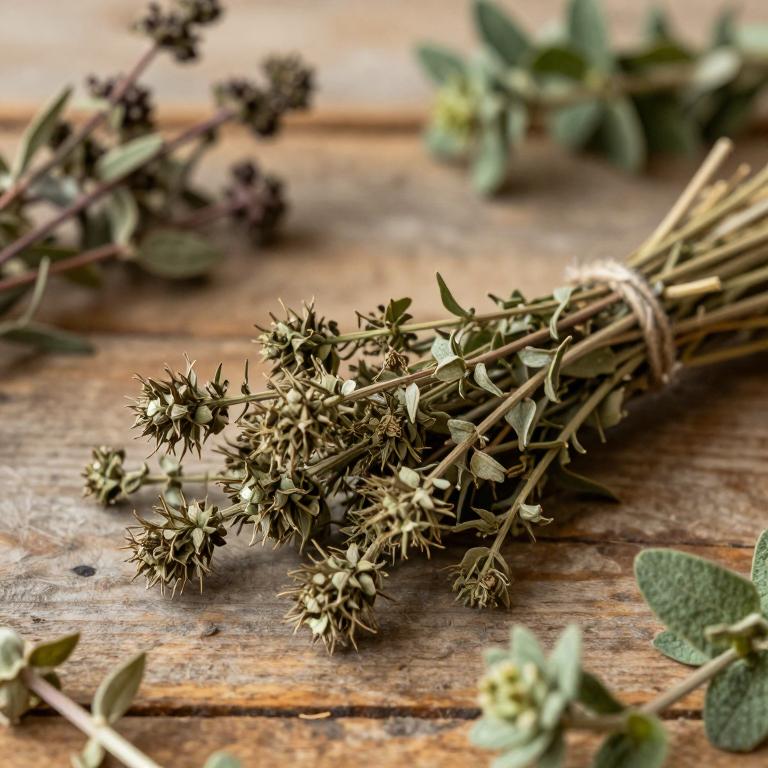
Planta venenosa, scientifically known as Eryngium bourgatii var. bourgatii, is a distinctive member of the Apiaceae family. Often found in specific ecological niches, this botanical variety is characterized by its unique structural morphology. While studied for its phytochemical properties, its toxicity necessitates extreme caution during any medicinal or experimental application.
Names and Synonyms
Common Names
- Planta venenosa
- blue eryngo
- cross thistle
- flat eryngo
- flat rattlesnake-master
- flat sea holly
- plains eryngo
- kok-bas
Scientific Names
Accepted name
Eryngium bourgatii var. bourgatiiSynonyms
- Eryngium tournefortii
- Eryngium pallescens
- Eryngium bourgatii var. pyrenaicum
Regional and Traditional Names
Spanish:
- Eryngium planum
- Eryngium armatum
- Eryngium dalla-torrei
- Eryngium planum var. armatum
- Eryngium intermedium
- Eryngium planifolium
- Eryngium pumilum
- Eryngium pusillum
German:
- Eryngium planum
- Flachblättrige Mannstreu
- flachblättriger Mannstreu
French:
- Eryngium planum
- panicaut à feuilles planes
- panicaut à feuilles mutiques
Sources: Wikidata, Catalogue of Life
Taxonomical Classification
This plant belongs to the kingdom Plantae and the phylum Streptophyta, falling under the class Equisetopsida and subclass Magnoliidae. Within the order Apiales, it is classified under the family Apiaceae and the genus Eryngium. Specifically, it is identified by the variety name bourgatii.
| Rank | Classification |
|---|---|
| Kingdom | Plantae |
| Phylum | Streptophyta |
| Class | Equisetopsida |
| Subclass | Magnoliidae |
| Order | Apiales |
| Family | Apiaceae |
| Genus | Eryngium |
Sources: The World Checklist of Vascular Plants (WCVP)
Distribution
This plant exhibits a specific geographical distribution across several key regions of the European continent. In Northern Europe, its presence can be documented within the borders of Great Britain. Moving toward Middle Europe, the species is also found growing in Germany. Its range extends further into Southwestern Europe, where it inhabits various landscapes in France. Finally, the distribution continues through the Mediterranean reaches of Spain.
| Region | Area |
|---|---|
| Northern Europe | Great Britain |
| Middle Europe | Germany |
| Southwestern Europe | France |
| Southwestern Europe | Spain |
Sources: The World Checklist of Vascular Plants (WCVP)
Botanical Identification
Ecology
The ecology of Eryngium bourgatii var. bourgatii is characterized by its remarkable adaptability to diverse and often contrasting environmental conditions. This variety thrives across a wide spectrum of landscapes, ranging from the shaded, moisture-retentive environments of forests and lush meadows to the more exposed and arid terrains of semi-deserts and steppes. Its presence near rivers indicates an ability to utilize riparian moisture, yet it is equally capable of colonizing well-drained, sandy substrates. This ecological versatility allows the plant to inhabit both relatively stable, nutrient-rich ecosystems and more challenging, water-stressed habitats, demonstrating a high degree of resilience to varying levels of precipitation and soil composition.
- Habitat :
- forest, meadows, rivers, sand, semidesert, steppe
Life history
The life history of Eryngium bourgatii var. bourgatii is characterized by its classification as a perennial organism, meaning it possesses the ability to persist through multiple growing seasons. Its morphological structure and survival strategy are defined by its life form, specifically acting as a hemicryptophyte. This indicates that the plant's perennating buds are located at or just below the soil surface, protected by the remains of previous seasons' foliage or leaf litter, which allows it to endure varying environmental conditions and regrow during favorable periods.
- Life form :
- hemicryptophyte
- Lifecycle :
- perennial
Morphology
The morphology of Eryngium bourgatii var. bourgatii is characterized by its growth form as a non-woody herb and forb. This self-supporting plant is strictly terrestrial in its habitat, functioning as an independent organism rather than an epiphyte or parasite. In terms of stature, it maintains a modest height, typically ranging from a minimum of 0.3 m to a maximum of 0.8 m, with an average plant height of approximately 0.525 m.
- Aquatic :
- terrestrial
- Climber :
- self-supporting
- Epiphyte :
- terrestrial
- Growth form :
- herb
- Growth form :
- forb
- Parasite :
- independent
- Plant height max:
- 0.8 m
- Plant height mean:
- 0.525 m
- Plant height min:
- 0.3 m
- Woodiness :
- non-woody
Physiology
The physiology of Eryngium bourgatii var. bourgatii is characterized by a C3 photosynthetic pathway, which dictates its metabolic processes and carbon fixation strategies. The morphological aspects of its foliage play a crucial role in its physiological efficiency and gas exchange capabilities. The leaves exhibit significant dimensional variation, with lengths ranging from a minimum of 5 cm to a maximum of 8.5 cm, maintaining an average leaf length of 6.75 cm. In terms of lateral expansion, the leaf width spans from a minimum of 2.5 cm to a maximum of 5 cm. These specific leaf dimensions and the C3 metabolic framework collectively influence the plant's transpiration rates and its ability to optimize light interception for energy production.
- Leaf length max:
- 8.5 cm
- Leaf length mean:
- 6.75 cm
- Leaf length min:
- 5 cm
- Leaf width max:
- 5 cm
- Leaf width min:
- 2.5 cm
- Photosynthetic pathway :
- C3
Reproduction
The reproduction of Eryngium bourgatii var. bourgatii is characterized by a specific flowering window that typically begins in June and concludes in July. The plant utilizes a biotic pollination syndrome, specifically relying on insects to facilitate the transfer of pollen. While it is capable of self-fertilization, its reproductive success is tied to these biological interactions. Following successful pollination, the plant develops small fruits that vary in size; the fruit dimensions typically range from a minimum width of 0.15 cm to a maximum of 0.18 cm, with a mean width of 0.165 cm. In terms of length, the fruits range from 0.3 cm to 0.35 cm, maintaining a mean length of 0.325 cm. The resulting seeds are highly uniform in mass, with a recorded mean, minimum, and maximum value of 9e-04 g. Finally, the dispersal of these seeds follows an anemochorous syndrome, meaning they are primarily dispersed by the wind.
- Dispersal syndrome :
- anemochorous
- Flowering time :
- Jun
- Flowering time :
- Jul
- Fruit length max:
- 0.35 cm
- Fruit length mean:
- 0.325 cm
- Fruit length min:
- 0.3 cm
- Fruit width max:
- 0.18 cm
- Fruit width mean:
- 0.165 cm
- Fruit width min:
- 0.15 cm
- Pollination syndrome :
- insect
- Pollination syndrome :
- biotic
- Seed mass mean:
- 9e-04 g
- Self fertilization :
- present
Sources: Global Inventory of Floras and Traits (GIFT)
Plant Parts
Eryngium bourgatii var. bourgatii has 3 reported plant parts identified across 4 scientific publications and several other databases that are studied for medicinal purposes. The most consistently reported plant part include fruit, leaf, root.
| Plant part | Supporting sources | Consensus |
|---|---|---|
| Fruit | 2 supporting sources | ★☆☆☆☆ |
| Leaf | 1 supporting sources | ★☆☆☆☆ |
| Root | 1 supporting sources | ★☆☆☆☆ |
Fruit
- Analytica chimica acta
- Fitoterapia
Leaf
- Acta poloniae pharmaceutica
Root
- Acta poloniae pharmaceutica
Chemicals
Eryngium bourgatii var. bourgatii has 13 reported phytochemicals identified across 4 scientific publications and several other databases. The most consistently reported chemicals include Flavonoids, 2,3,4-trimethylbenzaldehyde, Antioxidant Activity, CHLOROGENIC ACID, Caryophyllene.
| Chemical | Supporting sources | Consensus |
|---|---|---|
| Flavonoids | 2 supporting sources | ★☆☆☆☆ |
| 2,3,4-trimethylbenzaldehyde | 1 supporting sources | ★☆☆☆☆ |
| Antioxidant Activity | 1 supporting sources | ★☆☆☆☆ |
| CHLOROGENIC ACID | 1 supporting sources | ★☆☆☆☆ |
| Caryophyllene | 1 supporting sources | ★☆☆☆☆ |
| Coumarins | 1 supporting sources | ★☆☆☆☆ |
| Dipeptides | 1 supporting sources | ★☆☆☆☆ |
| Germacrene D | 1 supporting sources | ★☆☆☆☆ |
| MYRISTIC ACID | 1 supporting sources | ★☆☆☆☆ |
| Proanthocyanidins | 1 supporting sources | ★☆☆☆☆ |
Flavonoids
- Molecules (Basel, Switzerland)
- Pharmacognosy magazine
2,3,4-trimethylbenzaldehyde
- Journal of food science and technology
Antioxidant Activity
- Journal of food science and technology
CHLOROGENIC ACID
- Acta biochimica Polonica
Caryophyllene
- International journal of biomaterials
Coumarins
- Molecules (Basel, Switzerland)
Dipeptides
- Molecules (Basel, Switzerland)
Germacrene D
- Journal of food science and technology
MYRISTIC ACID
- International journal of biomaterials
Proanthocyanidins
- Pharmacognosy magazine
Activities
Eryngium bourgatii var. bourgatii has 2 reported activities identified across 4 scientific publications and several other databases. The most consistently reported activities include Antimicrobial, Antioxidant.
| Activity | Supporting sources | Consensus |
|---|---|---|
| Antimicrobial | 1 supporting sources | ★☆☆☆☆ |
| Antioxidant | 1 supporting sources | ★☆☆☆☆ |
Antimicrobial
- Molecules (Basel, Switzerland)
Antioxidant
- Molecules (Basel, Switzerland)
Preparations
Eryngium bourgatii var. bourgatii has 12 reported preparations identified across 4 scientific publications and several other databases. The most consistently reported preparations include CO2 extract, CO2 extract of Eryngium planum L., carbon dioxide extract, ethanol extracts from fruits, ethanolic extract from basal leaves.
| Preparation | Supporting sources | Consensus |
|---|---|---|
| Co2 extract | 1 supporting sources | ★☆☆☆☆ |
| Co2 extract of eryngium planum l. | 1 supporting sources | ★☆☆☆☆ |
| Carbon dioxide extract | 1 supporting sources | ★☆☆☆☆ |
| Ethanol extracts from fruits | 1 supporting sources | ★☆☆☆☆ |
| Ethanolic extract from basal leaves | 1 supporting sources | ★☆☆☆☆ |
| Ethanolic extracts obtained from leaves and roots | 1 supporting sources | ★☆☆☆☆ |
| Flavonoid fraction (lf) | 1 supporting sources | ★☆☆☆☆ |
| Flavonoid-saponin fraction (lf-s) | 1 supporting sources | ★☆☆☆☆ |
| Phenolic acids fraction (la) | 1 supporting sources | ★☆☆☆☆ |
| Phenolic acids fraction (ra) | 1 supporting sources | ★☆☆☆☆ |
Co2 extract
- International journal of biomaterials
Co2 extract of eryngium planum l.
- International journal of biomaterials
Carbon dioxide extract
- International journal of biomaterials
Ethanol extracts from fruits
- Fitoterapia
Ethanolic extract from basal leaves
- Acta poloniae pharmaceutica
Ethanolic extracts obtained from leaves and roots
- Acta poloniae pharmaceutica
Flavonoid fraction (lf)
- Acta poloniae pharmaceutica
Flavonoid-saponin fraction (lf-s)
- Acta poloniae pharmaceutica
Phenolic acids fraction (la)
- Acta poloniae pharmaceutica
Phenolic acids fraction (ra)
- Acta poloniae pharmaceutica