Cut-leaved Stork's-bill
Erodium laciniatum · Accepted scientific name
Scientific literature: Very Sparse (6 studies) · ★☆☆☆☆
Cut-leaved Stork's-bill, scientifically known as Erodium laciniatum, is a delicate perennial herb native to specific regions of Africa. Characterized by its deeply lobed, laciniate foliage and charming pinkish flowers, this plant is valued in traditional herbalism for its potential therapeutic properties and its unique contribution to botanical biodiversity.
- Family
- Geraniaceae
- Native range
- Europe
- Parts used
- Not available
- Common names
- Cut-Leaved Stork'S-Bill · Cutleaf Stork'S Bill
- Scientific synonyms
- Erodium Triangulare · Erodium Triangulare Var. Affine · 30 more
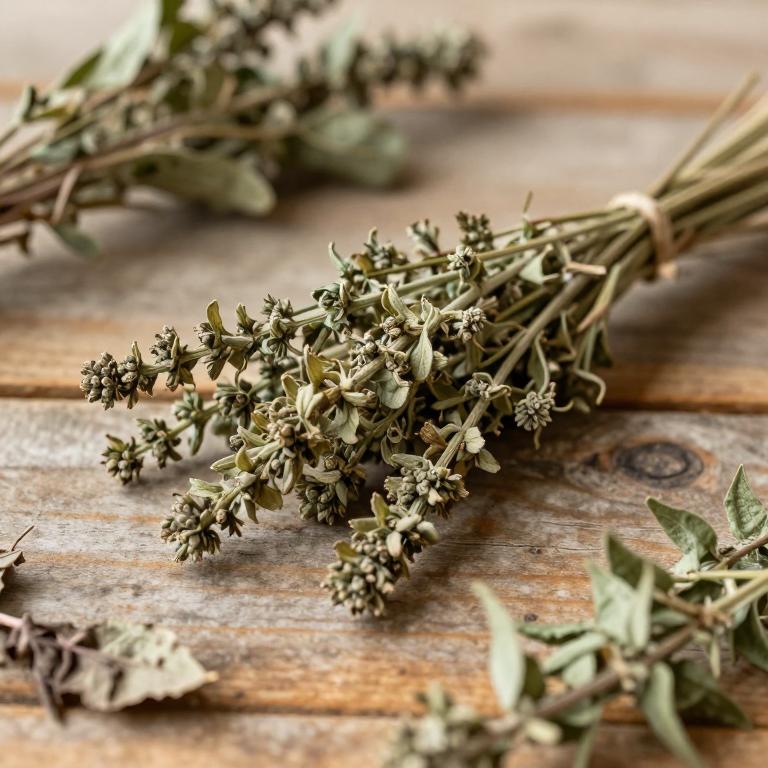
Names and Synonyms
Common Names
- Cut-leaved Stork's-bill
- cutleaf stork's bill
Scientific Names
Accepted name
Erodium laciniatumSynonyms
- Erodium triangulare
- Erodium triangulare var. affine
- Erodium laciniatum var. intermedium
- Erodium laciniatum f. glandulosopilosum
- Erodium affine
- Erodium involucratum
- Erodium hispidum
- Geranium triangulare
- Erodium leucophyllum
- Erodium triangulare subsp. laciniatum
- Erodium reflexum
- Erodium pyramidum
- Erodium triangulare f. micranthum
- Erodium laciniatum f. brevimucronatum
- Erodium strigosum
- Erodium soluntinum
- Erodium laciniatum var. dissectum
- Erodium decipiens
- Erodium laciniatum var. hispidum
- Erodium cinerascens
- Erodium laciniatum subvar. hispidum
- Erodium alexandrinum
- Erodium laciniatum f. involucratum
- Erodium triangulare var. dissectum
- Erodium laciniatum f. soluntinum
- Erodium laciniatum var. involucratum
- Erodium laciniatum var. subintegrifolium
- Erodium laciniatum subsp. soluntinum
- Erodium chium var. soluntinum
- Erodium triangulare var. involucratum
- Erodium chium f. hispidum
- Erodium chium var. laciniatum
Regional and Traditional Names
French:
- Erodium à feuilles découpées
Sources: Wikidata, Catalogue of Life
Taxonomical Classification
This plant belongs to the kingdom Plantae and the phylum Streptophyta, falling under the class Equisetopsida and subclass Magnoliidae. Within the order Geraniales and the family Geraniaceae, it is classified under the genus Erodium. Specifically, its taxonomic identity is defined as Erodium laciniaatum.
| Rank | Classification |
|---|---|
| Kingdom | Plantae |
| Phylum | Streptophyta |
| Class | Equisetopsida |
| Subclass | Magnoliidae |
| Order | Geraniales |
| Family | Geraniaceae |
| Genus | Erodium |
Sources: The World Checklist of Vascular Plants (WCVP)
Distribution
This plant exhibits a specific distribution pattern across several regions of Europe. In Middle Europe, its presence is recorded in Germany. Moving toward the Mediterranean, it is found within Southwestern Europe in France and Portugal. The species also inhabits the islands of Corse and Sardegna. Consequently, its range spans from central continental areas to various southwestern coastal territories.
| Region | Area |
|---|---|
| Middle Europe | Germany |
| Southwestern Europe | Corse |
| Southwestern Europe | France |
| Southwestern Europe | Portugal |
| Southwestern Europe | Sardegna |
| Southwestern Europe | Spain |
| Southeastern Europe | Albania |
| Southeastern Europe | Greece |
| Southeastern Europe | Italy |
| Southeastern Europe | Kriti |
Sources: The World Checklist of Vascular Plants (WCVP)
Botanical Identification
Ecology
The ecology of Erodium laciniaatum is characterized by its specific preference for high-altitude environments and particular soil compositions. This species thrives within a narrow elevational range, specifically occurring between 900 m and 1000 m AMSL (meters above sea level). Within these altitudinal limits, the plant is primarily found inhabiting sandy substrates, where its root systems are adapted to the drainage and nutrient profiles typical of sand-based habitats.
- Elevational range max:
- 1000 m AMSL
- Elevational range min:
- 900 m AMSL
- Habitat :
- sand
Life history
The life history of Erodium laciniatum is characterized by an annual lifecycle, meaning the plant completes its entire developmental process from germination to seed production within a single growing season. As a therophyte, it survives unfavorable environmental conditions by existing solely in the form of seeds, which remain dormant until the onset of favorable growing conditions. This life form strategy allows the species to rapidly exploit seasonal resources, utilizing its brief period of vegetative growth and flowering to ensure the dispersal of the next generation before the onset of drought or extreme temperatures.
- Life form :
- therophyte
- Lifecycle :
- annual
Morphology
The morphology of Erodium laciniatum is characterized by its growth form as a non-woody herb and forb. This species is a self-supporting plant that does not function as a climber, liana, or vine, nor does it exhibit parasitic behavior, growing instead as an independent organism. It is primarily a terrestrial plant, lacking aquatic or epiphytic tendencies. In terms of stature, it is a diminutive species, with a plant height ranging from a minimum of 0.1 m to a maximum of 0.3 m.
- Aquatic :
- terrestrial
- Climber :
- self-supporting
- Epiphyte :
- terrestrial
- Growth form :
- herb
- Growth form :
- forb
- Parasite :
- independent
- Plant height max:
- 0.3 m
- Plant height min:
- 0.1 m
- Woodiness :
- non-woody
Reproduction
The reproduction of Erodium laciniaatum is characterized by a specific phenological window and precise seed production metrics. The flowering period for this species is concentrated primarily in April, though the potential flowering cycle can vary across the months of January through December depending on environmental conditions. Following successful pollination, the plant produces seeds with highly consistent physical properties; the seed mass is remarkably uniform, with a mean, maximum, and minimum value all recorded at 0.00124 g. This consistency in seed mass suggests a highly standardized reproductive output per individual seed produced during its seasonal cycle.
- Flowering time :
- Apr
- Seed mass mean:
- 0.00124 g
Sources: Global Inventory of Floras and Traits (GIFT)
Chemicals
Erodium laciniatum has 2 reported phytochemicals identified across 0 scientific publications and several other databases. The most consistently reported chemicals include Phenols, Tannins.
| Chemical | Supporting sources | Consensus |
|---|---|---|
| Phenols | 1 supporting sources | ★☆☆☆☆ |
| Tannins | 1 supporting sources | ★☆☆☆☆ |
Phenols
- Journal of complementary & integrative medicine
Tannins
- Journal of complementary & integrative medicine
Activities
Erodium laciniatum has 2 reported activities identified across 0 scientific publications and several other databases. The most consistently reported activities include Antimicrobial, Antioxidant.
| Activity | Supporting sources | Consensus |
|---|---|---|
| Antimicrobial | 1 supporting sources | ★☆☆☆☆ |
| Antioxidant | 1 supporting sources | ★☆☆☆☆ |
Antimicrobial
- Journal of complementary & integrative medicine
Antioxidant
- Journal of complementary & integrative medicine
Conditions
Erodium laciniatum has 2 reported investigations on conditions identified across 0 scientific publications and several other databases. The most consistently reported conditions include Alzheimer diseases, infectious diseases.
| Condition | Supporting sources | Consensus |
|---|---|---|
| Alzheimer diseases | 1 supporting sources | ★☆☆☆☆ |
| Infectious diseases | 1 supporting sources | ★☆☆☆☆ |
Alzheimer diseases
- Journal of complementary & integrative medicine
Infectious diseases
- Journal of complementary & integrative medicine