Long-beaked Stork's-bill
Erodium gruinum · Accepted scientific name
Scientific literature: Very Sparse (10 studies) · ★☆☆☆☆
Long-beaked Stork's-bill, scientifically known as Erodium gruinum, is a resilient herbaceous plant valued in traditional medicine. Often found in disturbed soils, it contains bioactive compounds with potential antioxidant and antimicrobial properties. This species is frequently studied for its therapeutic applications in managing inflammation and supporting overall digestive wellness.
- Family
- Geraniaceae
- Native range
- Europe
- Parts used
- Not available
- Common names
- Long-Beaked Stork'S-Bill
- Scientific synonyms
- Erodium Gruinum F. Cyrenaicum · Geranium Uniflorum · 3 more
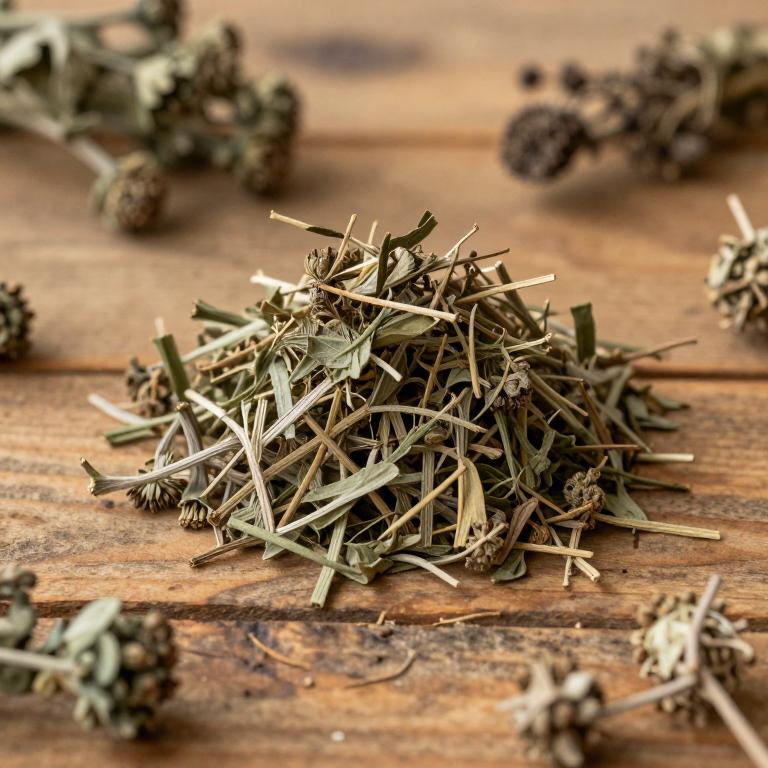
Names and Synonyms
Common Names
- Long-beaked Stork's-bill
Scientific Names
Accepted name
Erodium gruinumSynonyms
- Erodium gruinum f. cyrenaicum
- Geranium uniflorum
- Geranium gruinum
- Erodium monsonioides
- Erodium gruinum var. subpinnatum
Regional and Traditional Names
German:
- Kranich-Reiherschnabel
Sources: Wikidata, Catalogue of Life
Taxonomical Classification
This plant belongs to the kingdom Plantae and the phylum Streptophyta, falling under the class Equisetopsida and subclass Magnoliidae. Within the order Geraniales, it is classified under the family Geraniaceae. Finally, it is identified by its genus, Erodium, and its specific species name, Erodium gruinum.
| Rank | Classification |
|---|---|
| Kingdom | Plantae |
| Phylum | Streptophyta |
| Class | Equisetopsida |
| Subclass | Magnoliidae |
| Order | Geraniales |
| Family | Geraniaceae |
| Genus | Erodium |
Sources: The World Checklist of Vascular Plants (WCVP)
Distribution
This plant exhibits a broad geographical presence across several distinct regions of Europe. In Middle Europe, its distribution includes the territories of Germany as well as the area spanning Czechia and Slovakia. Moving toward the Mediterranean, the species can be found throughout Southeastern Europe, specifically in Greece. Its range further extends to the island of Kriti within the same southeastern region. Finally, the plant's documented presence reaches the island of Sicilia, rounding out its diverse distribution.
| Region | Area |
|---|---|
| Middle Europe | Czechia-Slovakia |
| Middle Europe | Germany |
| Southeastern Europe | Greece |
| Southeastern Europe | Kriti |
| Southeastern Europe | Sicilia |
| Southeastern Europe | Türkiye-in-Europe |
| Northern Africa | Egypt |
| Northern Africa | Libya |
| Western Asia | Cyprus |
| Western Asia | East Aegean Is. |
Sources: The World Checklist of Vascular Plants (WCVP)
Botanical Identification
Life history
The life history of Erodium gruinum is characterized by an annual lifecycle, meaning the plant completes its entire developmental process—from germination to seed production—within a single growing season. As a therophyte, it survives the unfavorable seasons by producing specialized seeds that remain dormant in the soil, ensuring the continuation of the species without maintaining persistent vegetative structures above ground. This life form strategy allows the plant to rapidly exploit available resources during favorable environmental conditions, transitioning through its vegetative and reproductive stages before the onset of senescence.
- Life form :
- therophyte
- Lifecycle :
- annual
Morphology
The morphology of Erodium gruinum is characterized by its growth form as a non-woody herb and specifically a forb. As a terrestrial plant, it does not exhibit aquatic or semiaquatic tendencies, nor does it function as an epiphyte. The species is strictly self-supporting, lacking any climber, vine, or liana characteristics, and it operates as an independent organism rather than a parasite. Its structural development is entirely non-woody, maintaining a herbaceous habit throughout its life cycle.
- Aquatic :
- terrestrial
- Climber :
- self-supporting
- Epiphyte :
- terrestrial
- Growth form :
- herb
- Growth form :
- forb
- Parasite :
- independent
- Woodiness :
- non-woody
Reproduction
Reproduction in Erodium gruinum is primarily facilitated through the production of seeds, which exhibit specific morphological characteristics regarding their weight. The seed mass within a population displays a measurable range of variation, with a documented minimum mass of 0.034 g and a maximum mass reaching up to 0.05364 g. On average, the seed mass is calculated to be 0.041093333 g, reflecting a relatively consistent reproductive output essential for the establishment of new individuals in its habitat.
- Seed mass max:
- 0.05364 g
- Seed mass mean:
- 0.041093333 g
- Seed mass min:
- 0.034 g
Sources: Global Inventory of Floras and Traits (GIFT)
Chemicals
Erodium gruinum has 7 reported phytochemicals identified across 0 scientific publications and several other databases. The most consistently reported chemicals include Fatty acids, Flavonoids, Phytoestrogens, Phytosterols, Tannins.
| Chemical | Supporting sources | Consensus |
|---|---|---|
| Fatty acids | 1 supporting sources | ★☆☆☆☆ |
| Flavonoids | 1 supporting sources | ★☆☆☆☆ |
| Phytoestrogens | 1 supporting sources | ★☆☆☆☆ |
| Phytosterols | 1 supporting sources | ★☆☆☆☆ |
| Tannins | 1 supporting sources | ★☆☆☆☆ |
| Terpenes | 1 supporting sources | ★☆☆☆☆ |
| coumarin | 1 supporting sources | ★☆☆☆☆ |
Fatty acids
- Journal of infection in developing countries
Flavonoids
- Journal of infection in developing countries
Phytoestrogens
- Journal of infection in developing countries
Phytosterols
- Journal of infection in developing countries
Tannins
- Journal of infection in developing countries
Terpenes
- Journal of infection in developing countries
coumarin
- Journal of infection in developing countries
Conditions
Erodium gruinum has 3 reported investigations on conditions identified across 0 scientific publications and several other databases. The most consistently reported conditions include Acinetobacter baumannii, Klebsiella pneumoniae, Proteus mirabilis.
| Condition | Supporting sources | Consensus |
|---|---|---|
| Acinetobacter baumannii | 1 supporting sources | ★☆☆☆☆ |
| Klebsiella pneumoniae | 1 supporting sources | ★☆☆☆☆ |
| Proteus mirabilis | 1 supporting sources | ★☆☆☆☆ |
Acinetobacter baumannii
- Journal of infection in developing countries
Klebsiella pneumoniae
- Journal of infection in developing countries
Proteus mirabilis
- Journal of infection in developing countries
Preparations
Erodium gruinum has 2 reported preparations identified across 0 scientific publications and several other databases. The most consistently reported preparations include ethanolic extracts, extracts.
| Preparation | Supporting sources | Consensus |
|---|---|---|
| Ethanolic extracts | 1 supporting sources | ★☆☆☆☆ |
| Extracts | 1 supporting sources | ★☆☆☆☆ |
Ethanolic extracts
- Journal of infection in developing countries
Extracts
- Frontiers in microbiology