Common Stork's-bill
Erodium cicutarium · Accepted scientific name
Scientific literature: Very Sparse (7 studies) · ★☆☆☆☆
Common Stork's-bill, scientifically known as Erodium cicutarium, is a delicate herbaceous plant belonging to the Geraniaceae family. Often found in disturbed soils, this species is valued in traditional medicine for its astringent and anti-inflammatory properties. Its unique, beak-like seed pods make it easily identifiable in various natural habitats.
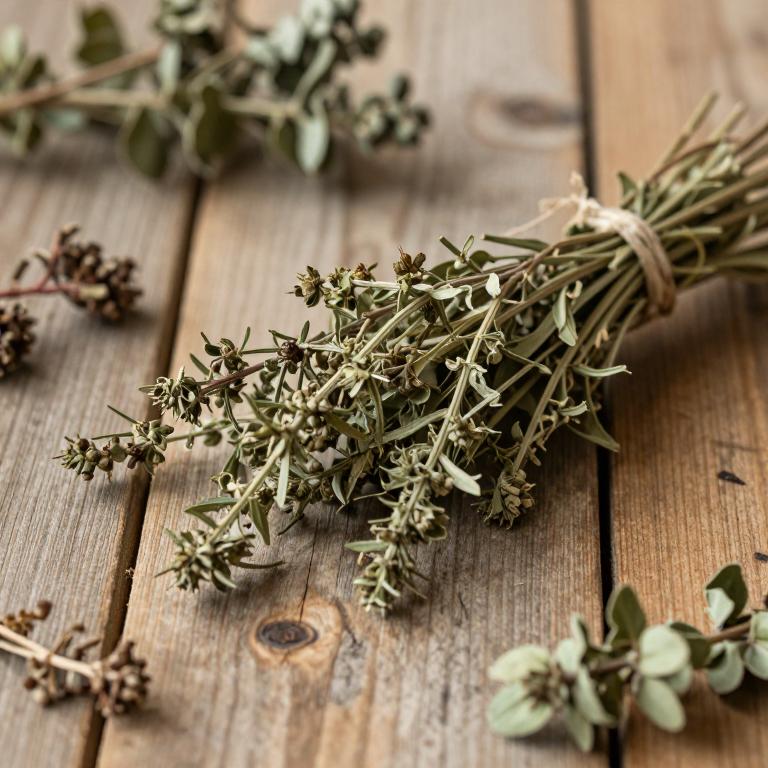
Names and Synonyms
Common Names
- alfilaria
- red-stemmed filaree
- red-stemmed stork's-bill
- stork's-bill
- Common Stork's-Bill
- Alfileria
- Common Storksbill
- Filaree
- Heron's Bill
- Herons-Bill
- Pin Clover
- Pin Grass
- Red-Stem Stork's-Bill
- Redstem Filaree
- Redstem Stork's-bill
- Stork's bill
- Wild Musk
Scientific Names
Accepted name
Erodium cicutariumSynonyms
- Erodium cicutarium var. arenicola
- Erodium pimpinellifolium
- Geranium cicutarium var. pimpinellifolium
- Erodium cicutarium proles pimpinellifolium
- Geranium cicutarium var. praecox
- Geranium cicutarium var. chaerophyllum
- Erodium pilosum var. chaerophyllum
- Erodium ballii
- Erodium bipinnatum var. albiflorum
- Geranium moschatum var. pimpinellifolium
- Erodium cicutarium var. vulgare
- Erodium melanostigma var. thalictroides
- Erodium pimpinellifolium var. pilosum
- Geranium cicutarium var. pilosissimum
- Erodium cicutarium var. album
- Erodium melanostigma
- Erodium praetermissum
- Erodium verbenifolium
- Erodium cicutarium var. immaculatum
- Geranium chaerophyllum
- Geranium cicutarium
- Geranium pimpinellifolium
- Geranium praecox
- Myrrhina inodora
- Erodium immaculatum
- Erodium himalayanum
- Erodium hirsutum
- Erodium millefolium
- Erodium minutiflorum
- Erodium moranense
- Erodium pallidiflorum
- Erodium parviflorum
- Geranium arenicola
- Erodium pentalobum
- Erodium petroselinum
- Erodium praecox
- Erodium subalbidum
- Erodium melanostigma var. grandiflorum
- Erodium triviale
- Erodium cicutarium f. arenarium
- Erodium baeticum
- Erodium cicutarium f. argenteum
- Erodium boraeanum
- Erodium cicutarium subsp. atomarium
- Erodium atomarium
- Erodium cicutarium var. hirsutum
- Erodium cicutarium f. hirsutum
- Erodium cicutarium var. chaerophyllum
- Erodium cicutarium var. cicutifolium
- Erodium cicutarium subsp. dunense
- Erodium cicutarium var. cinereum
- Erodium cicutarium var. triviale
- Erodium cicutarium proles dissectum
- Erodium cicutarium subsp. zairae
- Erodium cicutarium subsp. dissectum
- Erodium cicutifolium
- Erodium cicutarium var. estebani
- Erodium chaerophyllum
- Erodium carneum
- Erodium danicum
- Erodium cicutarium var. pallidiflorum
- Erodium cicutarium subsp. ontigolanum
- Erodium cicutarium subsp. pallidiflorum
- Erodium commixtum
- Erodium filicinum
- Erodium dissectum
- Erodium cicutarium f. pimpinellifolium
- Erodium cicutarium subsp. praecox
- Erodium alsiniflorum
- Erodium cicutarium f. praecox
- Erodium cicutarium var. filicinum
- Erodium cicutarium primulaceum
- Erodium cicutarium var. pimpinellifolium
- Erodium cicutarium var. primulaceum
- Erodium cicutarium var. praecox
- Erodium cicutarium proles primulaceum
- Erodium cicutarium subsp. primulaceum
- Erodium cicutarium f. primulaceum
- Erodium praecox var. primulaceum
- Erodium cicutarium var. subalbidum
- Erodium cicutarium f. subalbidum
- Erodium romanum var. caulescens
- Erodium pimpinellifolium var. subalbidum
- Erodium praecox var. baeticum
- Erodium praecox var. escurialense
- Erodium praecox subsp. primulaceum
- Erodium primulaceum f. praecox
- Erodium pimpinellifolium var. hirsutum
- Erodium jacquinianum var. annuum
- Geranium cicutarium var. erectum
- Geranium cicutarium var. album
- Erodium cicutarium var. viscosum
- Erodium cicutarium var. arvale
- Erodium cicutarium var. psilorhynchum
- Erodium cicutarium var. arenarium
- Erodium cicutarium subsp. pimpinellifolium
- Erodium cicutarium subsp. praetermissum
- Erodium cicutarium var. commixtum
- Erodium pilosum var. glutinosum
- Erodium pilosum var. vestitum
- Erodium pilosum var. subglabrum
Regional and Traditional Names
Spanish:
- Alfelitero
- Erodium sublyatrum
- Geranium cicutarium
- Erodium cicutarium subsp. ? ontigolanum
- Alfilerón
- Hierba de la coralina
- Alfileres de cigueña
- Erodium glutinosum subsp dunense
- Erodium cicutarium subsp dunense
- Erodium glutinosum subsp. glutinosum
- Alfileta
- Picos de cigueña
- Erodium glutinosum subsp. dunense
- Erodium cicutarium subsp cicutarium
- Erodium marcucci
- Erodium arenarium
- Alfileron
- alfiler
- yerba de la coralina y zapaticos de la Virgen
- mata de alfileres
- peine de bruja
- peine de brujas
- peine de Venus
- peludilla
- perejilón
- picocigüeña
- picos de cigüeña
- reloj
- relojes
- relojicos
- relojito
- relojitos
- tenedores
- tintones
- aguja de pastor
- aguja de vaquero
- aguja española
- agujas de pastor
- agujas de vaquero
- agujas españolas
- agujón
- alfiler de cigüeña
- alfileres
- alfileres de cigüeña
- alfileres de pastor
- alfilericos
- alfilerillo
- alfilerillo común
- alfilerillo de pastor
- alfilerillo hembra
- alfilerillos
- alfileritos
- alfilerones
- alfileteros
- alfinelera
- cabeza de pájaro
- cigüeña
- cigüeñuelo
- espetones
- fileres
- geranio silvestre
- aguja del pastor
- sulta
- Alfilerillo
German:
- Gewöhnlicher Reiherschnabel
- Schierlingsblättriger Reiherschnabel
- Hirtennadel
- Gemeiner Reiherschnabel
- Gewöhnlicher Reiherschnabel
French:
- Bec-de-grue commun
- Bec-de-grue à feuilles de ciguë
- Bec-de-grue a feuilles de cigue
- bec-de-cigogne commun
- Érodium à feuilles de ciguë
- bec-de-cigogne commun
- bec-de-grue à feuilles de ciguë
- érodium cicutaire
- Bec de grue commun
- Bec-de-grue des dunes
- Érodium commun
- Érodium commun intermédiaire
- Bec-de-grue commun
Sources: Wikidata, Catalogue of Life
Taxonomical Classification
This plant, known scientifically as Erodium cicutarium, belongs to the kingdom Plantae and the phylum Streptophyta. Within the class Equisetopsida and subclass Magnoliidae, it is categorized under the order Geraniales and the family Geraniaceae. Finally, it is classified under the genus Erodium.
| Rank | Classification |
|---|---|
| Kingdom | Plantae |
| Phylum | Streptophyta |
| Class | Equisetopsida |
| Subclass | Magnoliidae |
| Order | Geraniales |
| Family | Geraniaceae |
| Genus | Erodium |
Sources: The World Checklist of Vascular Plants (WCVP)
Distribution
This plant is widely distributed across several regions within Northern Europe. It can be found growing in the natural landscapes of Denmark. Furthermore, its presence is noted throughout the territories of Finland and Norway. The species also inhabits the islands of Great Britain and Ireland. These specific locations highlight the plant's preference for the northern European climate.
| Region | Area |
|---|---|
| Northern Europe | Denmark |
| Northern Europe | Finland |
| Northern Europe | Great Britain |
| Northern Europe | Ireland |
| Northern Europe | Norway |
| Northern Europe | Sweden |
| Middle Europe | Austria |
| Middle Europe | Belgium |
| Middle Europe | Czechia-Slovakia |
| Middle Europe | Germany |
Sources: The World Checklist of Vascular Plants (WCVP)
Botanical Identification
Ecology
The ecology of Erodium cicutarium is characterized by its remarkable adaptability to diverse and often harsh environmental landscapes. This species thrives across a wide variety of habitats, including deserts, hills, mountains, semideserts, and steppe ecosystems. Its altitudinal tolerance is exceptionally broad, allowing it to occupy ecological niches ranging from sea level (0 m AMSL) to high-altitude environments reaching up to 4000 m AMSL. This vast elevational range enables the plant to colonize various climatic zones, making it a resilient component of both low-lying arid regions and high-mountain terrains.
- Elevational range max:
- 4000 m AMSL
- Elevational range min:
- 0 m AMSL
- Habitat :
- desert, hills, mountains, semidesert, steppe
Genetics
The genetics of Erodium cicutarium are characterized by a complex and highly variable karyotype, which is indicative of its evolutionary history involving various polyploidy events. A defining feature of its genetic structure is the significant diversity in its chromosome number, with recorded values including 20, 30, 40, 42, 48, and 54. This wide range of ploidy levels suggests that the species undergoes frequent genome doubling and chromosomal rearrangements, contributing to its ability to adapt to diverse ecological niches. Such chromosomal plasticity plays a critical role in its genetic diversification and population structure across different geographical regions.
- Chromosome number :
- 20, 30, 40, 42, 48, 54
Life history
The life history of Erodium cicutarium is characterized by an annual lifecycle, meaning it completes its entire developmental process from germination to seed production within a single growing season. As a therophyte, the plant spends the majority of its existence in the seed stage, emerging only when environmental conditions are favorable for rapid growth and reproduction. Its vegetative structure is entirely deciduous, shedding its foliage as it completes its seasonal cycle and transitions back into dormancy through seed dispersal.
- Deciduousness :
- deciduous
- Life form :
- therophyte
- Lifecycle :
- annual
Morphology
The morphology of Erodium cicutarium is characterized by a non-woody, herbaceous growth form, specifically classified as a forb. This terrestrial plant is self-supporting rather than a climber or vine, and it functions as an independent organism without parasitic tendencies. The plant exhibits an ascending shoot orientation, with shoots reaching a maximum length of 50 cm. In terms of overall stature, the plant height is variable, ranging from a minimum of 0.02 m to a maximum of 0.6 m, with a mean height of approximately 0.425 m.
- Aquatic :
- terrestrial
- Climber :
- self-supporting
- Epiphyte :
- terrestrial
- Growth form :
- herb
- Growth form :
- forb
- Parasite :
- independent
- Plant height max:
- 0.6 m
- Plant height mean:
- 0.425 m
- Plant height min:
- 0.02 m
- Shoot length max:
- 50 cm
- Shoot orientation :
- ascending
- Woodiness :
- non-woody
Physiology
The physiology of Erodium cicutarium is characterized by a C3 photosynthetic pathway, indicating a reliance on the standard Calvin cycle for carbon fixation. The plant exhibits a non-carnivorous nutritional strategy and does not function as a nitrogen fixer, meaning it must acquire nitrogen through soil uptake. Its vegetative structure is defined by an opposite leaf arrangement, with leaf dimensions varying significantly; individual leaves can range in length from a minimum of 1 cm to a maximum of 18 cm, while the width fluctuates between 1 cm and 3 cm. These leaves possess an imparipinnate form and maintain a mean leaf size of approximately 17.425 cm². Furthermore, the plant demonstrates a mean Specific Leaf Area (SLA) of 280.41 cm²/g, reflecting its leaf mass per area and its physiological approach to light interception and resource management.
- Carnivory :
- non-carnivorous
- Leaf arrangement :
- opposite
- Leaf form :
- imparipinnate
- Leaf length max:
- 18 cm
- Leaf length min:
- 1 cm
- Leaf size mean:
- 17.425 cm²
- Leaf width max:
- 3 cm
- Leaf width min:
- 1 cm
- Nitrogen fixer :
- no
- Photosynthetic pathway :
- C3
- Specific Leaf Area (SLA) mean:
- 280.41 cm²/g
Reproduction
Reproduction in Erodium cicutarium is achieved through sexual means, utilizing bisexual flowers that are arranged in an umbel inflorescence. The flowering period typically begins in April and extends through July. These flowers are characterized by a pink coloration and vary in length from a minimum of 0.4 cm to a maximum of 0.9 cm. The pollination process is primarily biotic, specifically involving insects such as bees. While the plant is capable of self-fertilization, its reproductive cycle is highly productive; each dry fruit, which measures on average 3.1 cm in length (ranging from 2 cm to 4 cm), can contain a significant number of seeds, typically between 101 and 1000 seeds per fruit. The resulting seeds are small, with a length ranging from 2 mm to 3 mm and a volume between 2.7 mm³ and 3.8 mm³ (averaging 3.25 mm³). In terms of mass, the seeds average approximately 0.0017878714 g, with a minimum of 0.00121 g and a maximum of 0.0046 g. Finally, the dispersal of these seeds follows a zoochorous syndrome, specifically via epizoochory, allowing them to be transported by animals. Asexual reproduction is absent in this species.
- Dispersal syndrome :
- zoochorous
- Dispersal syndrome :
- epizoochorous
- Flower colour :
- pink
- Flower length max:
- 0.9 cm
- Flower length min:
- 0.4 cm
- Flowering time :
- Apr
- Flowering time :
- Jul
- Fruit dryness :
- dry
- Fruit length max:
- 4 cm
- Fruit length mean:
- 3.1 cm
- Fruit length min:
- 2 cm
- Inflorescence :
- umbel
- Pollination syndrome :
- insect
- Pollination syndrome :
- bee
- Pollination syndrome :
- biotic
- Reproduction asexual :
- absent
- Reproduction sexual :
- bisexual
- Seed length max:
- 3 mm
- Seed length min:
- 2 mm
- Seed mass max:
- 0.0046 g
- Seed mass mean:
- 0.0017878714 g
- Seed mass min:
- 0.00121 g
- Seed volume max:
- 3.8 mm³
- Seed volume mean:
- 3.25 mm³
- Seed volume min:
- 2.7 mm³
- Seeds_per_fruit :
- 101-1000
- Self fertilization :
- present
Sources: Global Inventory of Floras and Traits (GIFT)
Chemicals
Erodium cicutarium has 4 reported phytochemicals identified across 0 scientific publications and several other databases. The most consistently reported chemicals include (+)-catechin, Gallic acid, Tannin, vitamin C.
| Chemical | Supporting sources | Consensus |
|---|---|---|
| (+)-catechin | 1 supporting sources | ★☆☆☆☆ |
| Gallic acid | 1 supporting sources | ★☆☆☆☆ |
| Tannin | 1 supporting sources | ★☆☆☆☆ |
| vitamin C | 1 supporting sources | ★☆☆☆☆ |
(+)-catechin
- Zeitschrift fur Naturforschung. C, Journal of biosciences
Gallic acid
- Zeitschrift fur Naturforschung. C, Journal of biosciences
Tannin
- Zeitschrift fur Naturforschung. C, Journal of biosciences
vitamin C
- Zeitschrift fur Naturforschung. C, Journal of biosciences
Conditions
Erodium cicutarium has 3 reported investigations on conditions identified across 0 scientific publications and several other databases. The most consistently reported conditions include Vesicular stomatitis, myxoviruses, vaccinia virus.
| Condition | Supporting sources | Consensus |
|---|---|---|
| Vesicular stomatitis | 1 supporting sources | ★☆☆☆☆ |
| Myxoviruses | 1 supporting sources | ★☆☆☆☆ |
| Vaccinia virus | 1 supporting sources | ★☆☆☆☆ |
Vesicular stomatitis
- Archivum immunologiae et therapiae experimentalis
Myxoviruses
- Archivum immunologiae et therapiae experimentalis
Vaccinia virus
- Archivum immunologiae et therapiae experimentalis