Bilbao fleabane
Erigeron floribundus · Accepted scientific name
Scientific literature: Very Sparse (14 studies) · ★☆☆☆☆
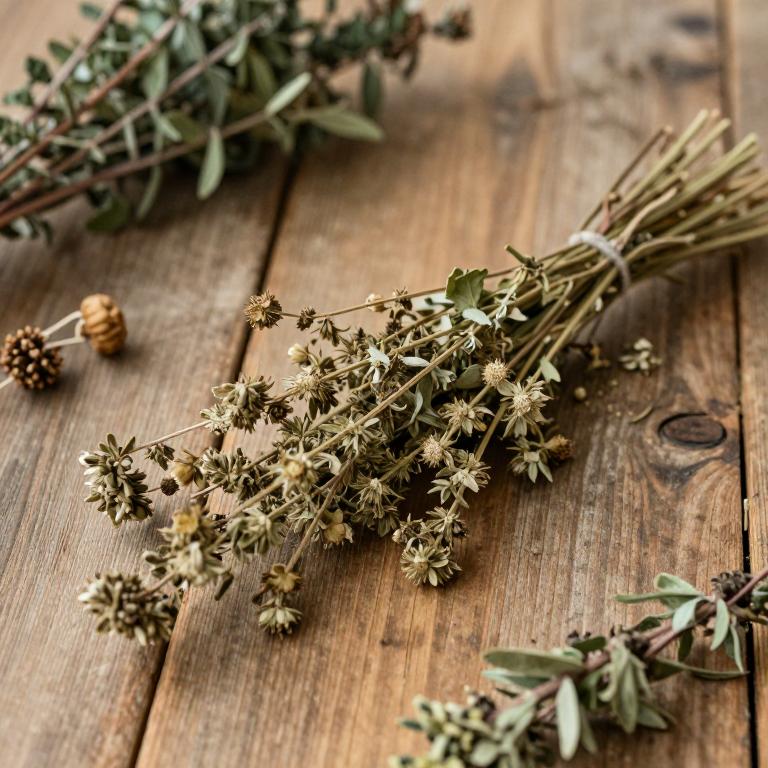
Bilbao fleabane, scientifically known as Erigeron floribundus, is a charming perennial herb native to the Mediterranean. Characterized by its delicate, daisy-like blooms and fine foliage, this plant is valued in traditional herbalism. It serves as a resilient groundcover, adding both aesthetic beauty and historical medicinal interest to botanical gardens.
Names and Synonyms
Common Names
- Bilbao fleabane
- Bilbao's fleabane
- Tall Fleabane
Scientific Names
Accepted name
Erigeron floribundusSynonyms
- Erigeron myriocephalus
- Conyza sumatrensis var. leiotheca
- Marsea bonariensis var. leiotheca
- Conyza albida
- Conyza bilbaoana
- Conyza bonariensis var. leiotheca
- Conyza elata
- Conyza floribunda
- Conyza floribunda var. laciniata
- Conyza floribunda var. linearifolia
- Conyza myriocephala
- Conyza sumatrensis var. floribunda
- Erigeron bilbaoanus
- Erigeron bonariensis var. leiothecus
- Erigeron albidus
Regional and Traditional Names
Spanish:
- Mata negra
German:
- Reichblühender Katzenschweif
French:
- Conyze très fleurie
- Vergerette très fleurie
- Vergerette à fleurs nombreuses
- Érigéron très fleuri
Sources: Wikidata, Catalogue of Life
Taxonomical Classification
This plant belongs to the kingdom Plantae and the phylum Streptophyta, falling under the class Equisetopsida and subclass Magnoliidae. Within the order Asterales, it is classified under the family Asteraceae. Finally, its taxonomic placement is completed within the genus Erigeron.
| Rank | Classification |
|---|---|
| Kingdom | Plantae |
| Phylum | Streptophyta |
| Class | Equisetopsida |
| Subclass | Magnoliidae |
| Order | Asterales |
| Family | Asteraceae |
| Genus | Erigeron |
Sources: The World Checklist of Vascular Plants (WCVP)
Distribution
This plant exhibits a diverse geographical range across several regions of the European continent. In Northern Europe, its presence is documented within the territories of Great Britain and Ireland. Moving into Middle Europe, the species can be found growing in both Belgium and Germany. Furthermore, its distribution extends into Southwestern Europe, specifically within the borders of France. Collectively, these locations highlight a broad ecological spread across various European landscapes.
| Region | Area |
|---|---|
| Northern Europe | Great Britain |
| Northern Europe | Ireland |
| Middle Europe | Belgium |
| Middle Europe | Germany |
| Southwestern Europe | France |
| Southwestern Europe | Spain |
| Macaronesia | Canary Is. |
| Macaronesia | Madeira |
| West-Central Tropical Africa | Central African Republic |
| West-Central Tropical Africa | Congo |
Sources: The World Checklist of Vascular Plants (WCVP)
Botanical Identification
Ecology
The ecology of Erigeron floribundus is characterized by its presence within the Bosque alto habitat, where it adapts to specific environmental conditions across a broad altitudinal gradient. This species can be found occupying a wide range of elevations, starting from sea level (0 m AMSL) and extending up to a maximum elevation of 2500 m AMSL. This expansive elevational range suggests a high degree of ecological plasticity, allowing the plant to thrive in various microclimates and successional stages within its high-forest ecological niche.
- Elevational range max:
- 2500 m AMSL
- Elevational range min:
- 0 m AMSL
- Habitat :
- Bosque alto
Life history
The life history of Erigeron floribundus is characterized by an annual lifecycle, meaning it completes its entire biological development—from germination to seed production—within a single growing season. As a therophyte, the plant survives the unfavorable seasons primarily in the form of seeds, which remain dormant until conditions are suitable for regrowth. This life form is further defined by its growth habit, where the plant remains close to the soil surface and withers away at the end of its cycle. Additionally, the plant exhibits deciduousness, shedding its foliage as it completes its seasonal progression.
- Deciduousness :
- deciduous
- Life form :
- therophyte
- Lifecycle :
- annual
Morphology
The morphology of Erigeron floribundus is characterized by its growth form as a non-woody herb and specifically a forb. This terrestrial species is independent, functioning neither as a parasite nor as an epiphyte. The plant exhibits a self-supporting habit rather than acting as a climber, vine, or liana, maintaining an erect shoot orientation. In terms of stature, the plant displays significant vertical variability, with heights ranging from a minimum of 0.3 m to a maximum of 2.5 m, maintaining an average height of approximately 2 m.
- Aquatic :
- terrestrial
- Climber :
- self-supporting
- Epiphyte :
- terrestrial
- Growth form :
- herb
- Growth form :
- forb
- Parasite :
- independent
- Plant height max:
- 2.5 m
- Plant height mean:
- 2 m
- Plant height min:
- 0.3 m
- Shoot orientation :
- erect
- Woodiness :
- non-woody
Physiology
The physiology of Erigeron floribundus is characterized by a C3 photosynthetic pathway, indicating its reliance on the standard Calvin cycle for carbon fixation. The plant exhibits an alternate leaf arrangement, with leaves that are elliptic in form and lack any specialized succulence. Morphologically, the foliage displays significant variation in dimensions, with leaf lengths ranging from a minimum of 2 cm to a maximum of 10 cm, while leaf widths vary from a minimum of 0.1 cm to a maximum of 1.5 cm, maintaining a mean width of approximately 1.2 cm. Furthermore, the species does not function as a nitrogen fixer, relying instead on external soil nutrient availability for its metabolic processes.
- Leaf arrangement :
- alternate
- Leaf form :
- elliptic
- Leaf length max:
- 10 cm
- Leaf length min:
- 2 cm
- Leaf width max:
- 1.5 cm
- Leaf width mean:
- 1.2 cm
- Leaf width min:
- 0.1 cm
- Nitrogen fixer :
- no
- Photosynthetic pathway :
- C3
- Succulence :
- no
Reproduction
The reproduction of Erigeron floribundus is characterized by a sexual process involving bisexual flowers that feature white coloration. The flowering period typically begins in March and concludes in May, though the timing can be variable across different environments. The plant relies on biotic pollination, specifically utilizing an insect-based pollination syndrome to facilitate fertilization, as self-fertilization is notably absent. Following successful pollination, the plant produces fruits categorized as achenes, which are indehiscent in nature and exhibit a red color. These fruits are quite small, with a mean length of 0.1 cm, ranging from a minimum of 0.1 cm to a maximum of 0.15 cm. Each fruit is highly prolific, containing more than 1,000 seeds, with an average seed mass of approximately 6.95e-05 g. Dispersal is achieved through an anemochorous syndrome, meaning the seeds are dispersed by the wind. There is no evidence of asexual reproduction in this species.
- Dehiscence :
- indehiscent
- Dispersal syndrome :
- anemochorous
- Flower colour :
- white
- Flowering time :
- Mar
- Flowering time :
- May
- Fruit colour :
- red
- Fruit length max:
- 0.15 cm
- Fruit length mean:
- 0.1 cm
- Fruit type :
- achene
- Pollination syndrome :
- insect
- Pollination syndrome :
- biotic
- Reproduction asexual :
- absent
- Reproduction sexual :
- bisexual
- Seed mass mean:
- 6.95e-05 g
- Seeds_per_fruit :
- >1000
- Self fertilization :
- absent
Sources: Global Inventory of Floras and Traits (GIFT)
Chemicals
Erigeron floribundus has 5 reported phytochemicals identified across 0 scientific publications and several other databases. The most consistently reported chemicals include Caryophyllene oxide, Condensed Tannins, Flavonoids, LIMONENE, Spathulenol.
| Chemical | Supporting sources | Consensus |
|---|---|---|
| Caryophyllene oxide | 1 supporting sources | ★☆☆☆☆ |
| Condensed Tannins | 1 supporting sources | ★☆☆☆☆ |
| Flavonoids | 1 supporting sources | ★☆☆☆☆ |
| LIMONENE | 1 supporting sources | ★☆☆☆☆ |
| Spathulenol | 1 supporting sources | ★☆☆☆☆ |
Caryophyllene oxide
- Molecules (Basel, Switzerland)
Condensed Tannins
- Scientific reports
Flavonoids
- Scientific reports
LIMONENE
- Molecules (Basel, Switzerland)
Spathulenol
- Molecules (Basel, Switzerland)
Activities
Erigeron floribundus has 4 reported activities identified across 0 scientific publications and several other databases. The most consistently reported activities include Antiinflammatory, Antimicrobial, Antioxidant, Antiproliferative.
| Activity | Supporting sources | Consensus |
|---|---|---|
| Antiinflammatory | 1 supporting sources | ★☆☆☆☆ |
| Antimicrobial | 1 supporting sources | ★☆☆☆☆ |
| Antioxidant | 1 supporting sources | ★☆☆☆☆ |
| Antiproliferative | 1 supporting sources | ★☆☆☆☆ |
Antiinflammatory
- Journal of ethnopharmacology
Antimicrobial
- Molecules (Basel, Switzerland)
Antioxidant
- Molecules (Basel, Switzerland)
Antiproliferative
- Molecules (Basel, Switzerland)
Conditions
Erigeron floribundus has 2 reported investigations on conditions identified across 0 scientific publications and several other databases. The most consistently reported conditions include Gram-negative bacterial infections, Staphylococcus aureus.
| Condition | Supporting sources | Consensus |
|---|---|---|
| Gram-negative bacterial infections | 1 supporting sources | ★☆☆☆☆ |
| Staphylococcus aureus | 1 supporting sources | ★☆☆☆☆ |
Gram-negative bacterial infections
- BMC complementary and alternative medicine
Staphylococcus aureus
- Molecules (Basel, Switzerland)
Preparations
Erigeron floribundus has 5 reported preparations identified across 0 scientific publications and several other databases. The most consistently reported preparations include Ethanolic extracts, aqueous and ethanolic extracts, essential oil, extracts, methanol extracts.
| Preparation | Supporting sources | Consensus |
|---|---|---|
| Ethanolic extracts | 1 supporting sources | ★☆☆☆☆ |
| Aqueous and ethanolic extracts | 1 supporting sources | ★☆☆☆☆ |
| Essential oil | 1 supporting sources | ★☆☆☆☆ |
| Extracts | 1 supporting sources | ★☆☆☆☆ |
| Methanol extracts | 1 supporting sources | ★☆☆☆☆ |
Ethanolic extracts
- Journal of ethnopharmacology
Aqueous and ethanolic extracts
- Scientific reports
Essential oil
- Molecules (Basel, Switzerland)
Extracts
- Journal of ethnopharmacology
Methanol extracts
- BMC complementary and alternative medicine