Category:Erica andevalensis
Erica andevalensis · Accepted scientific name
Scientific literature: Very Sparse (6 studies) · ★☆☆☆☆
Category:Erica andevalensis, scientifically known as Erica andevalensis, is a distinctive heath shrub valued for its unique medicinal properties. Native to specific highland ecosystems, this plant is traditionally used in various herbal remedies to address diverse health concerns, offering a fascinating subject for both ethnobotanical study and pharmacological research.
- Family
- Ericaceae
- Native range
- Europe
- Parts used
- Not available
- Common names
- Pyrite Heath
- Scientific synonyms
- Erica Mackayana Subsp. Andevalensis · Erica Andevalensis F. Albiflora
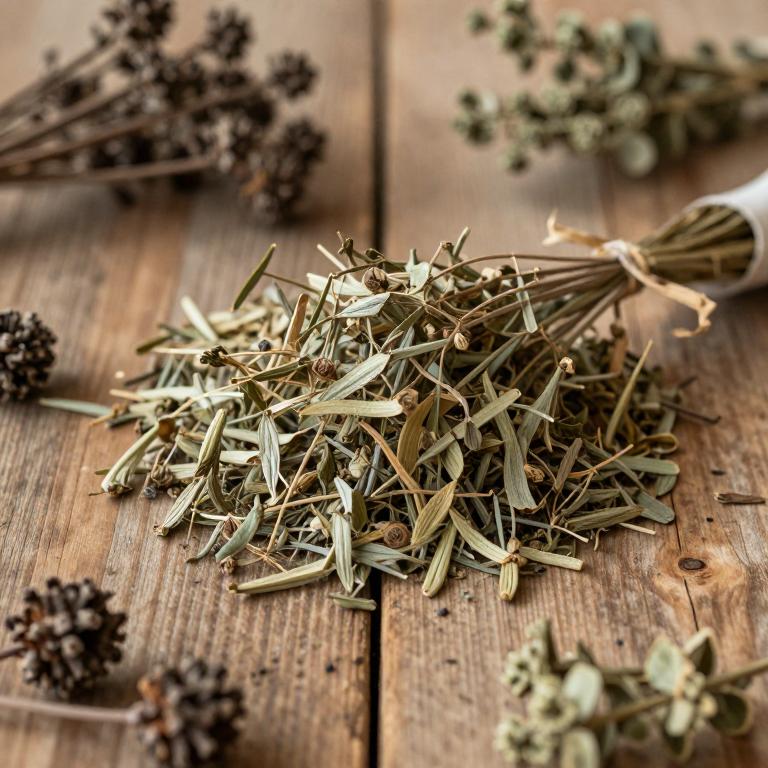
Names and Synonyms
Common Names
- Pyrite Heath
Scientific Names
Accepted name
Erica andevalensisSynonyms
- Erica mackayana subsp. andevalensis
- Erica andevalensis f. albiflora
Regional and Traditional Names
Spanish:
- brezo minero
Sources: Wikidata, Catalogue of Life
Taxonomical Classification
This plant belongs to the kingdom Plantae and is classified within the phylum Streptophyta and the class Equisetopsida. As a member of the subclass Magnoliidae and the order Ericales, it is further categorized into the family Ericaceae. Finally, it is identified under the genus Erica as the species Erica andevalensis.
| Rank | Classification |
|---|---|
| Kingdom | Plantae |
| Phylum | Streptophyta |
| Class | Equisetopsida |
| Subclass | Magnoliidae |
| Order | Ericales |
| Family | Ericaceae |
| Genus | Erica |
Sources: The World Checklist of Vascular Plants (WCVP)
Distribution
This plant is primarily found within the specific regions of Southwestern Europe. Its natural habitat is concentrated in the Iberian Peninsula. More specifically, the species is known to grow in the country of Portugal. It is also documented to exist throughout various parts of Spain. Consequently, its geographical range is limited to these two neighboring Mediterranean nations.
| Region | Area |
|---|---|
| Southwestern Europe | Portugal |
| Southwestern Europe | Spain |
Sources: The World Checklist of Vascular Plants (WCVP)
Botanical Identification
Life history
The life history of Erica andevalensis is characterized by its status as a perennial species, meaning it persists through multiple growing seasons rather than completing its life cycle in a single year. As a perennial, the plant establishes a long-term presence in its natural habitat, allowing it to invest resources into sustained growth, structural development, and repeated reproductive efforts over several years. This life strategy enables the plant to adapt to environmental fluctuations and maintain a stable population within its specific ecological niche.
- Lifecycle :
- perennial
Morphology
The morphology of Erica andevalensis is characterized by its growth form as a shrub, which defines its structural architecture and habit within its habitat. This plant exhibits a woody nature, possessing lignified stems that provide the necessary rigidity and support for its shrubby development.
- Growth form :
- shrub
- Woodiness :
- woody
Sources: Global Inventory of Floras and Traits (GIFT)
Chemicals
Erica andevalensis has 3 reported phytochemicals identified across 0 scientific publications and several other databases. The most consistently reported chemicals include Flavonoids, Ursolic acid, alpha-Amyrine.
| Chemical | Supporting sources | Consensus |
|---|---|---|
| Flavonoids | 1 supporting sources | ★☆☆☆☆ |
| Ursolic acid | 1 supporting sources | ★☆☆☆☆ |
| alpha-Amyrine | 1 supporting sources | ★☆☆☆☆ |
Flavonoids
- Zeitschrift fur Naturforschung. C, Journal of biosciences
Ursolic acid
- Zeitschrift fur Naturforschung. C, Journal of biosciences
alpha-Amyrine
- Zeitschrift fur Naturforschung. C, Journal of biosciences
Conditions
Erica andevalensis has 2 reported investigations on conditions identified across 0 scientific publications and several other databases. The most consistently reported conditions include gastric ulcers, ulcers.
| Condition | Supporting sources | Consensus |
|---|---|---|
| Gastric ulcers | 1 supporting sources | ★☆☆☆☆ |
| Ulcers | 1 supporting sources | ★☆☆☆☆ |
Gastric ulcers
- Zeitschrift fur Naturforschung. C, Journal of biosciences
Ulcers
- Zeitschrift fur Naturforschung. C, Journal of biosciences
Preparations
Erica andevalensis has 1 reported preparations identified across 0 scientific publications and several other databases. The most consistently reported preparations include methanolic extract of the aerial parts.
| Preparation | Supporting sources | Consensus |
|---|---|---|
| Methanolic extract of the aerial parts | 1 supporting sources | ★☆☆☆☆ |
Methanolic extract of the aerial parts
- Zeitschrift fur Naturforschung. C, Journal of biosciences