Eremurus persicus
Eremurus persicus · Accepted scientific name
Scientific literature: Very Sparse (21 studies) · ★☆☆☆☆
, scientifically known as Eremurus persicus, is a stunning perennial herb native to the Iranian plateau. Renowned for its towering flower spikes, this plant is highly valued in traditional Persian medicine. It possesses significant therapeutic properties, often utilized for its anti-inflammatory and antioxidant effects in treating various ailments.
- Family
- Asphodelaceae
- Native range
- Asia-Temperate
- Parts used
- Leaf · Root
- Common names
- Not available
- Scientific synonyms
- Asphodelus Persicus · Henningia Persica · 3 more
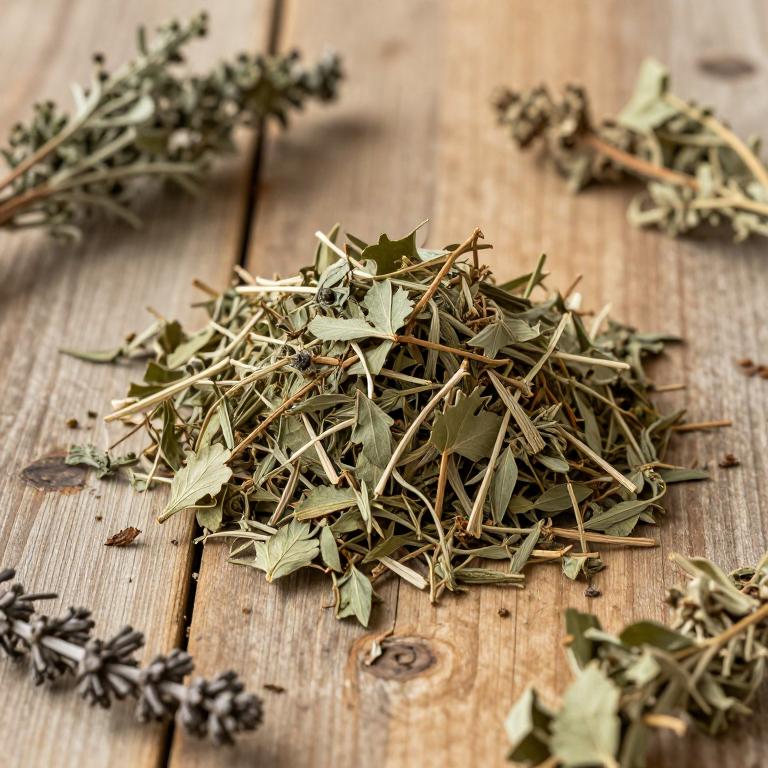
Names and Synonyms
Scientific Names
Accepted name
Eremurus persicusSynonyms
- Asphodelus persicus
- Henningia persica
- Henningia aucheriana
- Henningia sikesara
- Eremurus aucherianus
Sources: Wikidata
Taxonomical Classification
This plant belongs to the kingdom Plantae and is classified under the phylum Streptophyta and class Equisetopsida. Within the subclass Magnoliidae, it is ordered under Asparagales and falls into the family Asphodelaceae. Finally, its specific taxonomic placement is within the genus Eremurus.
| Rank | Classification |
|---|---|
| Kingdom | Plantae |
| Phylum | Streptophyta |
| Class | Equisetopsida |
| Subclass | Magnoliidae |
| Order | Asparagales |
| Family | Asphodelaceae |
| Genus | Eremurus |
Sources: The World Checklist of Vascular Plants (WCVP)
Distribution
This plant is widely distributed across several specific regions in Western and South Asia. In Western Asia, it can be found growing throughout the country of Iran. Its range also extends into Afghanistan, which is another key territory in Western Asia. Moving toward the Indian Subcontinent, the species is documented in Pakistan. Finally, it inhabits the West Himalaya region within the Indian Subcontinent.
| Region | Area |
|---|---|
| Western Asia | Afghanistan |
| Western Asia | Iran |
| Indian Subcontinent | Pakistan |
| Indian Subcontinent | West Himalaya |
Sources: The World Checklist of Vascular Plants (WCVP)
Botanical Identification
Ecology
The ecology of Eremurus persicus is defined by its adaptation to high-altitude mountainous environments, where it thrives within a specific altitudinal gradient. This species is typically found inhabiting rugged terrains at elevations ranging from a minimum of 1000 m AMSL to a maximum of 3500 m AMSL. Such a broad elevational range suggests a high degree of ecological plasticity, allowing the plant to persist in diverse sub-alpine and alpine microclimates. Its distribution is closely linked to the specific temperature fluctuations and soil compositions characteristic of these mid-to-high altitude zones, where it must navigate varying levels of solar radiation and seasonal moisture availability typical of its montane habitat.
- Elevational range max:
- 3500 m AMSL
- Elevational range min:
- 1000 m AMSL
Life history
The life history of Eremurus persicus is characterized by a perennial lifecycle, allowing the plant to persist through multiple growing seasons. It is classified as a geophyte, a life form defined by its ability to survive unfavorable environmental conditions through underground storage organs. Furthermore, its biological strategy identifies it as a cryptophyte, ensuring its survival by protecting its vital regenerative structures beneath the soil surface.
- Life form :
- geophyte
- Life form :
- cryptophyte
- Lifecycle :
- perennial
Morphology
The morphology of Eremurus persicus is characterized by a growth form consisting of a non-woody herb. It is a self-supporting plant that does not exhibit climbing behavior, functioning as a non-climbing organism rather than a liana or vine. The species is strictly terrestrial in its habitat, lacking aquatic or semiaquatic tendencies, and it does not function as an epiphyte. Furthermore, it is an independent organism that does not exhibit parasitic traits, maintaining its own physiological processes without reliance on a host.
- Aquatic :
- terrestrial
- Climber :
- self-supporting
- Epiphyte :
- terrestrial
- Growth form :
- herb
- Parasite :
- independent
- Woodiness :
- non-woody
Physiology
The physiology of Eremurus persicus is characterized by a specialized metabolic framework adapted to its specific ecological niche, primarily utilizing a C3 photosynthetic pathway. As a C3 plant, its carbon fixation process occurs through the Calvin cycle, where the enzyme RuBisCO facilitates the initial carboxylation of ribulose-1,5-bisphosphate to produce 3-phosphoglycerate. This metabolic strategy dictates its gas exchange patterns and water-use efficiency, as the plant must balance the intake of carbon dioxide with the risk of photorespiration and transpirational water loss. The plant's physiological performance is heavily influenced by its ability to manage these C3 processes under varying environmental stressors, such as fluctuating light intensities and temperature shifts, which impact the rate of photosynthesis and overall biomass accumulation.
- Photosynthetic pathway :
- C3
Reproduction
The reproduction of Eremurus persicus is characterized by a specific seasonal flowering window and a highly consistent seed production profile. The flowering period typically commences in May and reaches its conclusion in June, though the timing can be variable depending on environmental conditions. Following successful pollination, the plant produces seeds that exhibit remarkable uniformity in weight; the seed mass is measured at a mean, minimum, and maximum of 0.0079 g, indicating a very stable and standardized mass for its progeny.
- Flowering time :
- May
- Flowering time :
- Jun
- Seed mass mean:
- 0.0079 g
Sources: Global Inventory of Floras and Traits (GIFT)
Plant Parts
Eremurus persicus has 2 reported plant parts identified across 2 scientific publications and several other databases that are studied for medicinal purposes. The most consistently reported plant part include leaf, root.
| Plant part | Supporting sources | Consensus |
|---|---|---|
| Leaf | 1 supporting sources | ★☆☆☆☆ |
| Root | 1 supporting sources | ★☆☆☆☆ |
Leaf
- Zeitschrift fur Naturforschung. C, Journal of biosciences
Root
- Molecules (Basel, Switzerland)
Chemicals
Eremurus persicus has 14 reported phytochemicals identified across 2 scientific publications and several other databases. The most consistently reported chemicals include 1,8-Cineol, 4-amino-4-carboxychroman-2-one, Aloesaponol III 8-methyl ether, Auraptene, Corchoionoside A.
| Chemical | Supporting sources | Consensus |
|---|---|---|
| 1,8-Cineol | 1 supporting sources | ★☆☆☆☆ |
| 4-amino-4-carboxychroman-2-one | 1 supporting sources | ★☆☆☆☆ |
| Aloesaponol III 8-methyl ether | 1 supporting sources | ★☆☆☆☆ |
| Auraptene | 1 supporting sources | ★☆☆☆☆ |
| Corchoionoside A | 1 supporting sources | ★☆☆☆☆ |
| Geranyl acetone | 1 supporting sources | ★☆☆☆☆ |
| Geranylgeraniol | 1 supporting sources | ★☆☆☆☆ |
| IMPERATORIN | 1 supporting sources | ★☆☆☆☆ |
| Isoorientin | 1 supporting sources | ★☆☆☆☆ |
| LIMONENE | 1 supporting sources | ★☆☆☆☆ |
1,8-Cineol
- Cellular and molecular biology (Noisy-le-Grand, France)
4-amino-4-carboxychroman-2-one
- Zeitschrift fur Naturforschung. C, Journal of biosciences
Aloesaponol III 8-methyl ether
- Molecules (Basel, Switzerland)
Auraptene
- Zeitschrift fur Naturforschung. C, Journal of biosciences
Corchoionoside A
- Zeitschrift fur Naturforschung. C, Journal of biosciences
Geranyl acetone
- Cellular and molecular biology (Noisy-le-Grand, France)
Geranylgeraniol
- Cellular and molecular biology (Noisy-le-Grand, France)
IMPERATORIN
- Zeitschrift fur Naturforschung. C, Journal of biosciences
Isoorientin
- Zeitschrift fur Naturforschung. C, Journal of biosciences
LIMONENE
- Cellular and molecular biology (Noisy-le-Grand, France)
Activities
Eremurus persicus has 3 reported activities identified across 2 scientific publications and several other databases. The most consistently reported activities include Anticancer, Antimicrobial, Antioxidant.
| Activity | Supporting sources | Consensus |
|---|---|---|
| Anticancer | 1 supporting sources | ★☆☆☆☆ |
| Antimicrobial | 1 supporting sources | ★☆☆☆☆ |
| Antioxidant | 1 supporting sources | ★☆☆☆☆ |
Anticancer
- Cellular and molecular biology (Noisy-le-Grand, France)
Antimicrobial
- Cellular and molecular biology (Noisy-le-Grand, France)
Antioxidant
- Cellular and molecular biology (Noisy-le-Grand, France)
Conditions
Eremurus persicus has 2 reported investigations on conditions identified across 2 scientific publications and several other databases. The most consistently reported conditions include Leishmania infections, hepatocellular carcinoma.
| Condition | Supporting sources | Consensus |
|---|---|---|
| Leishmania infections | 1 supporting sources | ★☆☆☆☆ |
| Hepatocellular carcinoma | 1 supporting sources | ★☆☆☆☆ |
Leishmania infections
- Molecules (Basel, Switzerland)
Hepatocellular carcinoma
- Cellular and molecular biology (Noisy-le-Grand, France)
Preparations
Eremurus persicus has 1 reported preparations identified across 2 scientific publications and several other databases. The most consistently reported preparations include root extract.
| Preparation | Supporting sources | Consensus |
|---|---|---|
| Root extract | 1 supporting sources | ★☆☆☆☆ |
Root extract
- Molecules (Basel, Switzerland)