Horned Larks
Eremophila · Accepted scientific name
Scientific literature: Very Sparse (4 studies) · ★☆☆☆☆
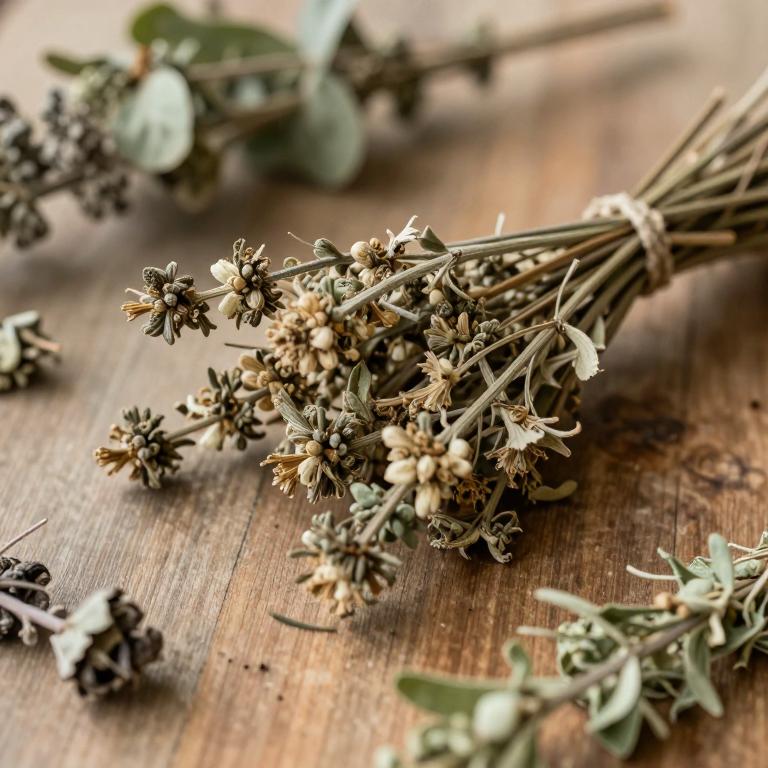
Horned Larks, scientifically known as Eremophila, is a resilient medicinal plant native to arid landscapes. Renowned for its unique therapeutic properties, it has long been utilized in traditional healing practices to support digestive health and reduce inflammation. This hardy herb offers a fascinating glimpse into nature's potent apothecary.
Names and Synonyms
Common Names
- Horned Larks
- Eared Larks
- Horned and Temminck's Larks
- Emu Bush
Scientific Names
Accepted name
EremophilaSynonyms
- Pholidia
- Bondtia
- Eremodendron
- Sentis
- Stenochilus
- Diocirea
- Pseudopholidia
- Pholidiopsis
- Calamphoreus
Regional and Traditional Names
Spanish:
- Eremophila (animal)
- Stenochilus
German:
- Emusträucher
- Ohrenlerchen
Sources: Wikidata, Catalogue of Life
Taxonomical Classification
This plant belongs to the kingdom Plantae and the phylum Streptophyta, falling under the class Equisetopsida and subclass Magnoliidae. Within the order Lamiales and the family Scrophulariaceae, it is classified under the genus Eremophila.
| Rank | Classification |
|---|---|
| Kingdom | Plantae |
| Phylum | Streptophyta |
| Class | Equisetopsida |
| Subclass | Magnoliidae |
| Order | Lamiales |
| Family | Scrophulariaceae |
| Genus | Eremophila |
Sources: The World Checklist of Vascular Plants (WCVP)
Distribution
This plant is native to several distinct regions across the Australian continent. Its distribution primarily encompasses the eastern states, including New South Wales, Queensland, and Victoria. Additionally, it can be found expanding into the central landscapes of the Northern Territory. The species also makes its presence known within the southern reaches of South Australia. Collectively, these locations highlight the wide geographical range this medicinal plant occupies throughout Australia.
| Region | Area |
|---|---|
| Australia | New South Wales |
| Australia | Northern Territory |
| Australia | Queensland |
| Australia | South Australia |
| Australia | Victoria |
| Australia | Western Australia |
| New Zealand | New Zealand North |
Sources: The World Checklist of Vascular Plants (WCVP)
Plant Parts
Eremophila has 1 reported plant parts identified across 1 scientific publications and several other databases that are studied for medicinal purposes. The most consistently reported plant part include leaf.
| Plant part | Supporting sources | Consensus |
|---|---|---|
| Leaf | 1 supporting sources | ★☆☆☆☆ |
Leaf
- The Plant journal : for cell and molecular biology
Activities
Eremophila has 2 reported activities identified across 1 scientific publications and several other databases. The most consistently reported activities include Antimicrobial, Antiviral.
| Activity | Supporting sources | Consensus |
|---|---|---|
| Antimicrobial | 1 supporting sources | ★☆☆☆☆ |
| Antiviral | 1 supporting sources | ★☆☆☆☆ |
Antimicrobial
- The Journal of pharmacy and pharmacology
Antiviral
- The Journal of pharmacy and pharmacology
Conditions
Eremophila has 1 reported investigations on conditions identified across 1 scientific publications and several other databases. The most consistently reported conditions include Cryptococcus infections.
| Condition | Supporting sources | Consensus |
|---|---|---|
| Cryptococcus infections | 1 supporting sources | ★☆☆☆☆ |
Cryptococcus infections
- Antibiotics (Basel, Switzerland)
Preparations
Eremophila has 1 reported preparations identified across 1 scientific publications and several other databases. The most consistently reported preparations include extracts.
| Preparation | Supporting sources | Consensus |
|---|---|---|
| Extracts | 1 supporting sources | ★☆☆☆☆ |
Extracts
- Antibiotics (Basel, Switzerland)