emubush
Eremophila longifolia · Accepted scientific name
Scientific literature: Very Sparse (6 studies) · ★☆☆☆☆
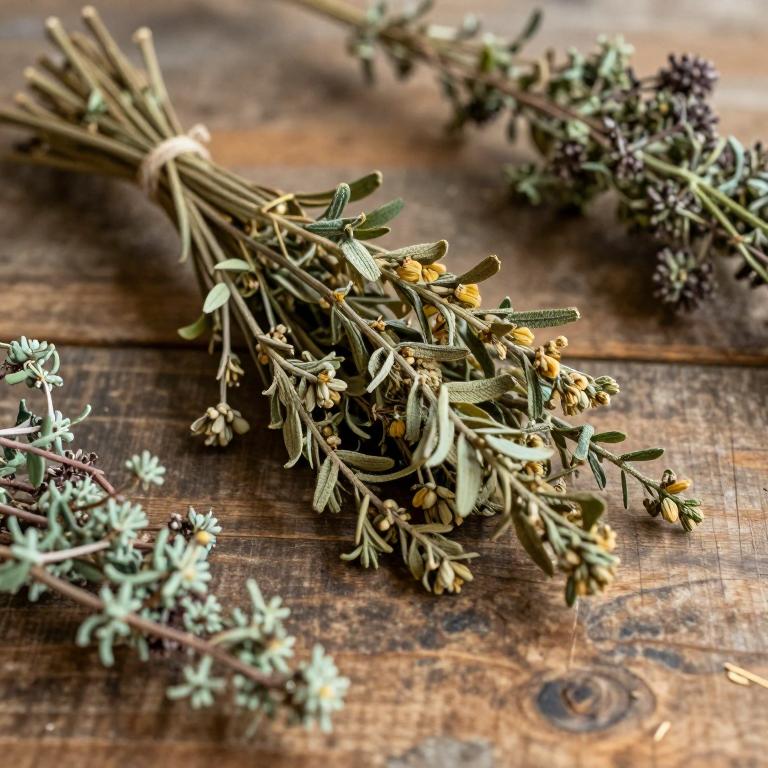
Emubush, scientifically known as Eremophila longifolia, is a versatile medicinal shrub native to the arid regions of Australia. Renowned for its profound healing properties, this plant is traditionally used to treat various ailments, ranging from skin irritations to digestive issues, offering a natural remedy deeply rooted in indigenous knowledge.
Names and Synonyms
Common Names
- emubush
- longleaf emubush
- Berrigan
- Weeping Emubush
Scientific Names
Accepted name
Eremophila longifoliaSynonyms
- Pholidia longifolia
- Eremophila salicina
- Bondtia graciliflora
- Bondtia longifolia
- Eremophila graciliflora
- Stenochilus longifolius
- Stenochilus salicinus
- Stenochilus pubiflorus
Sources: Wikidata, Catalogue of Life
Taxonomical Classification
This plant belongs to the kingdom Plantae and the phylum Streptophyta, falling under the class Equisetopsida and subclass Magnoliidae. Within the order Lamiales, it is classified under the family Scrophulariaceae. Finally, it is identified by the genus Eremophila and the specific species Eremophila longifolia.
| Rank | Classification |
|---|---|
| Kingdom | Plantae |
| Phylum | Streptophyta |
| Class | Equisetopsida |
| Subclass | Magnoliidae |
| Order | Lamiales |
| Family | Scrophulariaceae |
| Genus | Eremophila |
Sources: The World Checklist of Vascular Plants (WCVP)
Distribution
This plant exhibits a broad distribution across the diverse landscapes of Australia. It can be found growing throughout the state of New South Wales. Its range also extends northward into the Northern Territory. Additionally, the species is documented within the borders of Queensland. Finally, its presence is noted in both South Australia and Victoria.
| Region | Area |
|---|---|
| Australia | New South Wales |
| Australia | Northern Territory |
| Australia | Queensland |
| Australia | South Australia |
| Australia | Victoria |
| Australia | Western Australia |
Sources: The World Checklist of Vascular Plants (WCVP)
Botanical Identification
Life history
The life history of Eremophila longifolia is characterized by its status as a perennial species, allowing it to persist in its environment through multiple growing seasons. As a perennial, the plant establishes a long-term presence within its habitat, undergoing cycles of vegetative growth and reproductive phases over several years rather than completing its life cycle in a single season. This life strategy enables it to endure fluctuating environmental conditions, relying on its established root systems or specialized structures to survive dormant periods before re-emerging to contribute to the population's stability and seed production.
- Lifecycle :
- perennial
Morphology
The morphology of Eremophila longifolia is characterized by its growth form as a woody shrub, exhibiting a self-supporting structure rather than acting as a climber. This independent, non-parasitic plant thrives in terrestrial habitats, ranging from terrestrial to semiaquatic environments. In terms of stature, it is a substantial specimen, with a plant height that can reach a minimum of 1 meter and extend up to a maximum of 8 meters.
- Aquatic :
- terrestrial
- Climber :
- self-supporting
- Epiphyte :
- terrestrial
- Growth form :
- shrub
- Parasite :
- independent
- Plant height max:
- 8 m
- Plant height min:
- 1 m
- Woodiness :
- woody
Physiology
The physiology of Eremophila longifolia is characterized by its specialized photosynthetic processes and distinct leaf morphology adapted to its environment. The plant utilizes the C3 photosynthetic pathway to facilitate carbon fixation and energy production. Morphologically, the leaves exhibit significant variation in dimensions, with a minimum length of 3 cm and a maximum length reaching up to 20 cm. This longitudinal growth is complemented by a relatively narrow width, ranging from a minimum of 0.3 cm to a maximum of 1.4 cm, defining the plant's characteristic elongated foliage structure.
- Leaf length max:
- 20 cm
- Leaf length min:
- 3 cm
- Leaf width max:
- 1.4 cm
- Leaf width min:
- 0.3 cm
- Photosynthetic pathway :
- C3
Reproduction
The reproduction of Eremophila longifolia is characterized by a diverse range of dispersal mechanisms and specific seed morphological traits. The plant exhibits multiple dispersal syndromes, primarily functioning as zoochorous, though it also incorporates anemochorous, autochorous, hydrochorous, and unspecialized methods to distribute its progeny. The fruits produced are fleshy in nature, serving as a key component in its reproductive strategy. The seeds themselves show significant variation in mass, with a minimum weight of 0.018108 g, a maximum of 0.16632 g, and a mean seed mass of approximately 0.097919333 g. In terms of dimensions, the seed volume is remarkably consistent, maintaining a maximum, minimum, and mean volume of exactly 100 mm³.
- Dispersal syndrome :
- zoochorous
- Fruit dryness :
- fleshy
- Seed mass max:
- 0.16632 g
- Seed mass mean:
- 0.097919333 g
- Seed mass min:
- 0.018108 g
- Seed volume max:
- 100 mm³
Sources: Global Inventory of Floras and Traits (GIFT)
Plant Parts
Eremophila longifolia has 1 reported plant parts identified across 1 scientific publications and several other databases that are studied for medicinal purposes. The most consistently reported plant part include leaf.
| Plant part | Supporting sources | Consensus |
|---|---|---|
| Leaf | 1 supporting sources | ★☆☆☆☆ |
Leaf
- Journal of natural products
Chemicals
Eremophila longifolia has 3 reported phytochemicals identified across 1 scientific publications and several other databases. The most consistently reported chemicals include Geniposidic acid, Neryl ferulate, Neryl p-coumarate.
| Chemical | Supporting sources | Consensus |
|---|---|---|
| Geniposidic acid | 1 supporting sources | ★☆☆☆☆ |
| Neryl ferulate | 1 supporting sources | ★☆☆☆☆ |
| Neryl p-coumarate | 1 supporting sources | ★☆☆☆☆ |
Geniposidic acid
- Journal of ethnopharmacology
Neryl ferulate
- Journal of natural products
Neryl p-coumarate
- Journal of natural products
Activities
Eremophila longifolia has 1 reported activities identified across 1 scientific publications and several other databases. The most consistently reported activities include Antimicrobial.
| Activity | Supporting sources | Consensus |
|---|---|---|
| Antimicrobial | 1 supporting sources | ★☆☆☆☆ |
Antimicrobial
- Journal of ethnopharmacology
Conditions
Eremophila longifolia has 1 reported investigations on conditions identified across 1 scientific publications and several other databases. The most consistently reported conditions include headache.
| Condition | Supporting sources | Consensus |
|---|---|---|
| Headache | 1 supporting sources | ★☆☆☆☆ |
Headache
- European journal of pharmaceutical sciences : official journal of the European Federation for Pharmaceutical Sciences
Preparations
Eremophila longifolia has 3 reported preparations identified across 1 scientific publications and several other databases. The most consistently reported preparations include extracts, lipophilic extraction into animal fats, smoking applications.
| Preparation | Supporting sources | Consensus |
|---|---|---|
| Extracts | 1 supporting sources | ★☆☆☆☆ |
| Lipophilic extraction into animal fats | 1 supporting sources | ★☆☆☆☆ |
| Smoking applications | 1 supporting sources | ★☆☆☆☆ |
Extracts
- European journal of pharmaceutical sciences : official journal of the European Federation for Pharmaceutical Sciences
Lipophilic extraction into animal fats
- Journal of ethnopharmacology
Smoking applications
- Journal of ethnopharmacology